
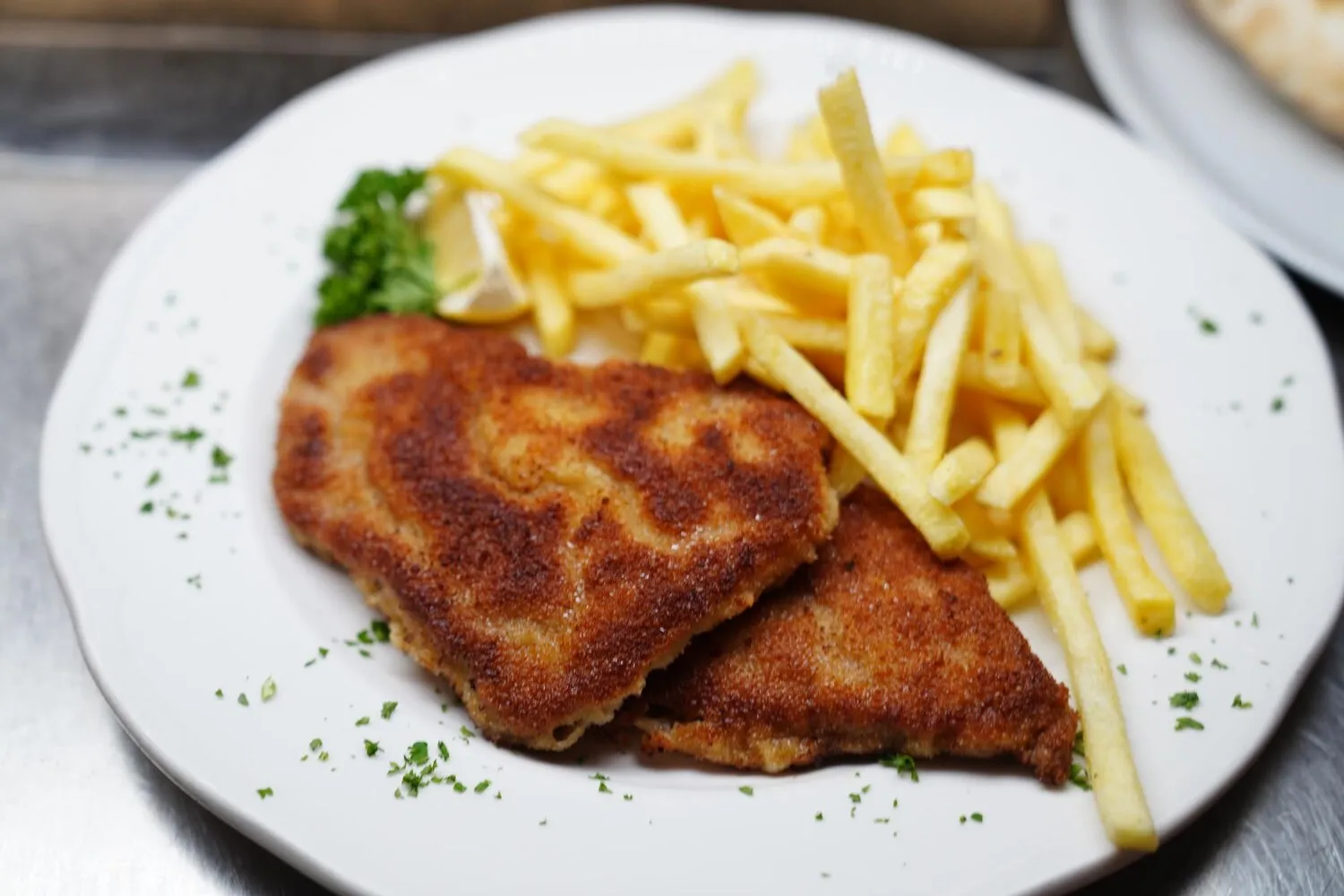

Schnitzel
Traditional Austrian Schnitzel is often available. (Based on general Austrian cuisine context)
Valeurs Nutritionnelles
* Le % de la valeur quotidienne (VQ) vous indique la quantité d'un nutriment dans une portion d'aliment qui contribue à un régime quotidien. 2 000 calories par jour sont utilisées pour les conseils nutritionnels généraux.
Fonctionnalité Premium
Fonctionnalité Premium
While the exact origins are debated, the Wiener Schnitzel is believed to have been inspired by the Italian 'cotoletta alla milanese.' The story goes that Field Marshal Radetzky brought the recipe back to Austria in the mid-19th century, where it was adapted and refined to become the iconic dish we know today. The method of breading and frying meat has roots extending far back in history, but the specific Austrian version gained prominence and national significance over time.
Fonctionnalité Premium
Schnitzel is deeply embedded in Austrian culture, representing culinary tradition, comfort food, and national pride. It is a staple dish found in restaurants across the country and is frequently prepared at home.
National Dish
Schnitzel is widely considered one of Austria's national dishes, symbolizing Austrian cuisine and heritage. It's often a 'must-try' for tourists visiting the country.
Family Tradition
Preparing and enjoying Schnitzel is often a family tradition, passed down through generations. Variations in recipes and techniques exist within families, adding a personal touch to the dish.
Restaurant Staple
Almost every traditional Austrian restaurant will feature Schnitzel on its menu. The presentation is often simple and classic, reflecting the dish's enduring appeal.
Celebratory Meal
Schnitzel is frequently served during festive occasions, celebrations, and family gatherings. It's a dish that brings people together and signifies a special occasion.
Fonctionnalité Premium
Schnitzel boasts a harmonious balance of textures and flavors, primarily savory with subtle hints of richness from the butter or oil used for frying.
The dominant flavor is savory, derived from the veal (traditionally Wiener Schnitzel) or pork. The breadcrumb coating provides a crispy, golden-brown texture that contrasts beautifully with the tender meat inside. The frying process in butter adds a nutty, rich dimension to the overall flavor profile. A squeeze of lemon is a common accompaniment, offering a bright, acidic counterpoint that cuts through the richness and enhances the savory notes. Salt and pepper are the primary seasonings, allowing the quality of the meat and the crispiness of the breading to shine through.
Fonctionnalité Premium
Meat Preparation
Pound the meat thinly and evenly to ensure even cooking and a tender texture. Use a meat mallet and work gently to avoid tearing the meat. The ideal thickness is around 4mm (about 1/6 inch).
Breading Technique
Follow the standard breading procedure: flour, egg wash, and breadcrumbs. Use fine, dry breadcrumbs for the best crispy texture. Make sure the breadcrumbs adhere well to the meat by pressing them gently. This creates a more flavorful and appealing crust.
Frying Temperature
Maintain a consistent frying temperature (around 175°C or 350°F) to ensure even cooking and a golden-brown crust. Avoid overcrowding the pan, as this will lower the temperature and result in soggy Schnitzel.
Type of Fat
Traditionally, Schnitzel is fried in clarified butter (Butterschmalz), which imparts a rich, nutty flavor. Alternatively, a neutral oil with a high smoke point, such as vegetable oil or sunflower oil, can be used.
Serving Suggestions
Serve immediately after frying for the best crispy texture. A squeeze of fresh lemon juice is a must. Common side dishes include parsley potatoes (Petersilkartoffeln), potato salad (Kartoffelsalat), and cranberries (Preiselbeeren).
Fonctionnalité Premium
Explorez des plats et restaurants supplémentaires de Main Course
Explorer Main CourseDécouvrez les meilleurs restaurants et expériences culinaires à Linz.
Explorer LinzEn savoir plus sur la culture gastronomique, la scène des restaurants et le patrimoine culinaire de Austria.
Explorer Austria