
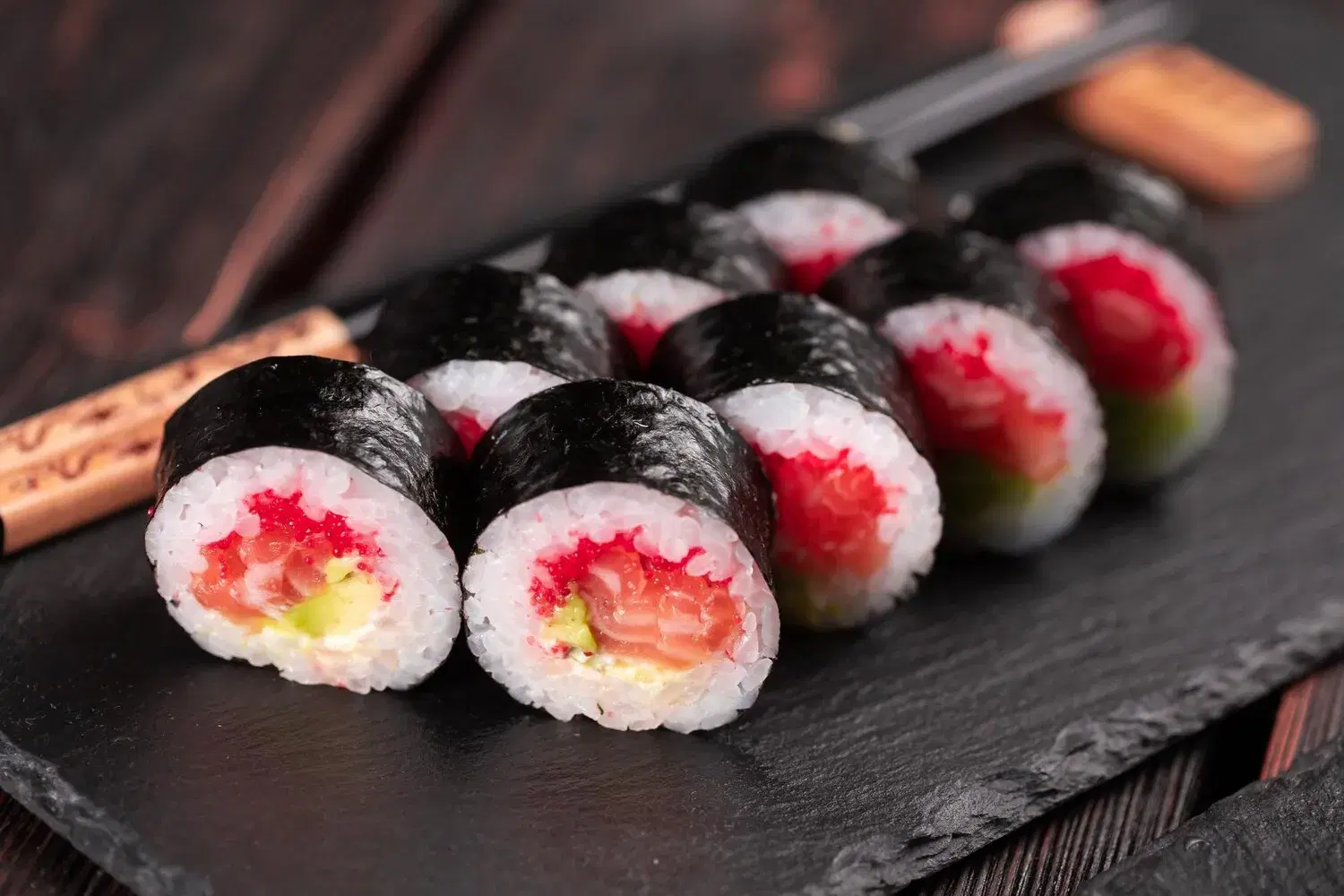

Maki
Maki rolls with various fillings, such as salmon, tuna, avocado, and cucumber.
Valeurs Nutritionnelles
* Le % de la valeur quotidienne (VQ) vous indique la quantité d'un nutriment dans une portion d'aliment qui contribue à un régime quotidien. 2 000 calories par jour sont utilisées pour les conseils nutritionnels généraux.
Fonctionnalité Premium
Fonctionnalité Premium
Maki's origins can be traced back to the need to preserve fish in rice during ancient times. Narezushi, an early form of sushi, involved fermenting fish with rice. Over time, this evolved into quicker methods, leading to the development of maki as a way to enjoy fresh fish with rice and other ingredients rolled in seaweed.
Fonctionnalité Premium
Maki holds a significant place in Japanese culinary culture, representing a balance of flavors, textures, and visual appeal. It is a popular dish for both casual meals and special occasions, often enjoyed in social settings.
Presentation
The presentation of maki is highly valued, with chefs meticulously arranging the rolls to showcase the vibrant colors and textures of the ingredients. The neat and precise cuts are a testament to the chef's skill.
Sushi Etiquette
Proper etiquette is observed when eating sushi, including using chopsticks or your fingers to pick up the rolls, dipping sparingly in soy sauce to avoid overpowering the flavors, and eating the sushi in one or two bites.
Variety and Innovation
Maki demonstrates the Japanese appreciation for variety and innovation. While traditional fillings remain popular, chefs constantly experiment with new ingredients and flavor combinations to create unique and exciting maki variations.
Fonctionnalité Premium
Maki boasts a diverse range of flavors depending on the fillings. However, the fundamental taste profile includes a savory, slightly sweet vinegared rice base, umami from the nori seaweed, and fresh, clean flavors from the chosen fillings.
The vinegared rice provides a slightly tangy and subtly sweet base. Nori seaweed contributes a distinct umami flavor and a crispy texture. Salmon offers a rich, fatty, and slightly sweet taste. Tuna, especially maguro (bluefin), provides a more robust and savory flavor. Avocado lends a creamy, buttery texture and a mild flavor that complements the other ingredients. Cucumber provides a refreshing, crisp, and slightly sweet counterpoint. Soy sauce, often used as a dipping sauce, adds saltiness and enhances the umami notes.
Fonctionnalité Premium
Rice Preparation
Use sushi rice and rinse it thoroughly before cooking. Cook the rice according to package directions and season it with a mixture of rice vinegar, sugar, and salt. Allow the rice to cool before using it to make maki.
Nori Quality
Use high-quality nori seaweed sheets. They should be crisp and have a rich, seaweed flavor. Toasting the nori lightly before use can enhance its flavor and crispness.
Rolling Technique
Use a bamboo rolling mat (makisu) to help you roll the maki tightly and evenly. Ensure the rice is spread evenly on the nori, leaving a small space at the top edge for sealing. Use gentle but firm pressure to roll the maki, and moisten the top edge of the nori with water to seal it.
Knife Skills
Use a very sharp knife to cut the maki into even pieces. Wipe the blade with a damp cloth between cuts to prevent the rice from sticking. Cut the roll in half, then cut each half into smaller, even pieces.
Fonctionnalité Premium
Explorez des plats et restaurants supplémentaires de Sushi
Explorer SushiDécouvrez les meilleurs restaurants et expériences culinaires à Wels.
Explorer WelsEn savoir plus sur la culture gastronomique, la scène des restaurants et le patrimoine culinaire de Austria.
Explorer Austria