
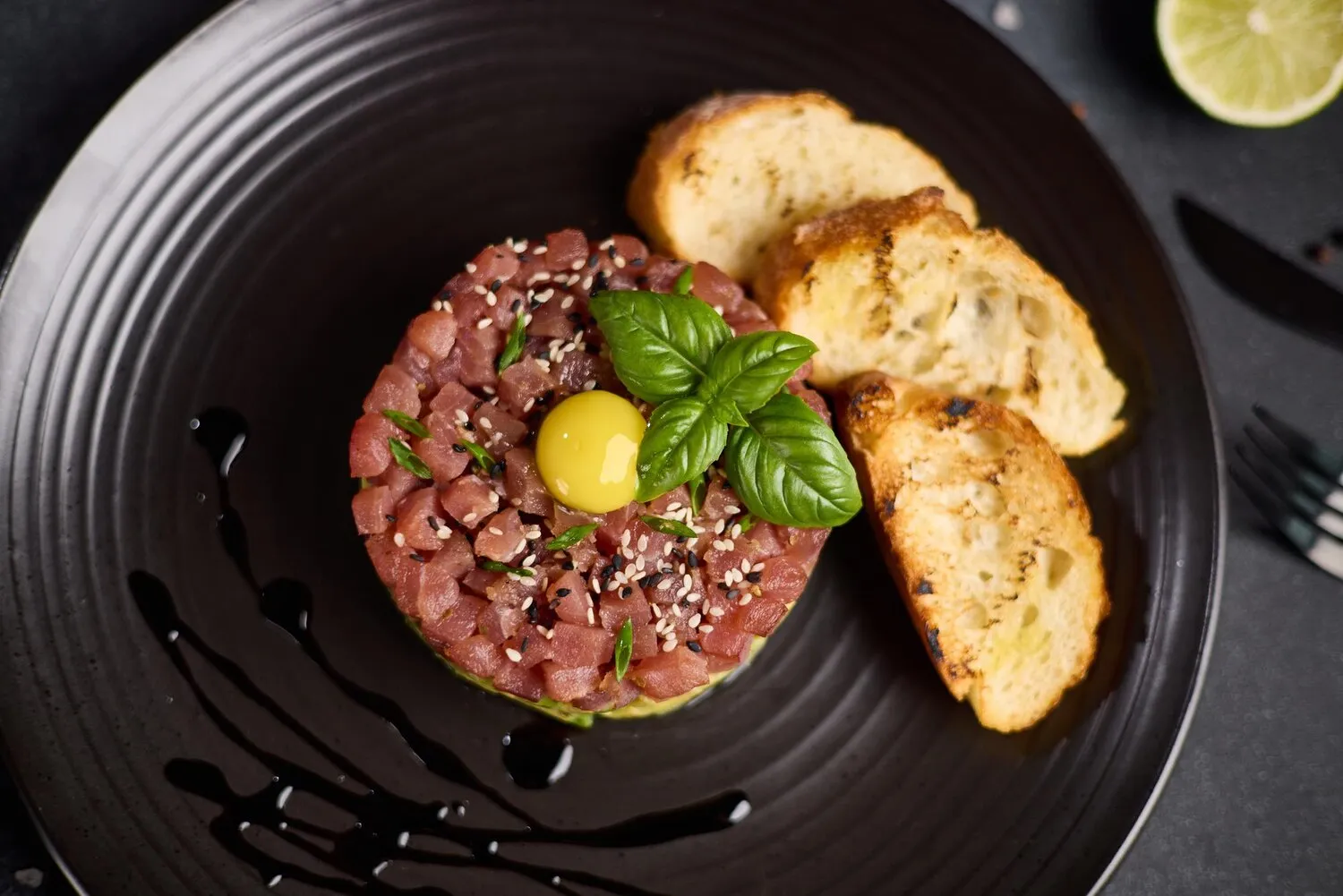

Steak Tartare
A classic Belgian dish consisting of raw ground beef, seasoned and served with various accompaniments.
Valeurs Nutritionnelles
* Le % de la valeur quotidienne (VQ) vous indique la quantité d'un nutriment dans une portion d'aliment qui contribue à un régime quotidien. 2 000 calories par jour sont utilisées pour les conseils nutritionnels généraux.
Fonctionnalité Premium
Fonctionnalité Premium
The origins of steak tartare are debated, with some attributing it to nomadic Tatar horsemen who purportedly tenderized meat under their saddles. A more plausible theory suggests its development in the late 19th and early 20th centuries in French restaurants, inspired by dishes like beef à la mode and German mett.
Fonctionnalité Premium
Steak tartare is considered a classic dish in many cultures, particularly in France and Belgium. It is often seen as a sophisticated and adventurous culinary choice, representing a willingness to appreciate the purity and quality of ingredients.
French Bistro Staple
Steak tartare is a menu staple in many French bistros and restaurants, considered a classic example of French cuisine. Its preparation is often a demonstration of the chef's skill and attention to detail.
Belgian Variations
In Belgium, steak tartare, often called 'filet américain', is a popular dish, sometimes served as a sandwich spread or as a main course with fries. Belgian versions may include additions like mayonnaise or Worcestershire sauce.
Symbol of Culinary Adventure
The dish is often associated with a certain level of culinary adventurousness, due to the consumption of raw meat. It represents a willingness to explore different textures and flavors, and a trust in the quality of the ingredients and preparation methods.
Fonctionnalité Premium
Steak tartare offers a complex interplay of savory, rich, and slightly spicy flavors, balanced by the freshness of raw beef and acidic notes from ingredients like capers and mustard.
The dominant flavor is the umami-rich taste of high-quality raw beef, providing a melt-in-your-mouth texture. This is complemented by the sharp, pungent bite of Dijon mustard, the salty tang of capers, the subtle sweetness of shallots or onions, the herbaceous aroma of parsley or chives, and the rich creaminess often added through egg yolk or mayonnaise. Optional additions like hot sauce or Worcestershire sauce contribute further layers of complexity and spice.
Fonctionnalité Premium
Source the Best Beef
Use only the freshest, highest-quality beef tenderloin or sirloin from a reputable butcher. Ask for beef that has been properly handled and stored to minimize the risk of contamination.
Keep it Cold
Maintain the beef at a cold temperature throughout the preparation process. Chilling the beef thoroughly before grinding or mincing helps to preserve its texture and flavor.
Prepare Immediately
Prepare and serve steak tartare as soon as possible after grinding or mincing the beef to prevent spoilage and maintain the best flavor and texture. If not serving immediately, store the prepared tartare in the refrigerator for a short period.
Balance the Flavors
Adjust the seasonings and accompaniments to your personal taste. The key is to create a balance of savory, acidic, and spicy notes that complement the richness of the raw beef.
Fonctionnalité Premium
Explorez des plats et restaurants supplémentaires de Classic Belgian
Explorer Classic BelgianDécouvrez les meilleurs restaurants et expériences culinaires à Gent.
Explorer GentEn savoir plus sur la culture gastronomique, la scène des restaurants et le patrimoine culinaire de Belgium.
Explorer Belgium