
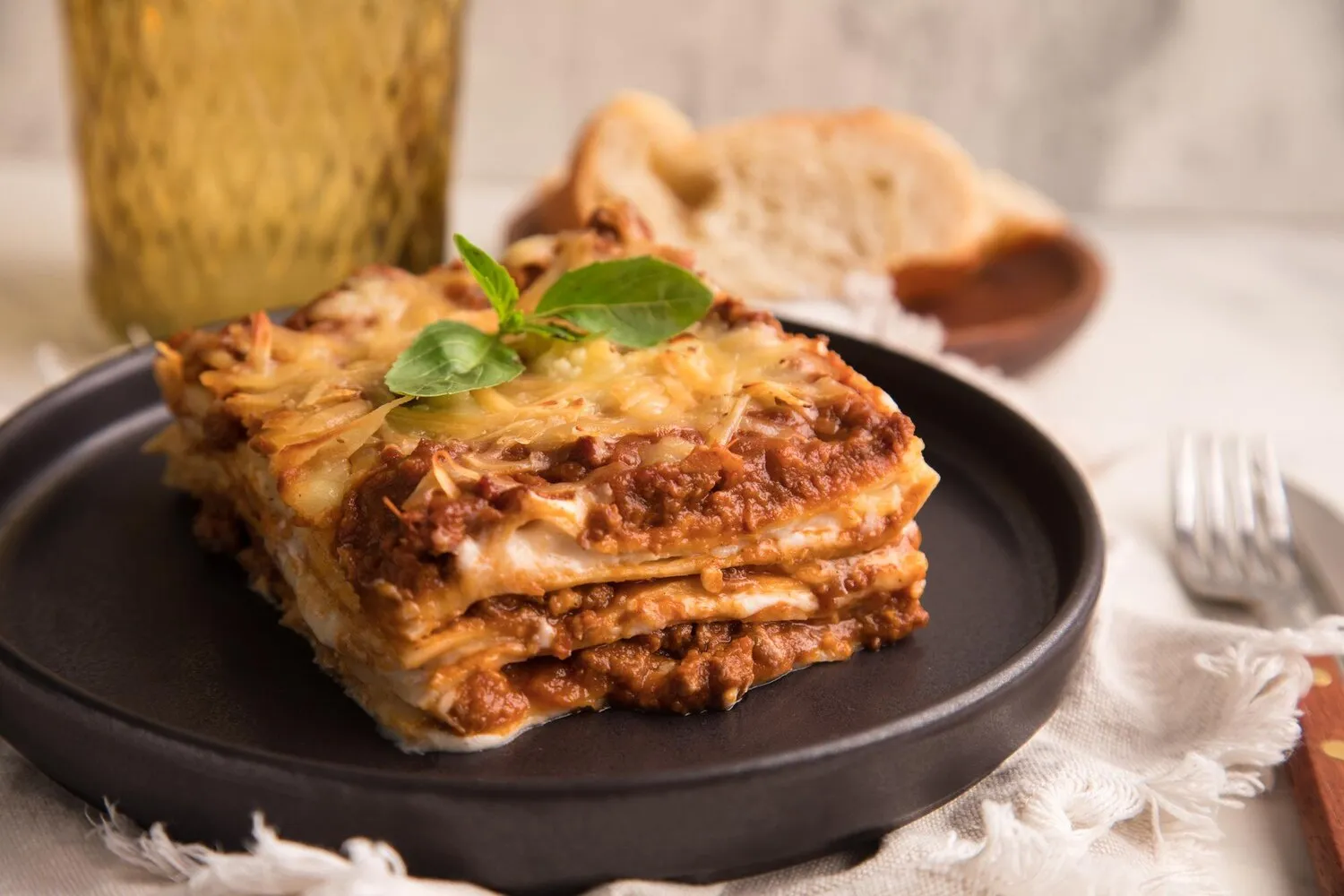

Lasagna
Lasagna is another common dish.
Valeurs Nutritionnelles
* Le % de la valeur quotidienne (VQ) vous indique la quantité d'un nutriment dans une portion d'aliment qui contribue à un régime quotidien. 2 000 calories par jour sont utilisées pour les conseils nutritionnels généraux.
Fonctionnalité Premium
Fonctionnalité Premium
Lasagna's origins are complex and debated. Some trace its roots back to ancient Greece and Rome, with dishes resembling stacked flatbreads. However, the modern understanding of lasagna, featuring layers of pasta, sauce, cheese, and meat, developed in the Naples region of Italy during the Middle Ages. Over time, regional variations emerged, solidifying lasagna as a staple of Italian cuisine.
Fonctionnalité Premium
Lasagna holds a significant place in Italian culture, often associated with family gatherings, celebrations, and home-cooked meals. It represents comfort, tradition, and the joy of sharing a delicious dish with loved ones.
Family Gatherings
Lasagna is a common dish served at family gatherings in Italy and Italian-American communities. It's a dish meant to be shared and enjoyed together.
Regional Variations
Different regions of Italy have their own unique versions of lasagna, reflecting local ingredients and culinary traditions. Neapolitan lasagna often includes meatballs and sausage, while other regions may use different types of cheese or vegetables.
Symbol of Home Cooking
Lasagna is often seen as a symbol of home cooking and the love and care that goes into preparing a meal from scratch.
Fonctionnalité Premium
Lasagna boasts a rich, savory, and comforting flavor profile. The combination of pasta, meat sauce, creamy béchamel, and melted cheese creates a harmonious blend of textures and tastes that is both hearty and satisfying.
The primary flavors in lasagna come from the meat sauce (typically a ragù, often featuring ground beef or pork), the creamy béchamel sauce (made with butter, flour, and milk), the pasta sheets, and various cheeses (often ricotta, mozzarella, and Parmesan). The meat sauce contributes a savory, umami richness, while the béchamel adds a smooth, luxurious texture and subtly sweet flavor. The cheese provides a salty, tangy, and melted delight. The herbs and spices used in the sauce, such as oregano, basil, and garlic, enhance the overall flavor complexity.
Fonctionnalité Premium
Perfect the Meat Sauce
Simmer the meat sauce for an extended period (at least 2-3 hours) to allow the flavors to meld and deepen. Adding a touch of red wine can also enhance the richness of the sauce.
Don't Overcook the Pasta
If using fresh pasta sheets, they may not need to be pre-cooked. If using dried pasta, parboil them until they are slightly undercooked, as they will continue to cook in the oven.
Layer with Precision
Start with a thin layer of sauce at the bottom of the dish to prevent sticking. Alternate layers of pasta, meat sauce, béchamel, and cheese, ensuring that each layer is evenly distributed. Finish with a generous layer of cheese on top for a golden-brown crust.
Rest Before Slicing
Allow the lasagna to rest for at least 15-20 minutes after baking before slicing. This will allow the layers to set and prevent it from falling apart.
Fonctionnalité Premium
Explorez des plats et restaurants supplémentaires de Italian
Explorer ItalianDécouvrez les meilleurs restaurants et expériences culinaires à Hofstade.
Explorer HofstadeEn savoir plus sur la culture gastronomique, la scène des restaurants et le patrimoine culinaire de Belgium.
Explorer Belgium