
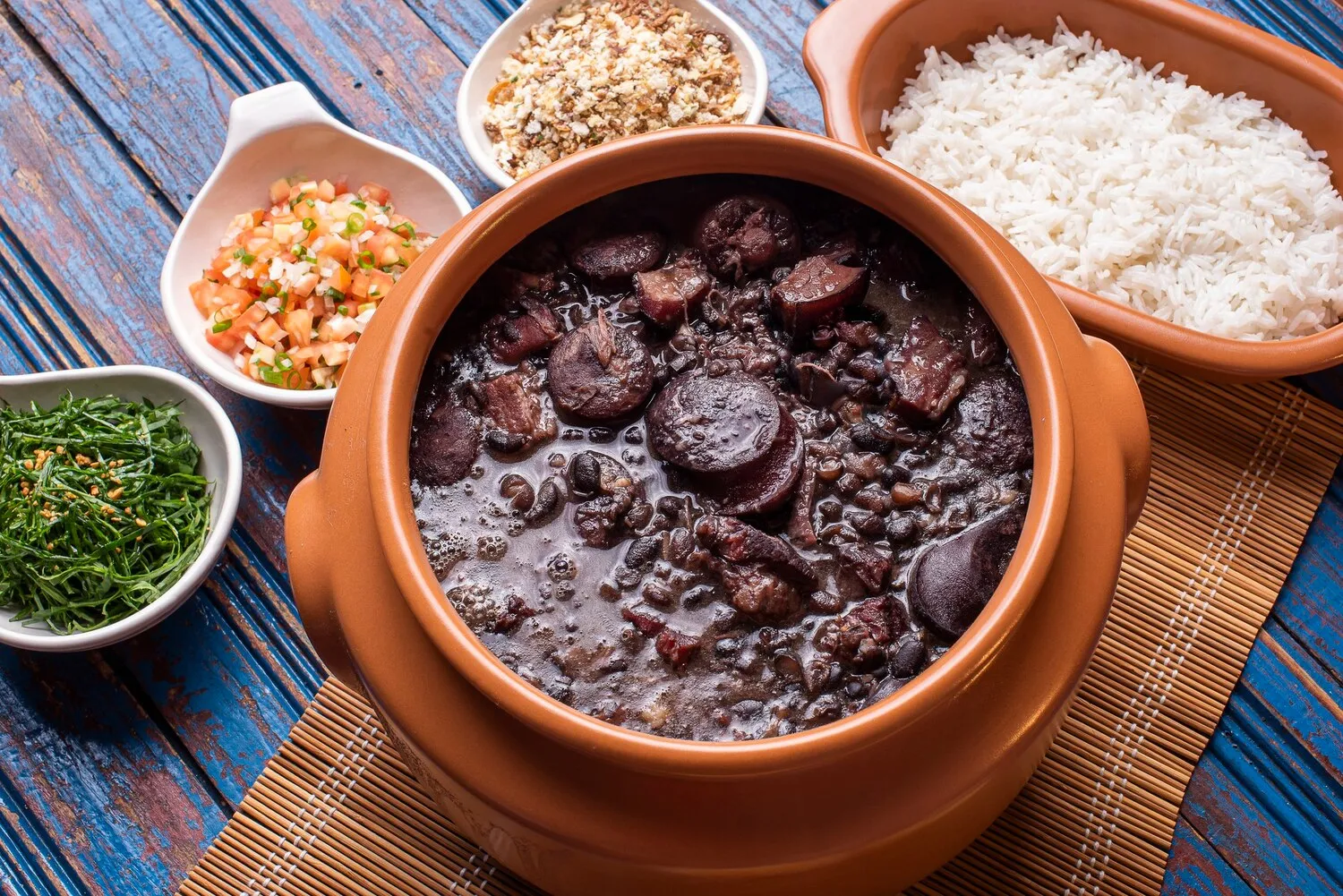

Feijoada
A traditional Brazilian black bean stew with various cuts of pork and beef.
Valeurs Nutritionnelles
* Le % de la valeur quotidienne (VQ) vous indique la quantité d'un nutriment dans une portion d'aliment qui contribue à un régime quotidien. 2 000 calories par jour sont utilisées pour les conseils nutritionnels généraux.
Fonctionnalité Premium
Barriga Cheia
Fonctionnalité Premium
The exact origins of feijoada are debated, with some believing it evolved from Roman bean stews and Portuguese meat dishes. A popular myth suggests enslaved people created it using discarded pork parts, but historians generally agree it's a more sophisticated dish, likely developed during the colonial era as a way to utilize various cuts of meat and beans, influenced by European and African culinary traditions.
Fonctionnalité Premium
Feijoada is considered Brazil's national dish and is deeply intertwined with Brazilian culture, often symbolizing gatherings, celebration, and the sharing of a communal meal.
Sunday Tradition
Feijoada is traditionally eaten on Wednesdays and Saturdays, although it is popularly enjoyed on Sundays as a special occasion meal, bringing families and friends together.
Symbol of Unity
The dish's diverse ingredients reflect Brazil's multicultural heritage, making it a symbol of unity and the blending of different cultures.
Regional Variations
While the basic concept remains the same, regional variations exist throughout Brazil, with different meats and accompaniments reflecting local ingredients and preferences. Some versions may be spicier or use different types of sausage.
Fonctionnalité Premium
Feijoada boasts a rich and savory flavor profile, dominated by the smoky and salty notes of various pork cuts and the earthy taste of black beans. It is usually served with plain white rice.
The complex flavor comes from slow-cooking black beans with a variety of smoked, salted, and fresh pork and beef. Common ingredients include dried salted pork (carne seca), smoked sausage (linguiça and paio), bacon, pork ribs, and sometimes cuts like pig's ears, trotters, and tail. The beans become creamy and absorb the flavors of the meats, resulting in a hearty and deeply satisfying taste. Often bay leaves and garlic are added to enhance the flavor profile. It is generally served with white rice, chopped collard greens (couve), orange slices, and farofa (toasted cassava flour).
Fonctionnalité Premium
Soaking the Beans
Soaking the black beans overnight (or for at least 6-8 hours) is crucial to reduce cooking time and ensure they cook evenly.
Desalting the Meats
Salted pork needs to be desalted by soaking it in several changes of water for at least 24 hours, or even longer, depending on the saltiness. Taste the meat before cooking to ensure it's not too salty.
Patience is Key
Slow cooking is essential for developing the complex flavors of feijoada. Don't rush the process; allow the beans and meats to simmer gently until tender.
Accompaniments Matter
The traditional accompaniments like rice, couve, orange slices, and farofa are essential for balancing the richness of the feijoada. Don't skip them!
Fonctionnalité Premium
Explorez des plats et restaurants supplémentaires de Stew
Explorer StewDécouvrez les meilleurs restaurants et expériences culinaires à Anápolis.
Explorer AnápolisEn savoir plus sur la culture gastronomique, la scène des restaurants et le patrimoine culinaire de Brazil.
Explorer Brazil