
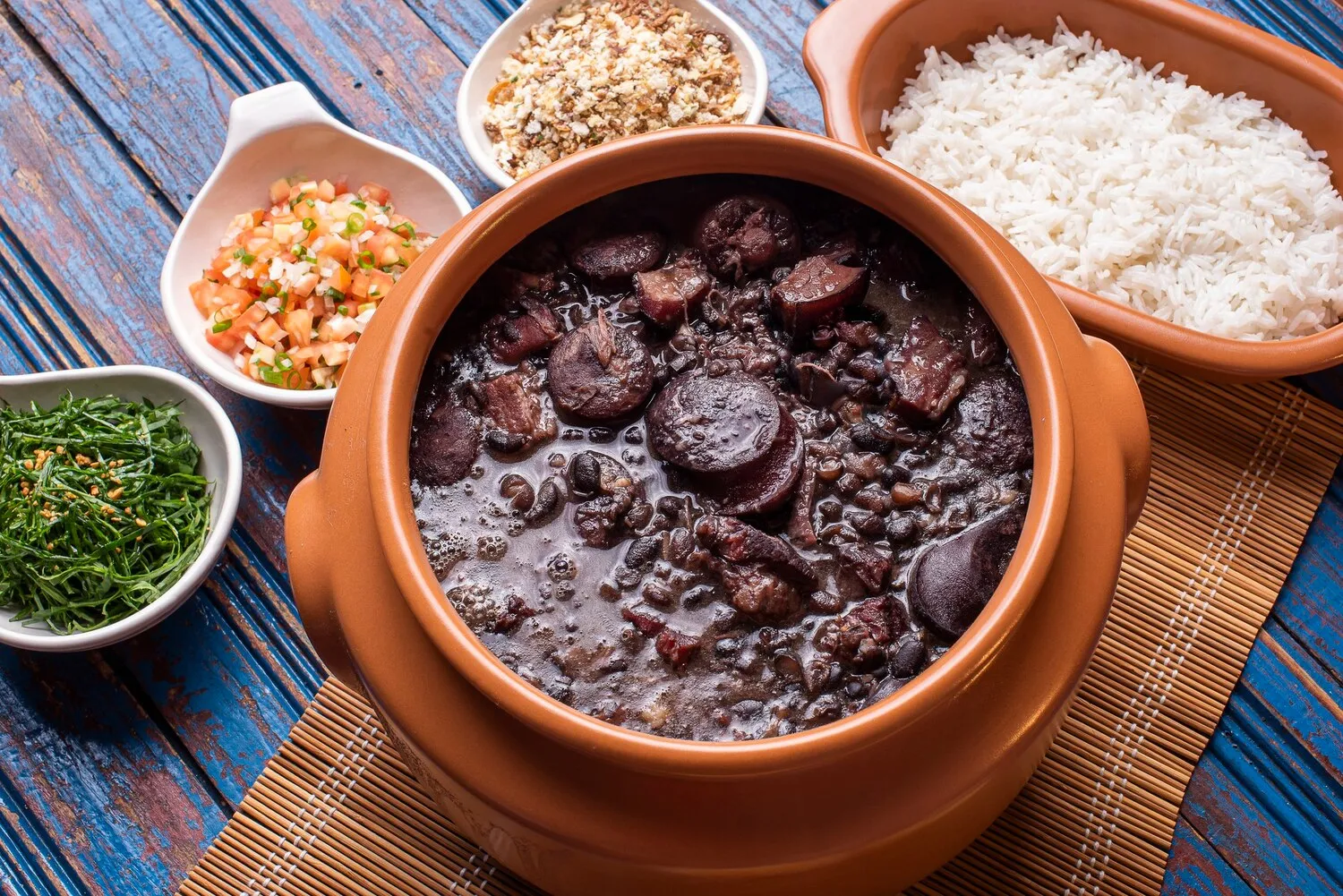

Feijoada
Brazil's national dish, a hearty stew of black beans cooked with various cuts of pork and beef. Often served with rice, farofa (toasted cassava flour), collard greens, and orange slices.
Valeurs Nutritionnelles
* Le % de la valeur quotidienne (VQ) vous indique la quantité d'un nutriment dans une portion d'aliment qui contribue à un régime quotidien. 2 000 calories par jour sont utilisées pour les conseils nutritionnels généraux.
Fonctionnalité Premium
Quintal da Maria
Aucun Plat Similaire Trouvé
Nous n'avons trouvé aucun plat similaire pour le moment. Essayez d'explorer d'autres restaurants !
Feijoada's origins are debated, with popular belief suggesting it emerged during the colonial era among enslaved Africans. They purportedly used discarded, less desirable cuts of pork and beans, transforming them into a flavorful and nourishing meal. However, some historians argue it's a European-influenced dish adapted with local ingredients.
Fonctionnalité Premium
Feijoada is more than just a meal; it's a symbol of Brazilian national identity, unity, and celebration, often enjoyed on weekends and special occasions.
Social Gathering
Feijoada is typically prepared in large quantities and shared among family and friends, fostering a sense of community and togetherness.
Weekend Tradition
It's commonly eaten on Saturdays or Sundays, offering a relaxed and leisurely dining experience.
Regional Variations
While the core ingredients remain consistent, regional variations exist in terms of the specific cuts of meat used and the accompanying side dishes.
Symbolic Representation
Some view Feijoada as a symbol of Brazilian resourcefulness, transforming humble ingredients into a culinary masterpiece.
Fonctionnalité Premium
Feijoada is characterized by its rich, savory, and smoky flavors, complemented by the earthy taste of black beans and the brightness of accompanying side dishes.
The flavor profile of feijoada is complex, arising from the combination of salted, smoked, and fresh pork cuts, like bacon, sausage (linguica and paio), ribs, and sometimes beef. The black beans are cooked slowly until tender, absorbing the flavors of the meats. Herbs like bay leaf and garlic are also essential. The sides, like rice and orange slices, balance the richness with their respective textures and acidity.
Fonctionnalité Premium
Soaking the Beans
Soak the black beans overnight (or for at least 8 hours) to reduce cooking time and improve digestibility.
Desalinating the Meats
Soak the salted and cured meats in several changes of water for 24-48 hours to remove excess salt. This prevents the feijoada from becoming overly salty.
Cooking Low and Slow
Cook the feijoada over low heat for several hours, allowing the flavors to meld and deepen. This results in a more tender and flavorful dish.
Serving Suggestions
Traditionally, feijoada is served with white rice, farofa (toasted cassava flour), collard greens (couve), and orange slices. These accompaniments provide textural contrast and balance the richness of the stew. Also add some hot sauce for a nice contrast to the flavour.
Fonctionnalité Premium
Explorez des plats et restaurants supplémentaires de Hearty Stew, Traditional
Explorer Hearty Stew, TraditionalDécouvrez les meilleurs restaurants et expériences culinaires à Cajamar.
Explorer CajamarEn savoir plus sur la culture gastronomique, la scène des restaurants et le patrimoine culinaire de Brazil.
Explorer Brazil