
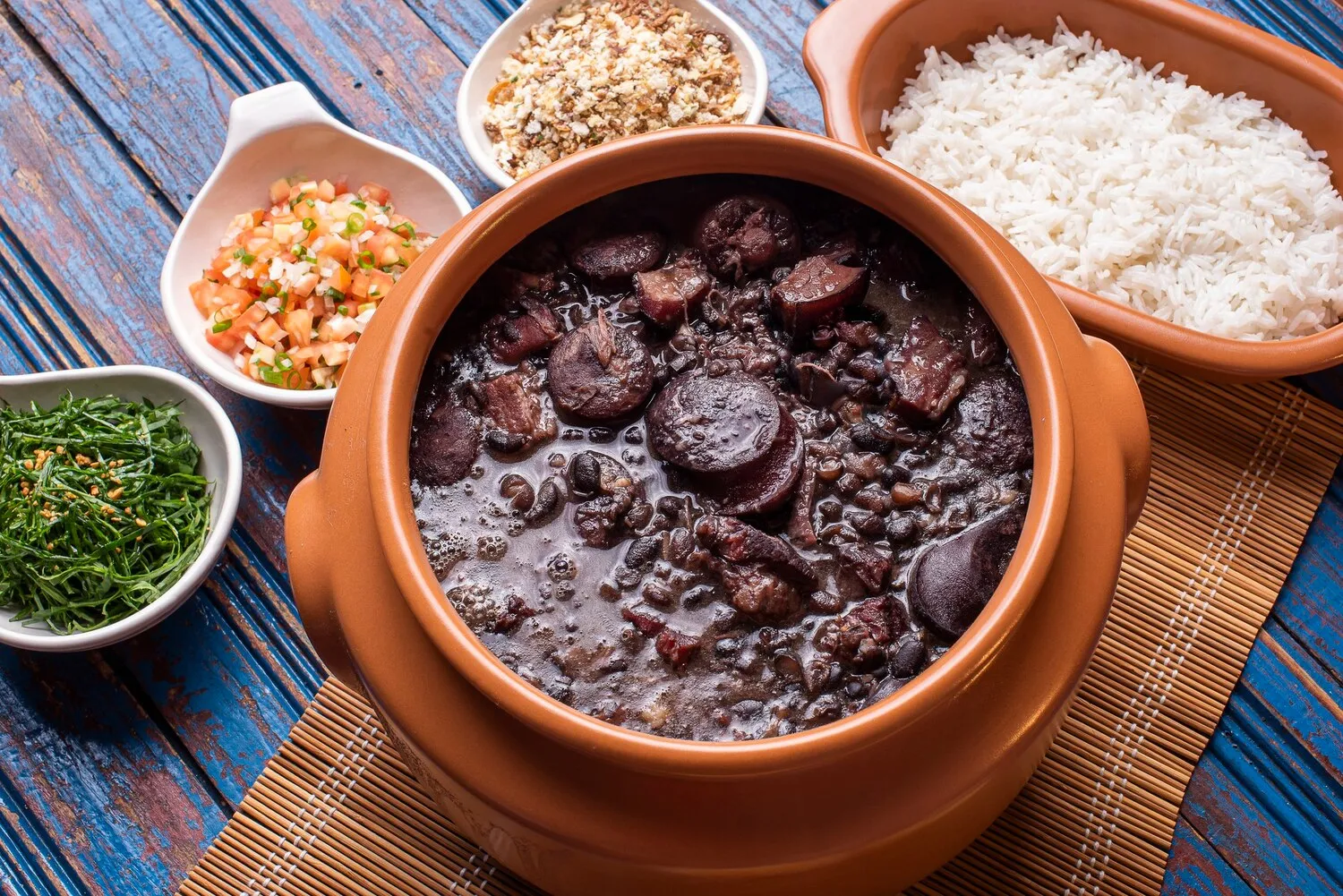

Feijoada
Brazilian black bean stew with various smoked pork and beef parts, served with rice, collard greens, farofa, and orange slices.
Valeurs Nutritionnelles
* Le % de la valeur quotidienne (VQ) vous indique la quantité d'un nutriment dans une portion d'aliment qui contribue à un régime quotidien. 2 000 calories par jour sont utilisées pour les conseils nutritionnels généraux.
Fonctionnalité Premium
Restaurante Dona Graça
Fonctionnalité Premium
Feijoada's origins are debated, with popular theories linking it to slave culture, where less desirable cuts of meat discarded by slave owners were combined with black beans. Other theories point to its origins as a Portuguese stew, evolving in Brazil with local ingredients and influences.
Fonctionnalité Premium
Feijoada is considered Brazil's national dish and a symbol of national unity. It's more than just a meal; it's a social event, often enjoyed on weekends with family and friends.
Sunday Lunch Tradition
Feijoada is commonly served on Saturdays or Sundays, a time for leisurely meals and gatherings with loved ones. It's a communal experience.
Regional Variations
While the core ingredients remain the same, regional variations exist. Some regions may add specific types of sausage or pork, or use different spices.
Accompanying Drinks
Caipirinhas, Brazil's national cocktail, or beer are popular drinks to accompany feijoada.
Brazilian Identity
Feijoada is deeply intertwined with Brazilian identity, representing the country's history, culinary creativity, and social values.
Fonctionnalité Premium
Feijoada boasts a rich, savory, and smoky flavor profile. The combination of black beans and various pork and beef cuts creates a complex, hearty, and satisfying taste.
The black beans provide an earthy base, while the smoked pork (sausages, bacon, ribs, dried meats) contribute saltiness and smokiness. Beef, often dried or salted, adds further depth and umami. Garlic, onions, and bay leaves are crucial aromatics. The stew is traditionally served with rice (mild counterpoint), collard greens (bitter element), farofa (toasted cassava flour providing texture), and orange slices (citrus to cut through richness).
Fonctionnalité Premium
Bean Soaking
Soak the black beans for at least 8 hours, or preferably overnight, to reduce cooking time and improve digestibility. Discard the soaking water.
Desalting Meats
Soak the dried or salted meats in water for 24-48 hours, changing the water several times, to remove excess salt. This is crucial for balancing the flavors of the dish.
Low and Slow Cooking
Cook the feijoada slowly over low heat for several hours to allow the flavors to meld and the meats to become tender. A slow cooker or Dutch oven works well.
Fat Removal
Skim off any excess fat that rises to the surface during cooking for a lighter and healthier dish.
Serving Order
Serve the feijoada in separate bowls or platters, allowing diners to choose their preferred cuts of meat and beans. The accompaniments (rice, collard greens, farofa, orange slices) are essential for balancing the richness.
Fonctionnalité Premium
Explorez des plats et restaurants supplémentaires de Brazilian
Explorer BrazilianDécouvrez les meilleurs restaurants et expériences culinaires à Cajamar.
Explorer CajamarEn savoir plus sur la culture gastronomique, la scène des restaurants et le patrimoine culinaire de Brazil.
Explorer Brazil