
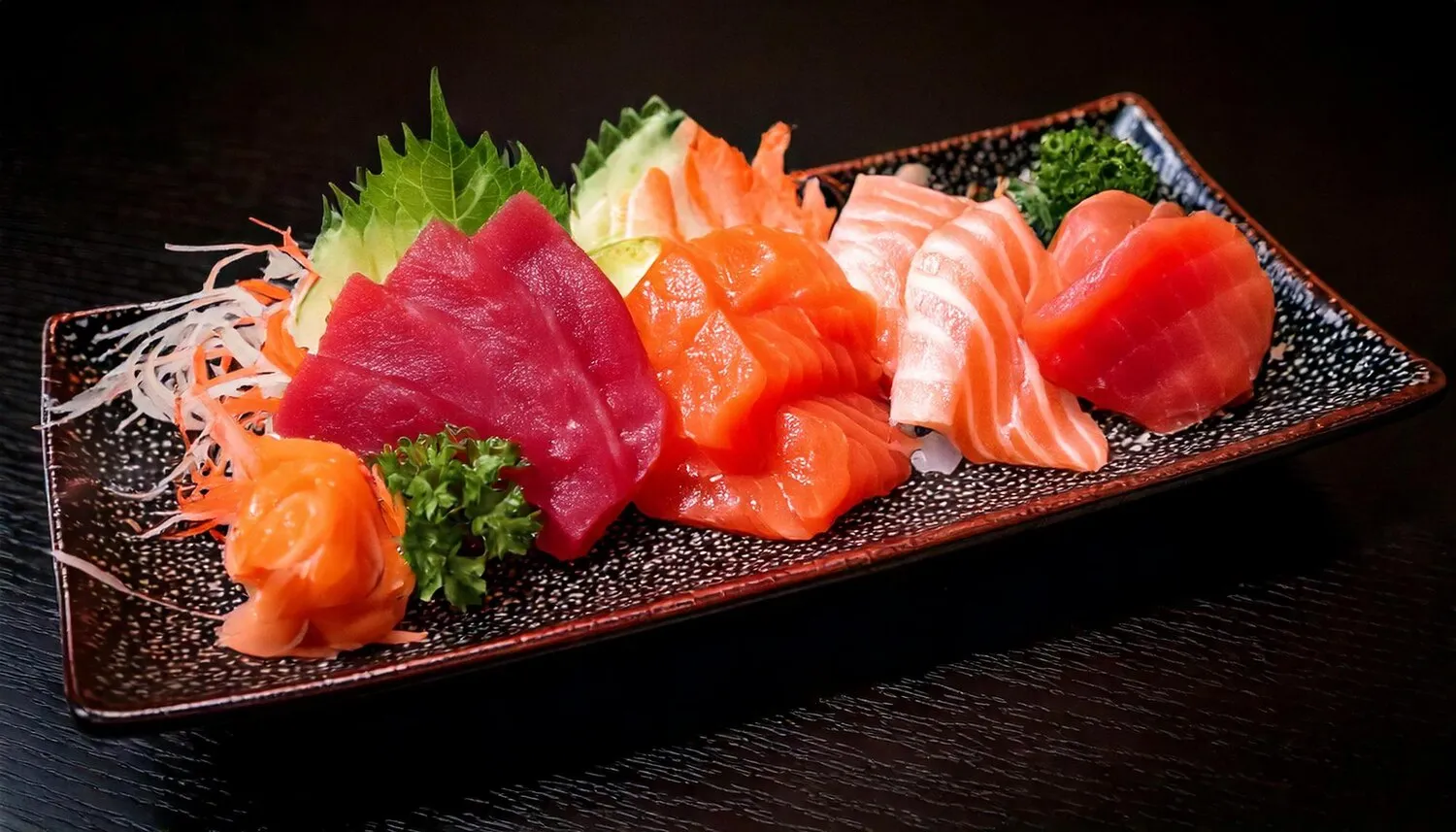

Sashimi
Slices of fresh fish.
Valeurs Nutritionnelles
* Le % de la valeur quotidienne (VQ) vous indique la quantité d'un nutriment dans une portion d'aliment qui contribue à un régime quotidien. 2 000 calories par jour sont utilisées pour les conseils nutritionnels généraux.
Fonctionnalité Premium
Fonctionnalité Premium
Sashimi's origins can be traced back to the Muromachi period (1336–1573) in Japan. Before refrigeration, it was a practical way to determine the freshness of fish, and skilled chefs developed techniques to prepare and present it artfully. The name 'sashimi' itself, meaning 'pierced body,' may refer to the practice of identifying fish by sticking its fin or skin to the slices.
Fonctionnalité Premium
Sashimi is deeply intertwined with Japanese culture, representing respect for nature, meticulous preparation, and artistic presentation. It is often served on special occasions and reflects the seasons.
Presentation
The arrangement of sashimi is a vital part of the dining experience. Chefs consider color, texture, and shape to create visually appealing presentations, often using garnishes like seaweed, radish, and edible flowers to enhance the beauty of the dish.
Respect for Ingredients
Sashimi highlights the importance of using the freshest, highest-quality ingredients. Selecting the right fish, preparing it with precision, and serving it with care demonstrates respect for the natural world and the art of cuisine.
Seasonal Eating
Certain types of sashimi are preferred during specific seasons, reflecting the Japanese emphasis on eating what is fresh and locally available. For example, fatty tuna is often enjoyed during the winter months.
Dining Etiquette
Proper etiquette includes using chopsticks to pick up the sashimi, dipping it lightly in soy sauce (not saturating it), and placing a small amount of wasabi directly on the fish rather than mixing it into the soy sauce (this dulls the wasabi flavor). It is customary to eat ginger between different types of fish to cleanse the palate.
Fonctionnalité Premium
Sashimi offers a delicate and clean taste, emphasizing the natural flavors of the fish. It's a celebration of freshness and quality, enhanced by subtle accompanying condiments.
The primary flavor is that of the specific fish used, ranging from the buttery richness of tuna belly (otoro) to the mild sweetness of sea bream (tai) or the briny flavor of scallop (hotate). Soy sauce provides umami and saltiness, wasabi adds a pungent kick, and ginger offers a refreshing cleanse between bites. Other possible flavors can include citrus notes.
Fonctionnalité Premium
Start with Lighter Fish
Begin with milder-flavored fish, such as sea bream or flounder, and gradually move towards richer, fattier options like tuna. This prevents overwhelming your palate.
Freshness is Key
Ensure the sashimi is impeccably fresh. The fish should be firm, translucent, and have a clean, ocean-like smell. Avoid sashimi that looks dull or smells fishy.
Use Soy Sauce Sparingly
Dip the sashimi lightly into soy sauce; avoid saturating it, as this can mask the delicate flavor of the fish. High-quality soy sauce can enhance the overall experience.
Pair with Sake or Tea
Sashimi pairs well with dry sake or green tea, which complements the flavors of the fish and cleanses the palate.
Proper Wasabi Use
Use wasabi sparingly. It is best placed directly on the sashimi slice, not mixed into the soy sauce.
Fonctionnalité Premium
Explorez des plats et restaurants supplémentaires de Sashimi
Explorer SashimiDécouvrez les meilleurs restaurants et expériences culinaires à Campinas.
Explorer CampinasEn savoir plus sur la culture gastronomique, la scène des restaurants et le patrimoine culinaire de Brazil.
Explorer Brazil