
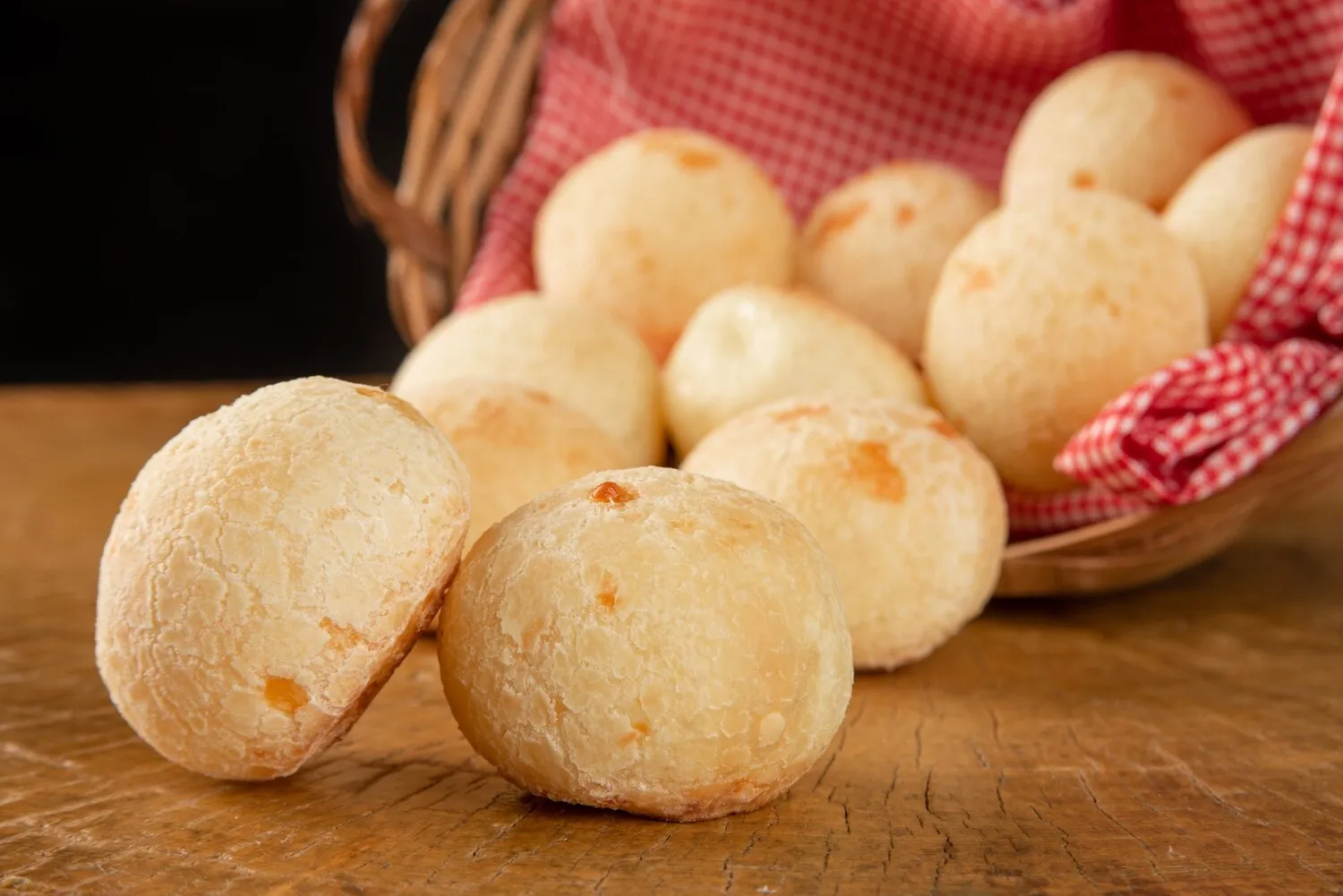

Pão de Queijo
Traditional Brazilian cheese bread.
Valeurs Nutritionnelles
* Le % de la valeur quotidienne (VQ) vous indique la quantité d'un nutriment dans une portion d'aliment qui contribue à un régime quotidien. 2 000 calories par jour sont utilisées pour les conseils nutritionnels généraux.
Fonctionnalité Premium
Quiero Café
Fonctionnalité Premium
Pão de Queijo's exact origins are debated, but it likely emerged in the state of Minas Gerais during the 18th century. The availability of abundant cheese and cassava starch (polvilho) from indigenous traditions, combined with the resourcefulness of enslaved Africans and Portuguese culinary influences, contributed to its creation. Some speculate that it arose from resourceful cooks seeking to use leftover cassava starch, which was a less desirable ingredient than wheat flour. The lack of wheat flour also contributed to the dish's rise.
Fonctionnalité Premium
Pão de Queijo is deeply embedded in Brazilian culture, particularly in Minas Gerais, where it is considered a culinary symbol and a staple food.
Regional Identity
In Minas Gerais, Pão de Queijo is more than just food; it represents the region's history, traditions, and hospitality. It is often served as a welcoming gesture to guests.
Everyday Staple
Pão de Queijo is enjoyed throughout the day, from breakfast to afternoon snacks. It's readily available in bakeries, cafes, supermarkets, and even street vendors.
Social Gathering
Pão de Queijo is frequently present at social gatherings, family meals, and celebrations. It's a dish that brings people together and fosters a sense of community.
Modern Variations
While traditional recipes remain popular, modern variations of Pão de Queijo exist, incorporating different cheeses, herbs, and fillings to cater to diverse tastes.
Fonctionnalité Premium
Pão de Queijo offers a savory, cheesy, and slightly tangy flavor profile with a unique chewy texture.
The predominant flavor comes from the cheese, traditionally Minas cheese, which contributes a mild, slightly acidic, and milky taste. Polvilho (cassava starch) provides a subtle earthy flavor and contributes significantly to the bread's chewy, airy texture. The eggs add richness and binding, while oil or butter contributes to a tender crumb. The overall flavor profile is savory and comforting, making it a popular snack or breakfast item.
Fonctionnalité Premium
Type of Polvilho
Use both sweet (polvilho doce) and sour (polvilho azedo) cassava starch for the best results. Sour polvilho contributes to the characteristic chewy texture and tangy flavor.
Cheese Quality
Opt for high-quality Minas cheese if available. Other cheeses like Parmesan, mozzarella, or provolone can be used as substitutes or in combination for varying flavor profiles.
Scalding the Polvilho
Scalding the polvilho with hot liquid (water or milk) is crucial for gelatinizing the starch, which results in the desired chewy texture. Let the mixture cool slightly before adding the eggs to prevent them from cooking.
Mixing Technique
Mix the dough thoroughly until it becomes smooth and elastic. A stand mixer or hand mixer is recommended for this process. Don't overmix, or the Pão de Queijo might become tough.
Baking Temperature
Bake at a high temperature (around 350-400°F or 175-200°C) to achieve a crispy exterior and a soft, airy interior. The baking time may vary depending on the oven and size of the Pão de Queijo.
Fonctionnalité Premium
Explorez des plats et restaurants supplémentaires de Handy food
Explorer Handy foodDécouvrez les meilleurs restaurants et expériences culinaires à Caxias do Sul.
Explorer Caxias do SulEn savoir plus sur la culture gastronomique, la scène des restaurants et le patrimoine culinaire de Brazil.
Explorer Brazil