
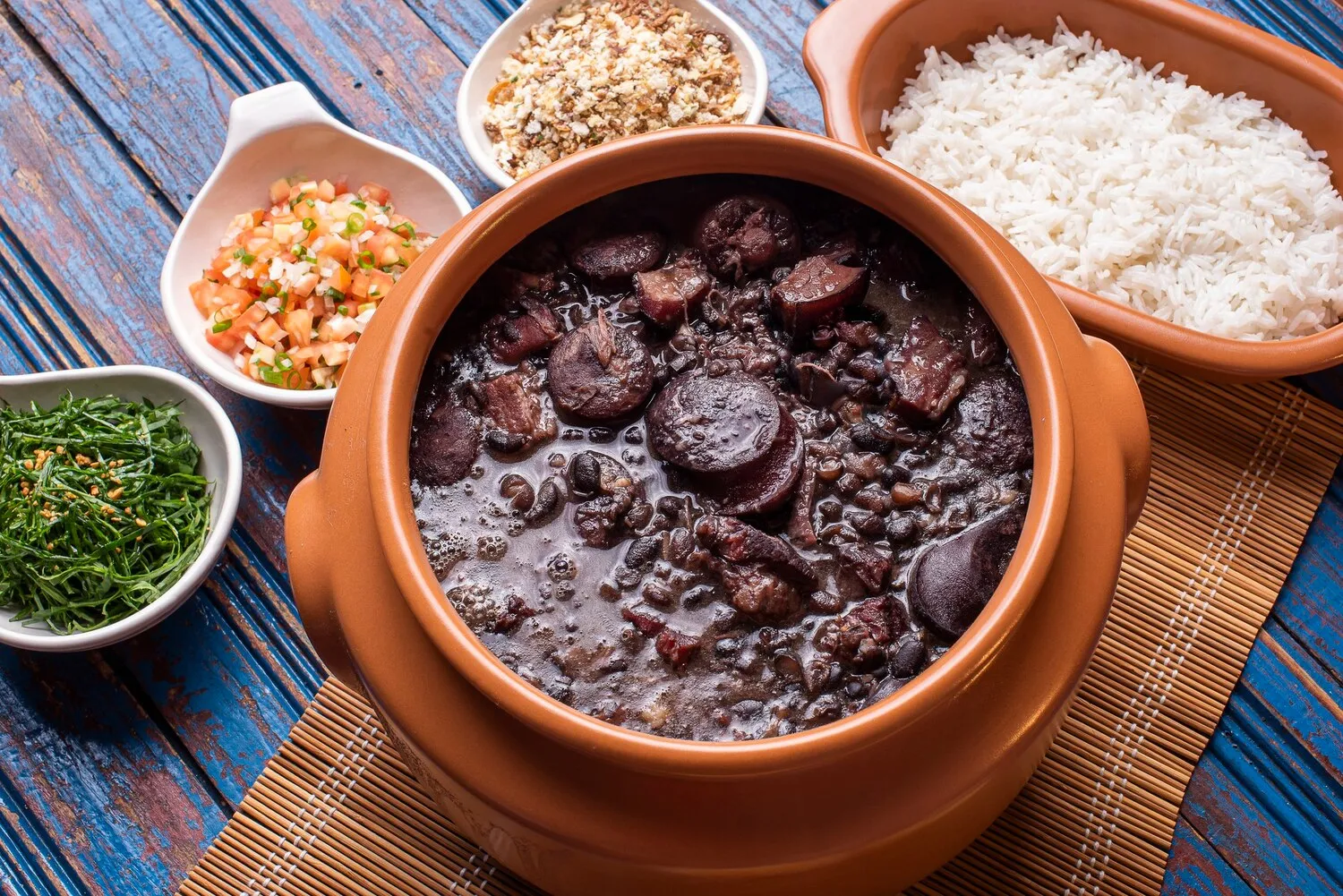

Feijoada
Traditional Brazilian black bean stew with various cuts of pork and beef, served with rice, collard greens, farofa, and orange slices.
Valeurs Nutritionnelles
* Le % de la valeur quotidienne (VQ) vous indique la quantité d'un nutriment dans une portion d'aliment qui contribue à un régime quotidien. 2 000 calories par jour sont utilisées pour les conseils nutritionnels généraux.
Fonctionnalité Premium
Restaurante São Francisco
Fonctionnalité Premium
The origins of feijoada are debated, with some claiming it originated as a peasant dish using discarded parts of pork brought by enslaved Africans, while others believe it evolved from Portuguese stews. Regardless, it has become a symbol of Brazilian national identity.
Fonctionnalité Premium
Feijoada is more than just a meal in Brazil; it's a social event, a symbol of national pride, and a celebration of Brazilian culture. It is typically enjoyed on weekends with family and friends, fostering a sense of community and shared experience.
Social Gathering
Feijoada is typically served at large gatherings, reinforcing social bonds and creating a festive atmosphere. The preparation and consumption of feijoada are often shared experiences, strengthening community ties.
National Dish
Feijoada is considered Brazil's national dish and is a symbol of Brazilian identity and culinary heritage. It represents the country's diverse cultural influences and its ability to transform simple ingredients into a culinary masterpiece.
Regional Variations
While the core ingredients remain consistent, feijoada variations exist across different regions of Brazil, reflecting local tastes and available ingredients. This highlights the dish's adaptability and its ability to reflect regional identities.
Fonctionnalité Premium
Feijoada is a hearty and savory stew, characterized by its rich, smoky flavors and complex blend of pork and beef. The black beans provide a creamy base, while the various meats contribute a depth of flavor that is both comforting and satisfying.
The primary flavor profile is deeply savory and smoky, derived from the combination of black beans, salted and smoked pork (such as bacon, sausage, ribs, and dried meat), and often beef. Garlic, onions, and bay leaves are typically used as aromatics, adding layers of complexity. The accompanying rice and collard greens provide a refreshing contrast, while farofa adds a textural element. Orange slices offer a citrusy counterpoint to the richness of the stew.
Fonctionnalité Premium
Soaking the Beans
Soaking the black beans overnight significantly reduces cooking time and helps to create a creamier texture.
Desalting the Meat
Salted meats must be thoroughly desalted before cooking to prevent the dish from becoming overly salty. This involves soaking the meats in multiple changes of water.
Cooking the Meats Separately
Some cooks prefer to cook the different cuts of pork and beef separately and add them to the beans at different stages to control the cooking time and preserve the individual flavors.
Serving Suggestions
Traditionally, feijoada is served with white rice, collard greens (couve), farofa (toasted cassava flour), orange slices, and often a spicy pepper sauce (molho de pimenta) or hot sauce.
Fonctionnalité Premium
Explorez des plats et restaurants supplémentaires de Classic Brazilian
Explorer Classic BrazilianDécouvrez les meilleurs restaurants et expériences culinaires à Curitiba.
Explorer CuritibaEn savoir plus sur la culture gastronomique, la scène des restaurants et le patrimoine culinaire de Brazil.
Explorer Brazil