
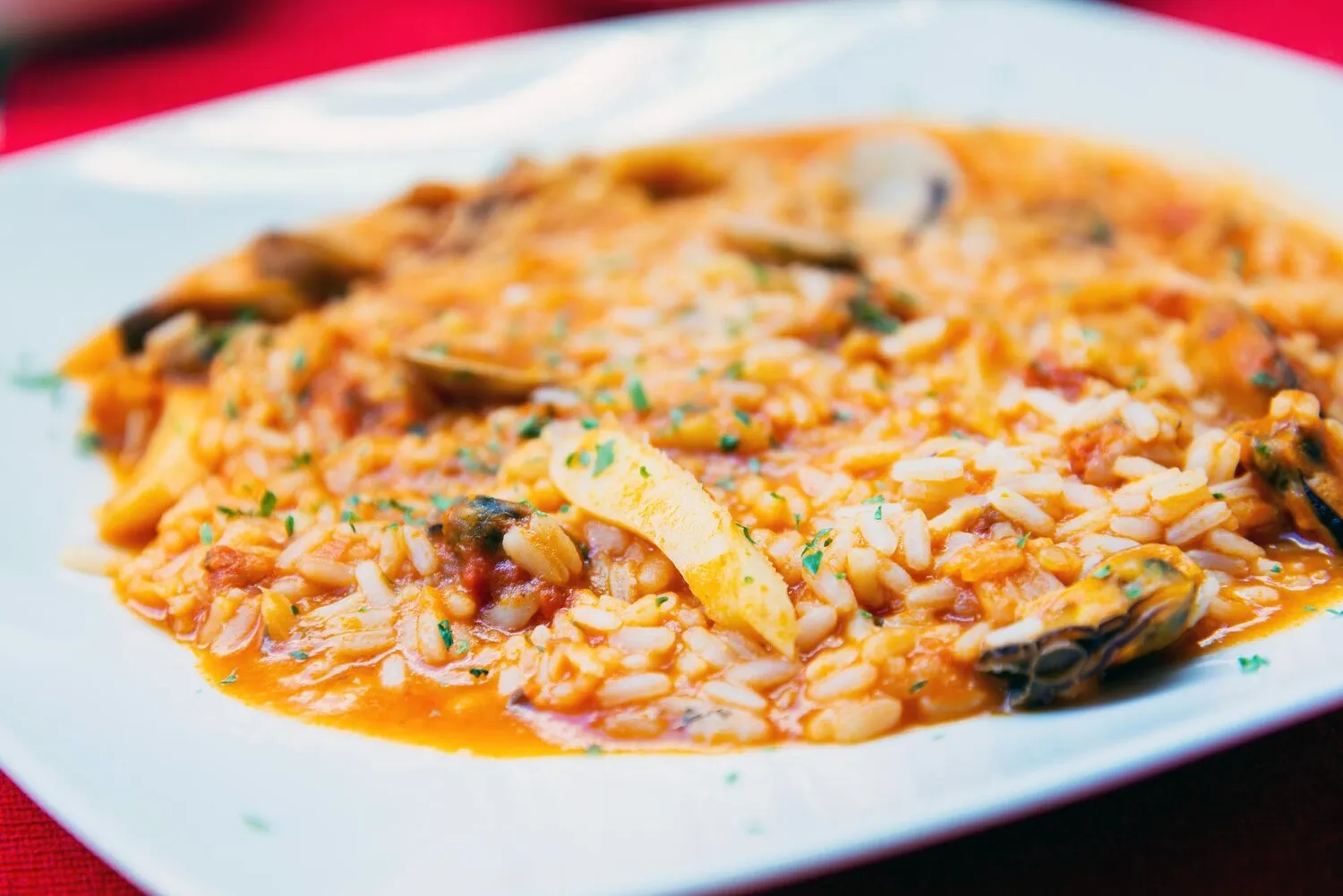

Risoto de Frutos do Mar
Seafood risotto.
Valeurs Nutritionnelles
* Le % de la valeur quotidienne (VQ) vous indique la quantité d'un nutriment dans une portion d'aliment qui contribue à un régime quotidien. 2 000 calories par jour sont utilisées pour les conseils nutritionnels généraux.
Fonctionnalité Premium
Balcone Restô - Meireles
Fonctionnalité Premium
Risotto's origins can be traced back to Northern Italy, particularly the Lombardy region. Rice was introduced to Italy through Arab traders in the Middle Ages. The dish evolved as Italian cooks experimented with rice, saffron (which led to the iconic Risotto alla Milanese), and other local ingredients. The incorporation of seafood is a natural progression, given Italy's extensive coastline and maritime traditions.
Fonctionnalité Premium
Risotto de Frutos do Mar is often associated with celebrations and special occasions, particularly along coastal regions. It embodies the Italian appreciation for fresh, seasonal ingredients and the art of simple yet elegant cooking. It is also a popular dish in restaurants and is often seen as a sophisticated and comforting meal.
Regional Variations
Different coastal regions of Italy have their own versions of Seafood Risotto, reflecting the locally available seafood. For example, a Venetian version might feature more lagoon-specific seafood, while a Sicilian version might incorporate more tomatoes and Mediterranean herbs.
Family Gatherings
Sharing a large pot of Seafood Risotto is a common tradition during family gatherings and holidays. The communal nature of the dish reflects the importance of food and family in Italian culture.
Sustainable Seafood
Increasingly, there's a focus on using sustainably sourced seafood in Risotto de Frutos do Mar, reflecting a growing awareness of environmental issues and responsible dining practices.
Fonctionnalité Premium
Seafood Risotto offers a harmonious blend of creamy rice, the delicate sweetness of various seafood elements, and aromatic herbs, often with a hint of acidity from white wine or lemon.
The primary flavors come from the seafood itself, which can include shrimp (gamberi), mussels (cozze), clams (vongole), squid (calamari), scallops (capesante), and sometimes even lobster or crab. These impart a briny, slightly sweet, and ocean-fresh taste. The risotto base, typically Arborio or Carnaroli rice, provides a creamy, starchy texture. White wine adds acidity and depth, while garlic, onion, and parsley contribute aromatic complexity. Some recipes incorporate tomato, adding a touch of sweetness and richness. A squeeze of lemon juice at the end brightens the flavors and balances the richness.
Fonctionnalité Premium
Rice Selection
Use Arborio or Carnaroli rice for the best creamy texture. These varieties have a higher starch content than regular long-grain rice, which is essential for a good risotto.
Broth Quality
Use a high-quality seafood or vegetable broth. Homemade is best, but a good store-bought broth is acceptable. The broth should be kept warm throughout the cooking process.
Gentle Stirring
Stir the rice frequently but gently. This helps release the starch and creates the creamy texture, but avoid over-stirring, which can make the risotto gummy.
Seafood Timing
Add the seafood towards the end of the cooking process to prevent it from becoming overcooked and rubbery. The specific timing will vary depending on the type of seafood being used. Mussels and clams can be added earlier than shrimp and calamari.
Final Touches
Finish the risotto with a knob of butter, a sprinkle of fresh parsley, and a squeeze of lemon juice to brighten the flavors and add richness.
Fonctionnalité Premium
Explorez des plats et restaurants supplémentaires de Risotto
Explorer RisottoDécouvrez les meilleurs restaurants et expériences culinaires à Fortaleza.
Explorer FortalezaEn savoir plus sur la culture gastronomique, la scène des restaurants et le patrimoine culinaire de Brazil.
Explorer Brazil