
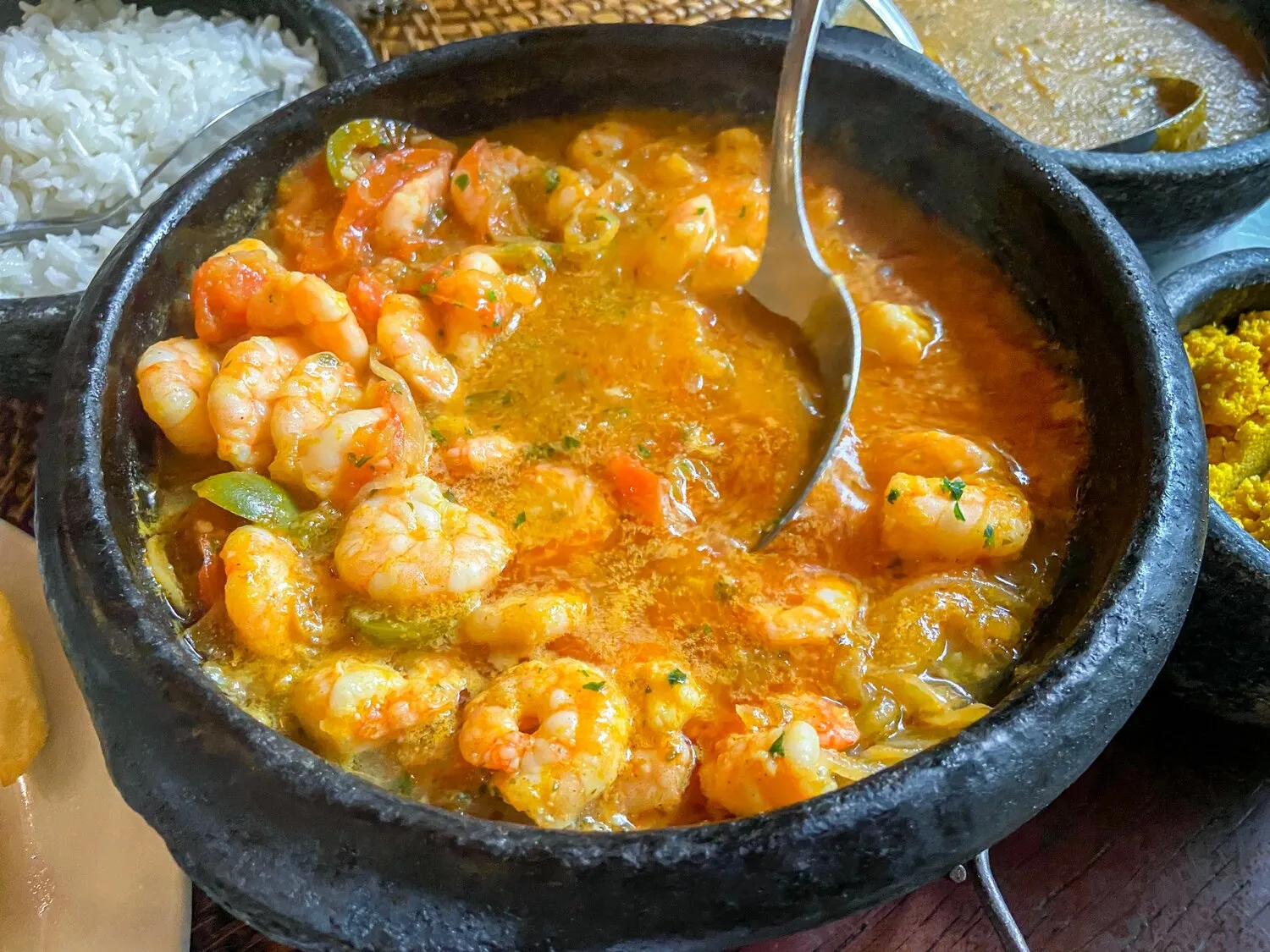

Moqueca de Camarão
Shrimp moqueca, a flavorful Brazilian seafood stew cooked in a clay pot with coconut milk, tomatoes, peppers, and onions. A popular dish.
Valeurs Nutritionnelles
* Le % de la valeur quotidienne (VQ) vous indique la quantité d'un nutriment dans une portion d'aliment qui contribue à un régime quotidien. 2 000 calories par jour sont utilisées pour les conseils nutritionnels généraux.
Fonctionnalité Premium
Fonctionnalité Premium
Moqueca's origins are rooted in the indigenous cooking traditions of Brazil, specifically from the coastal regions. It was then influenced by African ingredients and techniques brought by enslaved people, as well as European elements introduced by the Portuguese. This culinary fusion resulted in the flavorful and distinctive dish we know today.
Fonctionnalité Premium
Moqueca de Camarão is more than just a dish; it's a symbol of Brazilian coastal culture, particularly in the states of Bahia and Espírito Santo. It represents the blending of indigenous, African, and European traditions and is often enjoyed during celebrations and family gatherings.
Regional Variations
While Moqueca is popular across Brazil, Bahia and Espírito Santo are known for their distinct versions. Baiana moqueca typically uses dendê oil (palm oil) and coconut milk, while Capixaba moqueca generally avoids dendê oil and relies more on annatto (urucum) for color. The debate between these versions is a friendly point of regional pride.
Communal Eating
Moqueca is often served in the clay pot it's cooked in, placed in the center of the table for everyone to share. This communal style of eating emphasizes togetherness and celebration.
Accompanying Dishes
Moqueca is traditionally served with white rice and pirão (a creamy manioc flour porridge cooked with the moqueca broth). Often, farofa (toasted cassava flour) is also served as an additional textural element and source of carbohydrate. It is very common to pair the dish with a good caipirinha.
Fonctionnalité Premium
Moqueca de Camarão boasts a vibrant and complex flavor profile, characterized by the sweetness of coconut milk, the acidity of tomatoes, the aromatic presence of peppers and onions, and the briny taste of fresh shrimp.
The sweetness of coconut milk provides a creamy richness that balances the acidity of the tomatoes and lime juice. Onions, garlic, and bell peppers introduce savory and slightly sweet notes, while the shrimp contributes a delicate seafood flavor. Cilantro or parsley adds a fresh, herbaceous element. The use of palm oil (dendê oil) in some versions provides a distinct, slightly earthy flavor and characteristic orange color. The overall taste is savory, subtly sweet, and slightly tangy, with a comforting richness.
Fonctionnalité Premium
Freshness is Key
Use the freshest shrimp and other seafood available for the best flavor. Look for shrimp with a firm texture and a fresh, ocean-like smell.
Don't Overcook the Shrimp
Shrimp cooks quickly. Add it towards the end of the cooking process to prevent it from becoming rubbery. They should be pink and opaque when done.
Use a Clay Pot (if possible)
Cooking moqueca in a traditional clay pot imparts a unique earthy flavor and helps to distribute heat evenly. If a clay pot is unavailable, a heavy-bottomed pot is a good substitute.
Balance the Flavors
Taste and adjust the seasoning as you go. Ensure a balance between the sweetness of the coconut milk, the acidity of the tomatoes, and the savory elements of the onions, peppers, and garlic.
Fonctionnalité Premium
Explorez des plats et restaurants supplémentaires de Stew
Explorer StewDécouvrez les meilleurs restaurants et expériences culinaires à Guarujá.
Explorer GuarujáEn savoir plus sur la culture gastronomique, la scène des restaurants et le patrimoine culinaire de Brazil.
Explorer Brazil