
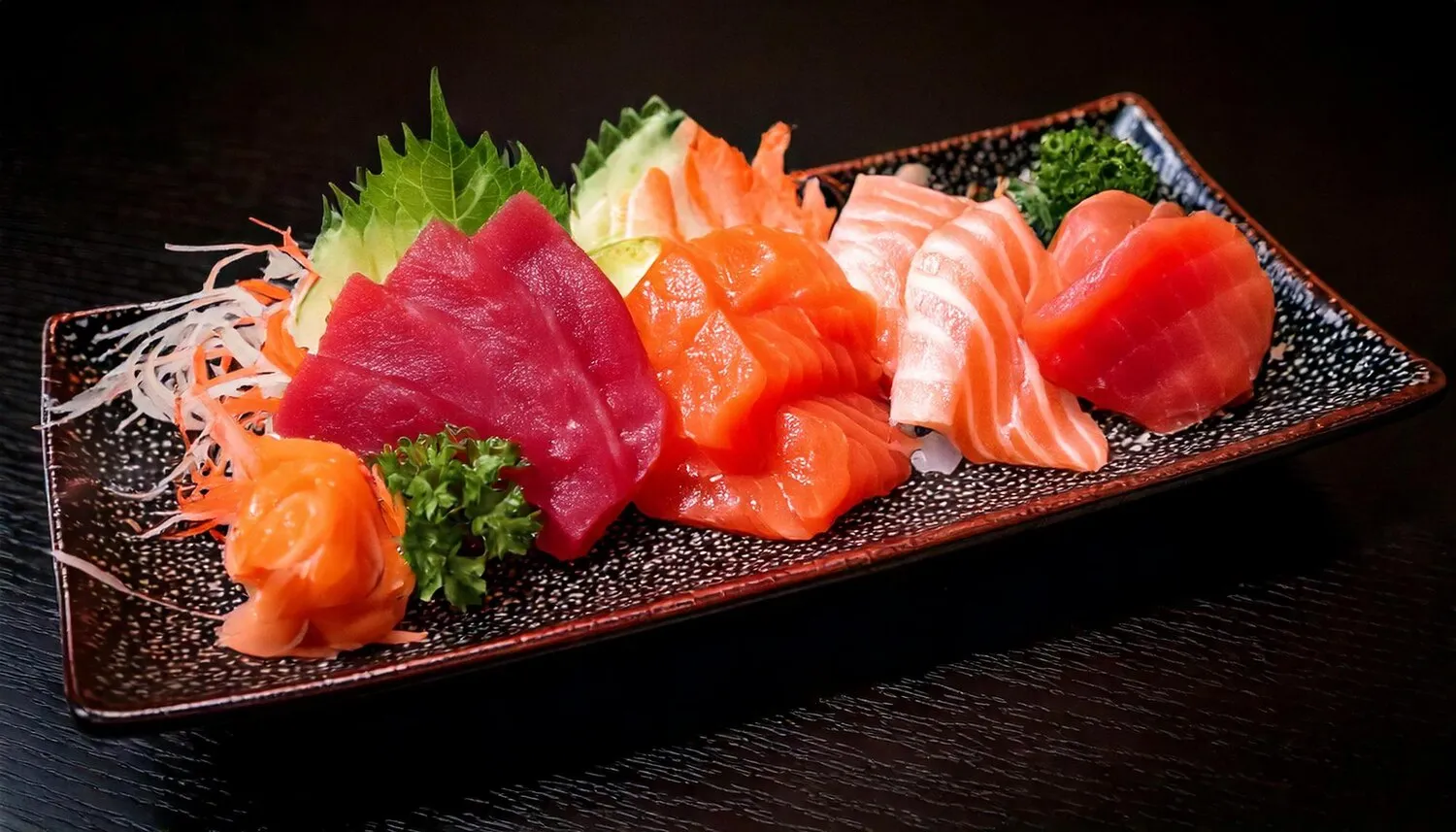

Sashimi
Thinly sliced raw fish, typically salmon, tuna, or white fish.
Valeurs Nutritionnelles
* Le % de la valeur quotidienne (VQ) vous indique la quantité d'un nutriment dans une portion d'aliment qui contribue à un régime quotidien. 2 000 calories par jour sont utilisées pour les conseils nutritionnels généraux.
Fonctionnalité Premium
Fonctionnalité Premium
Sashimi's origins can be traced back to ancient Japan, developing from the need to consume fresh seafood quickly. Initially, it was a method of preserving fish using ice and salt, evolving into a culinary art form focusing on the freshness and quality of the ingredients. Its simple preparation allowed for the pure flavors of the fish to be appreciated, cementing its place in Japanese cuisine.
Fonctionnalité Premium
Sashimi is deeply embedded in Japanese culture, representing simplicity, respect for nature, and a focus on quality. It is often served on special occasions and is a symbol of refined culinary skill and appreciation for the sea's bounty.
Presentation
The presentation of sashimi is considered an art form. The slices are carefully arranged to highlight the color and texture of the fish, often accompanied by edible garnishes like shiso leaves, daikon radish, and seaweed. The aesthetic appeal is just as important as the taste.
Respect for Ingredients
Sashimi embodies the Japanese respect for natural ingredients. The fish must be incredibly fresh, and skilled chefs take great care to prepare it in a way that preserves its natural flavors and textures. Minimizing waste is also a consideration.
Seasonality
Just as with other Japanese dishes, seasonality plays a crucial role in sashimi. Certain types of fish are considered to be at their peak flavor during specific times of the year, reflecting a connection to the natural cycles of the ocean.
Eating Etiquette
There are specific etiquette guidelines to observe when eating sashimi. Typically, one should only use a small amount of soy sauce, and avoid mixing the wasabi directly into the soy sauce dish. These customs are designed to respect the chef's preparation and the delicate flavors of the fish.
Fonctionnalité Premium
The primary flavor of sashimi is the clean, pure taste of the fresh fish itself. Subtle differences exist between types of fish, ranging from buttery richness to lean, delicate sweetness. The condiments enhance rather than mask these flavors.
The flavor profile of sashimi depends heavily on the type of fish used. Salmon offers a rich, fatty, and slightly sweet taste. Tuna can vary from the mild and slightly acidic flavor of akami (lean tuna) to the intensely rich and buttery flavor of otoro (fatty tuna). White fish, like sea bream (tai) or flounder (hirame), offer delicate, clean, and slightly sweet flavors. Wasabi provides a sharp, pungent kick, while soy sauce adds umami and saltiness. Pickled ginger (gari) cleanses the palate between bites.
Fonctionnalité Premium
Freshness is Key
The most important factor in good sashimi is the freshness of the fish. Look for a reputable source that handles fish with care and prioritizes quality.
Don't Overdo the Soy Sauce
Use soy sauce sparingly to enhance, not overpower, the flavor of the fish. A quick dip is all that's needed.
Wasabi Usage
Apply a small amount of wasabi directly to the fish rather than mixing it into the soy sauce. This helps to preserve the flavor and aroma of both.
Eat in Order
Traditionally, it's recommended to eat sashimi from the leanest to the fattiest cuts of fish. This allows you to appreciate the subtle differences in flavor and texture.
Pairing
Sashimi is often paired with sake or light white wine, which complements the delicate flavors of the fish without overpowering them. Green tea is also a suitable accompaniment.
Fonctionnalité Premium
Explorez des plats et restaurants supplémentaires de Sashimi
Explorer SashimiDécouvrez les meilleurs restaurants et expériences culinaires à Guarujá.
Explorer GuarujáEn savoir plus sur la culture gastronomique, la scène des restaurants et le patrimoine culinaire de Brazil.
Explorer Brazil