
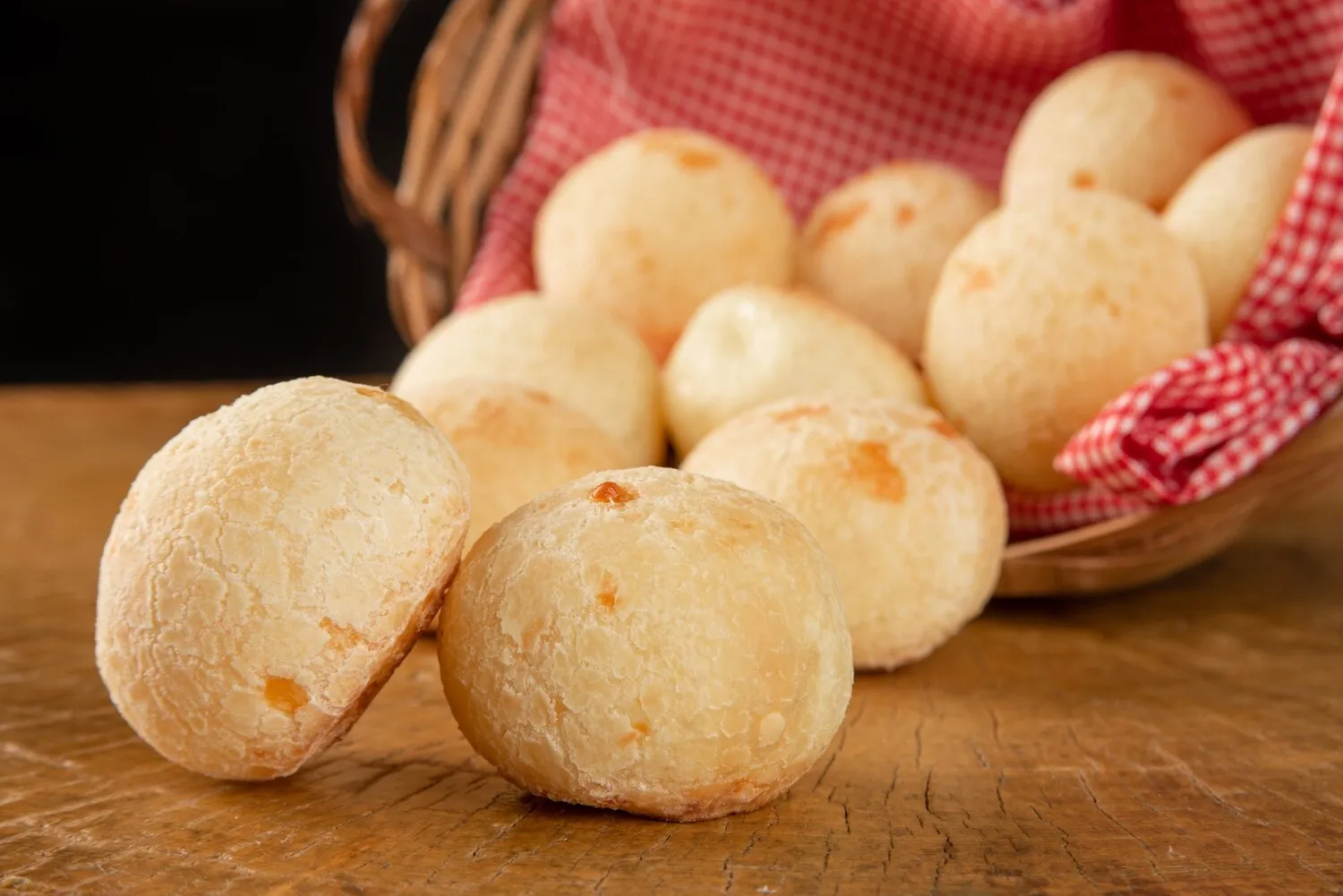

Pão de Queijo
Brazilian cheese bread.
Valeurs Nutritionnelles
* Le % de la valeur quotidienne (VQ) vous indique la quantité d'un nutriment dans une portion d'aliment qui contribue à un régime quotidien. 2 000 calories par jour sont utilisées pour les conseils nutritionnels généraux.
Fonctionnalité Premium
Fonctionnalité Premium
The exact origins of Pão de Queijo are somewhat debated, but it's generally believed to have originated in the state of Minas Gerais during the 18th century. During this period, access to wheat flour was limited, while cheese and cassava starch were readily available. Enslaved Africans and their descendants likely played a significant role in developing the recipe, improvising with available ingredients to create a simple yet satisfying bread.
Fonctionnalité Premium
Pão de Queijo is deeply ingrained in Brazilian culture, particularly in Minas Gerais, where it's considered a staple food and a symbol of hospitality.
Breakfast Staple
Pão de Queijo is a common breakfast item, often enjoyed with coffee.
Social Gathering Food
It's frequently served at social gatherings, parties, and as a snack throughout the day.
Regional Pride
In Minas Gerais, it is a source of regional pride and culinary identity. Variations exist with different types of cheese or fillings, reflecting local traditions.
Symbol of Hospitality
Offering Pão de Queijo to guests is a sign of warmth and welcome.
Fonctionnalité Premium
Pão de Queijo offers a delightful blend of savory, cheesy, and slightly tangy flavors, with a unique chewy texture.
The dominant flavor is undoubtedly the cheese, typically a blend of Minas Gerais cheeses like meia cura (semi-cured) and queijo curado (cured cheese), which contribute a salty, tangy, and slightly funky flavor. The tapioca starch (polvilho azedo or doce) provides a neutral base and contributes to the bread's characteristic chewy texture. The small amount of oil and milk adds richness and moisture, while eggs provide structure and bind the ingredients. The overall flavor profile is savory and cheesy, with a subtle tang and a satisfyingly chewy interior and a slightly crispy exterior.
Fonctionnalité Premium
Type of Starch
Using a combination of both sweet (polvilho doce) and sour (polvilho azedo) tapioca starch can create the ideal balance of chewiness and rise. Experiment with different ratios to find your preference.
Cheese Selection
The quality and type of cheese significantly impact the flavor. Authentic Minas cheese is ideal, but other semi-hard cheeses like cheddar, mozzarella, or parmesan can be used as substitutes, although the flavor will vary.
Scalding the Starch
Scalding the starch with hot liquid (milk, water, or oil) is crucial for achieving the characteristic chewy texture. Allow the mixture to cool slightly before adding the eggs to prevent them from cooking.
Baking Temperature
Baking at a high temperature helps the bread rise quickly and develop a crispy exterior. Don't overcrowd the baking sheet to ensure even browning.
Freezing dough
The dough freezes extremely well. Prepare dough, form balls, and freeze on a baking sheet. Then transfer to freezer bags. Bake straight from frozen - just add a few minutes to the baking time.
Fonctionnalité Premium
Explorez des plats et restaurants supplémentaires de Handy food
Explorer Handy foodDécouvrez les meilleurs restaurants et expériences culinaires à Guarulhos.
Explorer GuarulhosEn savoir plus sur la culture gastronomique, la scène des restaurants et le patrimoine culinaire de Brazil.
Explorer Brazil