
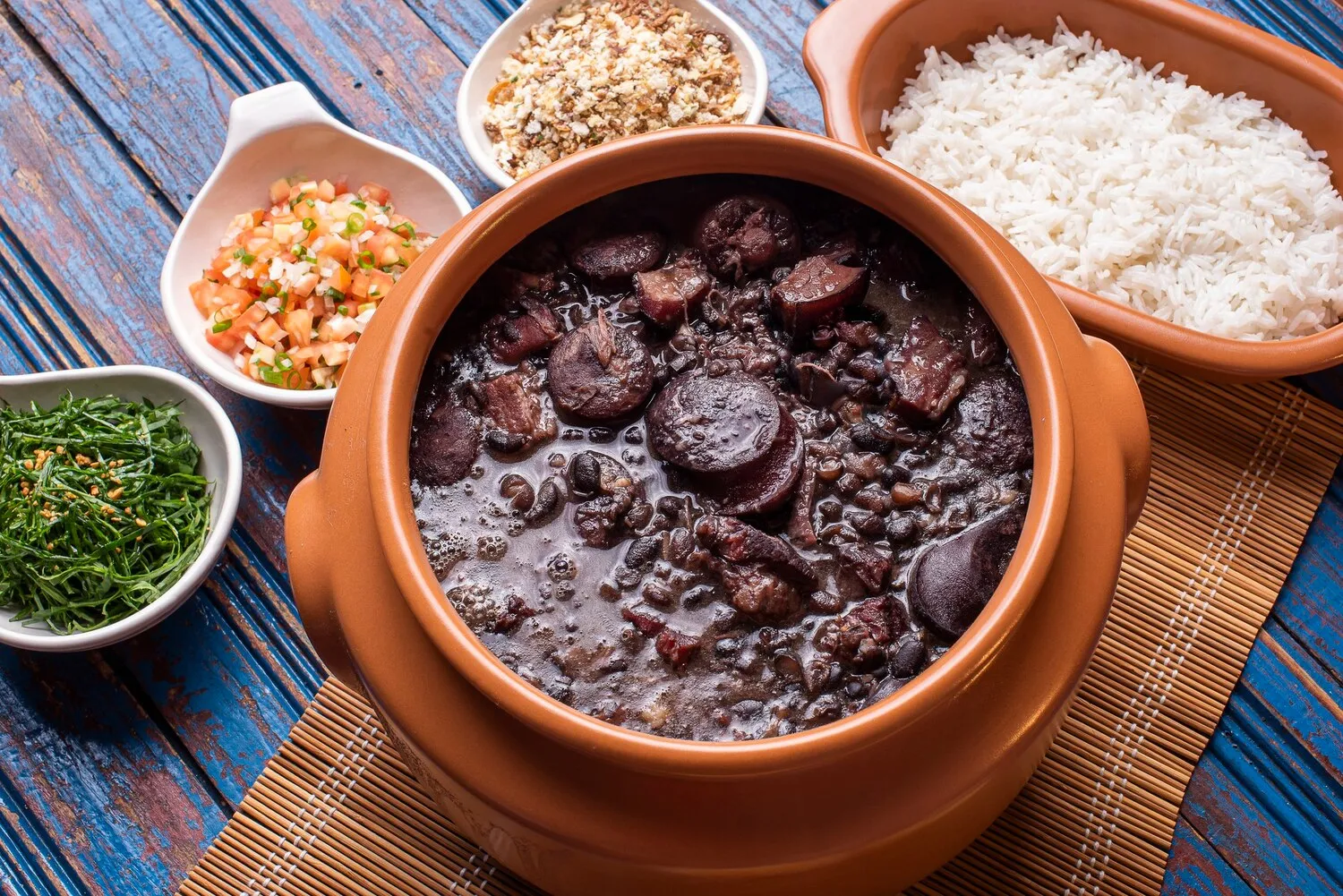

Feijoada
A classic Brazilian black bean stew with various cuts of pork, beef, and sausage. Usually served with rice, collard greens, farofa (toasted cassava flour), and orange slices.
Valeurs Nutritionnelles
* Le % de la valeur quotidienne (VQ) vous indique la quantité d'un nutriment dans une portion d'aliment qui contribue à un régime quotidien. 2 000 calories par jour sont utilisées pour les conseils nutritionnels généraux.
Fonctionnalité Premium
Fonctionnalité Premium
The origins of Feijoada are debated, with some theories suggesting it originated with enslaved Africans who combined discarded meat scraps with black beans, a staple food. Others trace its roots to Portuguese stews. Regardless, it evolved into a national dish representing a blend of cultures and ingredients.
Fonctionnalité Premium
Feijoada is more than just a meal; it's a cultural event, typically enjoyed on weekends (especially Saturdays) with family and friends. It's a symbol of Brazilian hospitality and communal dining.
Communal Meal
Feijoada is often prepared in large quantities and shared amongst a group, fostering a sense of community and togetherness.
Weekend Tradition
The preparation of Feijoada is a time-consuming process, making it a dish best suited for leisurely weekend meals.
Regional Variations
While the basic ingredients remain consistent, regional variations exist in the types of meats used and the accompanying side dishes.
Symbol of Brazilian Identity
Feijoada is considered a national dish of Brazil, representing a blend of cultures and ingredients that reflect the country's history and heritage.
Fonctionnalité Premium
Feijoada boasts a rich and savory flavor profile, characterized by smoky, salty, and slightly sweet notes. The variety of meats contributes depth, while the black beans provide a creamy texture.
The distinctive flavor of Feijoada comes from the slow cooking of black beans with various cuts of pork (smoked ribs, bacon, sausage, dried beef) and often beef. Smoked sausage like linguica and paio add a distinctly smoky element. The seasoning includes garlic, onions, bay leaves, and sometimes orange zest for a hint of sweetness. The accompanying rice offers a neutral canvas, while collard greens provide a slightly bitter counterpoint and farofa adds a toasted, crunchy texture. Orange slices cut through the richness with their acidity.
Fonctionnalité Premium
Soaking the Beans
Soak the black beans overnight (or for at least 6 hours) to reduce cooking time and improve digestibility.
Desalting the Meat
Some of the salted and cured meats require desalting before cooking. Soak them in water for several hours, changing the water periodically.
Slow Cooking is Key
Slow cooking is essential for developing the rich flavors of Feijoada. Allow the beans and meats to simmer for several hours until tender.
Controlling the Salt
Be mindful of the salt content, especially since some of the meats are already salted. Taste and adjust seasoning accordingly throughout the cooking process.
Serving Order
Traditionally, Feijoada is served in courses, starting with the broth and beans, followed by the different meats, allowing diners to savor each component individually.
Fonctionnalité Premium
Explorez des plats et restaurants supplémentaires de Stew
Explorer StewDécouvrez les meilleurs restaurants et expériences culinaires à Jacareí.
Explorer JacareíEn savoir plus sur la culture gastronomique, la scène des restaurants et le patrimoine culinaire de Brazil.
Explorer Brazil