
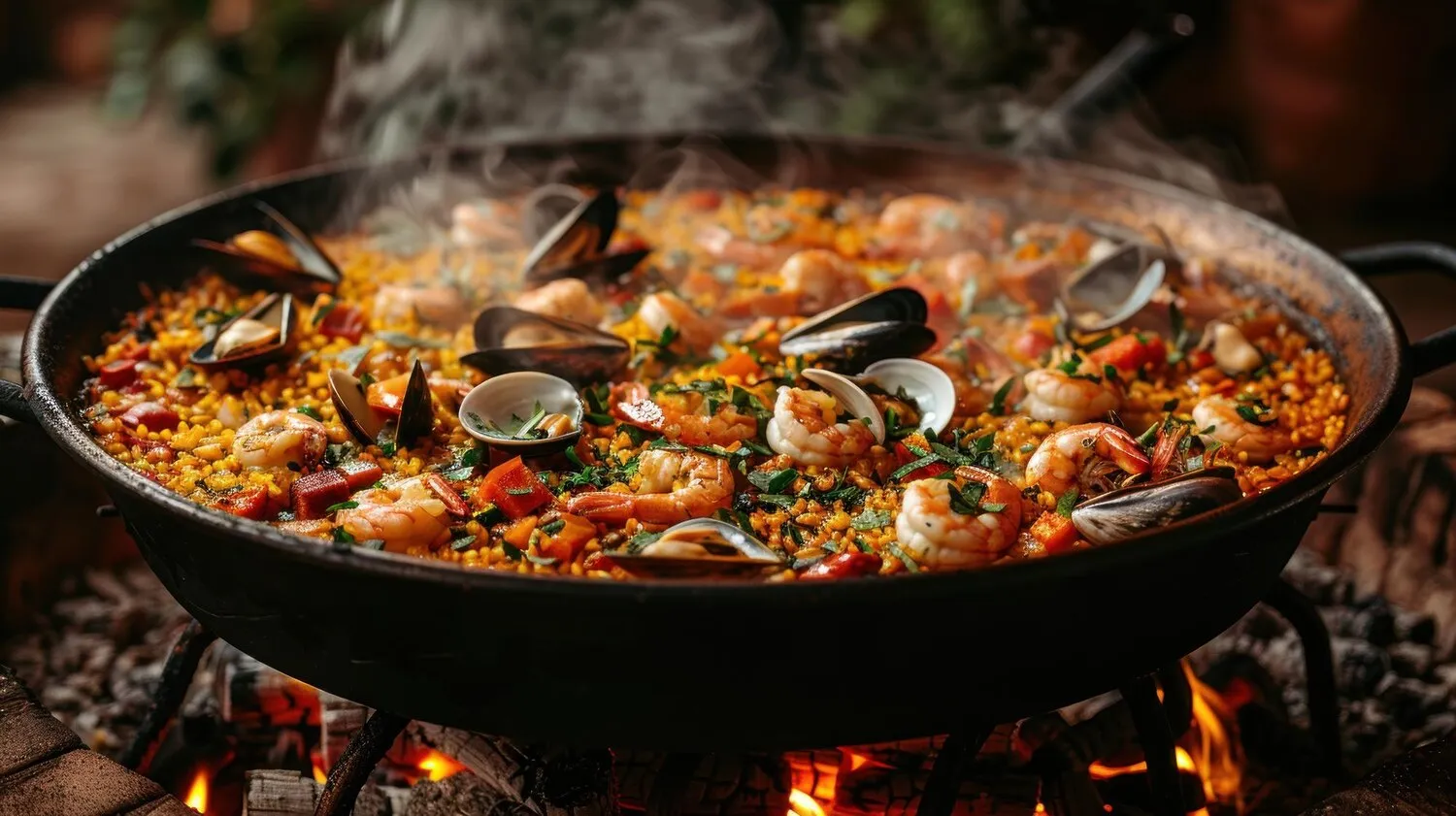

Paella
A classic Spanish rice dish with seafood, chicken, and vegetables.
Valeurs Nutritionnelles
* Le % de la valeur quotidienne (VQ) vous indique la quantité d'un nutriment dans une portion d'aliment qui contribue à un régime quotidien. 2 000 calories par jour sont utilisées pour les conseils nutritionnels généraux.
Fonctionnalité Premium
Quinta De Olivares
Fonctionnalité Premium
Paella's roots lie in the farmlands of Valencia, Spain, dating back to the 15th century. Originally a peasant dish, it was cooked over an open fire in the fields, using whatever ingredients were available. The Moors, who introduced rice cultivation to Spain, heavily influenced its development. As Valencia grew, so did paella, incorporating ingredients from the coast like seafood.
Fonctionnalité Premium
Paella is more than just a dish in Spain; it's a symbol of community, celebration, and tradition.
Family Gatherings
Paella is often prepared and enjoyed during family gatherings, fiestas, and special occasions, fostering a sense of togetherness and shared experience.
Regional Variations
Different regions of Spain have their own unique variations of paella, reflecting local ingredients and culinary traditions. Coastal regions emphasize seafood, while inland areas may feature meats like rabbit or snails.
Sunday Ritual
In many Spanish households, particularly in Valencia, paella is a traditional Sunday meal, enjoyed with family and friends.
Fonctionnalité Premium
Paella boasts a complex flavor profile, a result of the saffron-infused rice combined with the distinct tastes of seafood, meats, and vegetables.
The saffron imparts a subtle floral and earthy note, contributing to the dish's vibrant yellow color. Seafood such as mussels, clams, shrimp, and calamari provide a briny, oceanic taste, while chicken and/or rabbit add a savory, meaty dimension. Vegetables like tomatoes, peppers, and peas contribute sweetness and freshness. The socarrat, the crispy rice at the bottom of the pan, offers a delightful nutty flavor and textural contrast.
Fonctionnalité Premium
Use the Right Rice
Short-grain rice varieties like Bomba or Calasparra are ideal for paella, as they absorb liquid well and maintain their shape during cooking. Avoid long-grain rice, which tends to become mushy.
Create a Socarrat
The socarrat, the crispy layer of rice at the bottom of the pan, is a prized element of paella. To achieve it, increase the heat slightly towards the end of cooking and listen for a crackling sound. Be careful not to burn the rice.
Don't Stir Too Much
Avoid stirring the rice too frequently, as this can release starch and result in a sticky paella. Allow the rice to cook undisturbed, absorbing the flavorful broth.
Use Good Quality Ingredients
The flavor of paella relies heavily on the quality of its ingredients. Use fresh seafood, flavorful meats, and high-quality saffron for the best results.
Fonctionnalité Premium
Explorez des plats et restaurants supplémentaires de Paella
Explorer PaellaDécouvrez les meilleurs restaurants et expériences culinaires à Joinville.
Explorer JoinvilleEn savoir plus sur la culture gastronomique, la scène des restaurants et le patrimoine culinaire de Brazil.
Explorer Brazil