
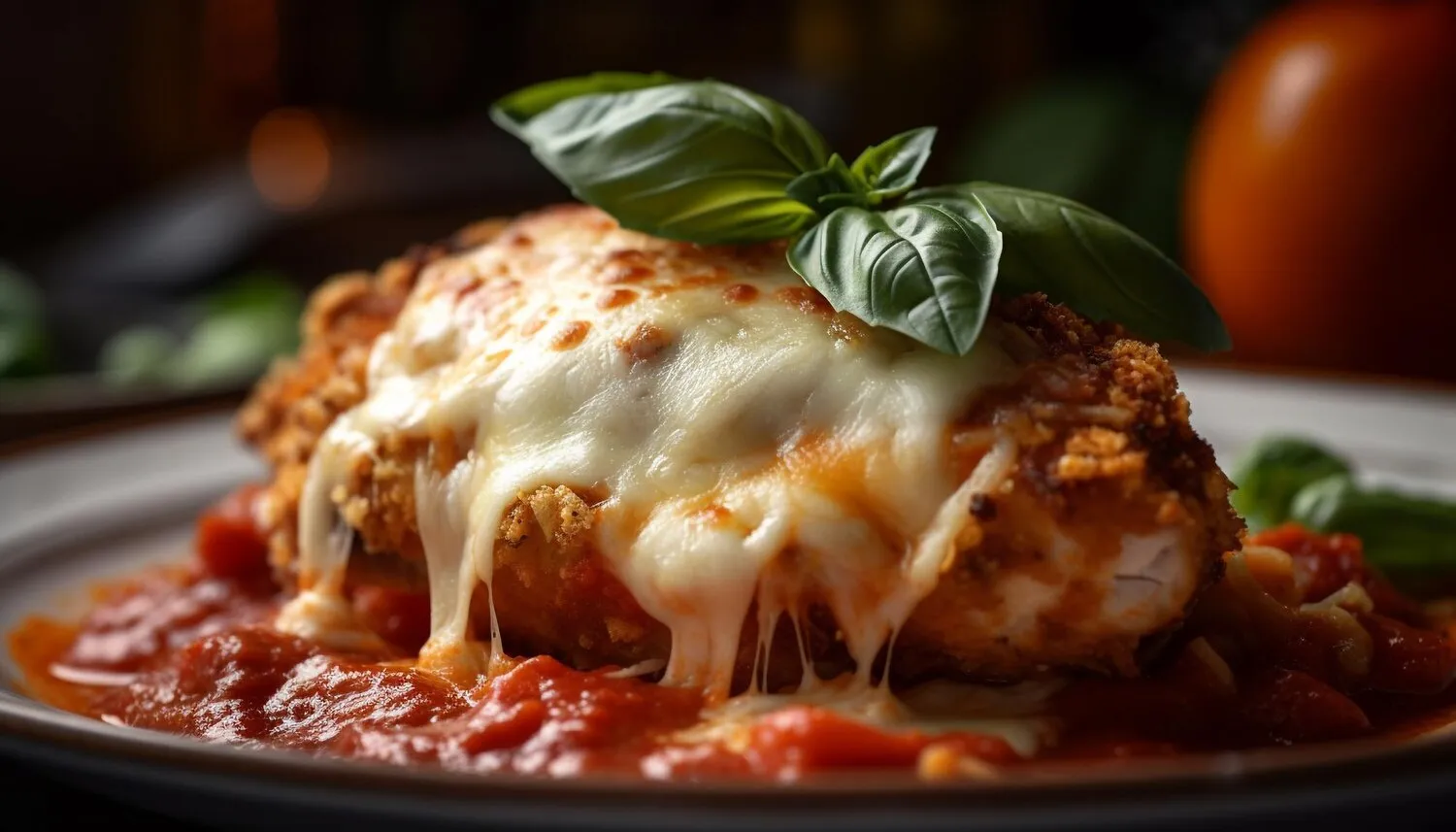

Parmegiana
Parmegiana dishes are commonly found on the menu. It includes options with meat, chicken, and eggplant.
Valeurs Nutritionnelles
* Le % de la valeur quotidienne (VQ) vous indique la quantité d'un nutriment dans une portion d'aliment qui contribue à un régime quotidien. 2 000 calories par jour sont utilisées pour les conseils nutritionnels généraux.
Fonctionnalité Premium
Fonctionnalité Premium
The exact origins of Parmigiana are debated, with both Sicily and Campania claiming its invention. Its roots likely lie in the Arab influence on Sicilian cuisine, which introduced eggplant. The dish evolved over time, incorporating techniques from both regions, including the use of cheese and tomato sauce.
Fonctionnalité Premium
Parmigiana is more than just a dish; it's a symbol of Italian home cooking and a representation of regional pride. It's often served at family gatherings and celebrations, representing comfort, tradition, and sharing.
Regional Variations
Different regions of Italy have their own variations of Parmigiana. Some use Pecorino Romano cheese instead of Parmesan, while others add boiled eggs or ham. Sicilian versions often include basil and mint, while Neapolitan versions might feature smoked mozzarella.
Family Tradition
Parmigiana is frequently prepared using recipes passed down through generations. Each family might have its own secret ingredient or technique, making their version unique and special.
Comfort Food
Parmigiana is considered a quintessential comfort food in Italy. Its warm, rich flavors and satisfying texture evoke feelings of home and nostalgia.
Fonctionnalité Premium
Parmigiana is a celebration of simple, yet robust Mediterranean flavors. The combination of fried ingredients, rich tomato sauce, and creamy cheese creates a comforting and satisfying dish.
The core flavors are defined by: the sweetness and slight bitterness of eggplant (or the savory character of meat/chicken); the acidity and umami of the tomato sauce, often flavored with garlic and herbs like basil or oregano; the richness and saltiness of Parmesan and mozzarella cheese; and the textural contrast between the soft interior and slightly crispy exterior.
Fonctionnalité Premium
Eggplant Preparation
To prevent the eggplant from becoming soggy, salt it generously and let it sit for at least 30 minutes to draw out excess moisture. Pat it dry before frying.
Sauce Quality
Use high-quality canned or fresh tomatoes for the sauce. Simmer the sauce for at least an hour to develop a rich and complex flavor.
Layering Technique
Layer the ingredients carefully to ensure even distribution of flavors and textures. Start with a layer of sauce on the bottom of the dish, followed by eggplant (or meat/chicken), cheese, and more sauce. Repeat until all ingredients are used.
Cheese Selection
Using a combination of mozzarella and Parmesan cheese creates a balance of flavors and textures. Fresh mozzarella melts beautifully, while Parmesan adds a salty, umami depth.
Resting Time
Let the Parmigiana rest for at least 15-20 minutes after baking before serving. This allows the flavors to meld together and the dish to set properly.
Fonctionnalité Premium
Explorez des plats et restaurants supplémentaires de Parmegiana
Explorer ParmegianaDécouvrez les meilleurs restaurants et expériences culinaires à Jundiaí.
Explorer JundiaíEn savoir plus sur la culture gastronomique, la scène des restaurants et le patrimoine culinaire de Brazil.
Explorer Brazil