
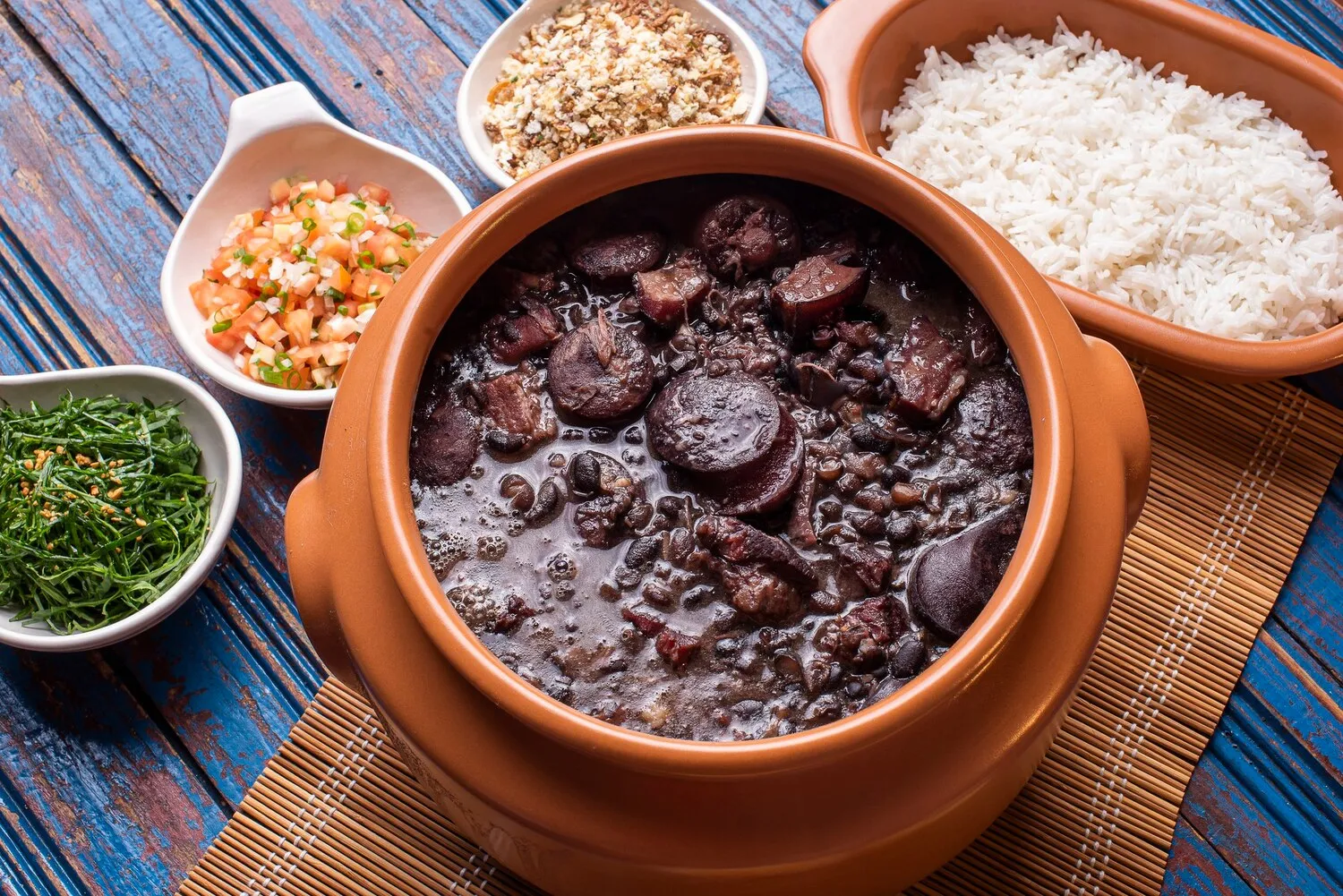

Feijoada
Feijoada is a classic Brazilian black bean stew with various pork and beef parts. It's often mentioned in connection with Brazilian restaurants. Though specific confirmation for Tauste is difficult, it is a common item and may be offered.
Valeurs Nutritionnelles
* Le % de la valeur quotidienne (VQ) vous indique la quantité d'un nutriment dans une portion d'aliment qui contribue à un régime quotidien. 2 000 calories par jour sont utilisées pour les conseils nutritionnels généraux.
Fonctionnalité Premium
Restaurante Supermercado Tauste
Fonctionnalité Premium
Feijoada's origins are debated, with some claiming it originated with enslaved Africans who used discarded pork parts. However, a more likely theory suggests it evolved from European stews and was adapted using locally available ingredients. The dish likely originated during the colonial period, reflecting a blend of Portuguese, African, and indigenous culinary influences.
Fonctionnalité Premium
Feijoada is considered Brazil's national dish and is deeply ingrained in Brazilian culture. It is more than just a meal; it's a social event, often enjoyed on weekends with family and friends.
Social Gathering
Feijoada is typically eaten on Saturdays or Sundays as a leisurely, social meal. Preparing and enjoying it is a communal activity, strengthening bonds between family and friends.
Regional Variations
While the core components remain the same, feijoada varies regionally across Brazil. Some regions include different types of meat or sausages, or add other vegetables to the stew.
National Identity
Feijoada represents Brazilian resourcefulness and culinary creativity, transforming humble ingredients into a hearty and satisfying dish. It symbolizes national unity and cultural heritage.
Fonctionnalité Premium
Feijoada is characterized by its rich, savory, and smoky flavors, resulting from the combination of black beans, various pork cuts, and smoked meats.
The primary flavor profile is savory and earthy from the black beans. The different cuts of pork, such as salted pork, smoked ribs, bacon, sausage (like linguiça or paio), and sometimes even ears, feet, and snout, contribute layers of saltiness, smokiness, and richness. Bay leaves and other seasonings like garlic, onions, and peppers enhance the overall depth of flavor. The stew is typically served with accompaniments like rice, collard greens (couve), farofa (toasted cassava flour), and orange slices, which provide contrasting textures and flavors.
Fonctionnalité Premium
Soaking the Beans
Soaking the black beans overnight (or for at least 4-6 hours) is crucial to soften them and reduce cooking time. Discard the soaking water to remove indigestible sugars and improve digestion.
Desalting the Meats
Salted meats, like carne seca (dried beef) and paio sausage, need to be desalted by soaking them in water for several hours, changing the water frequently.
Layering Flavors
Add meats in stages, starting with the saltiest and hardest meats, allowing their flavors to infuse the beans gradually. The softer sausages should be added later in the cooking process.
Patience is Key
Feijoada is best cooked low and slow, allowing the flavors to meld and the beans to become creamy. This process can take several hours, but the result is well worth the effort.
Accompaniments are essential
The perfect feijoada is more than just the stew itself. Do not forget to serve it with rice, couve, farofa and orange slices!
Fonctionnalité Premium
Explorez des plats et restaurants supplémentaires de Brazilian Comfort Food
Explorer Brazilian Comfort FoodDécouvrez les meilleurs restaurants et expériences culinaires à Jundiaí.
Explorer JundiaíEn savoir plus sur la culture gastronomique, la scène des restaurants et le patrimoine culinaire de Brazil.
Explorer Brazil