
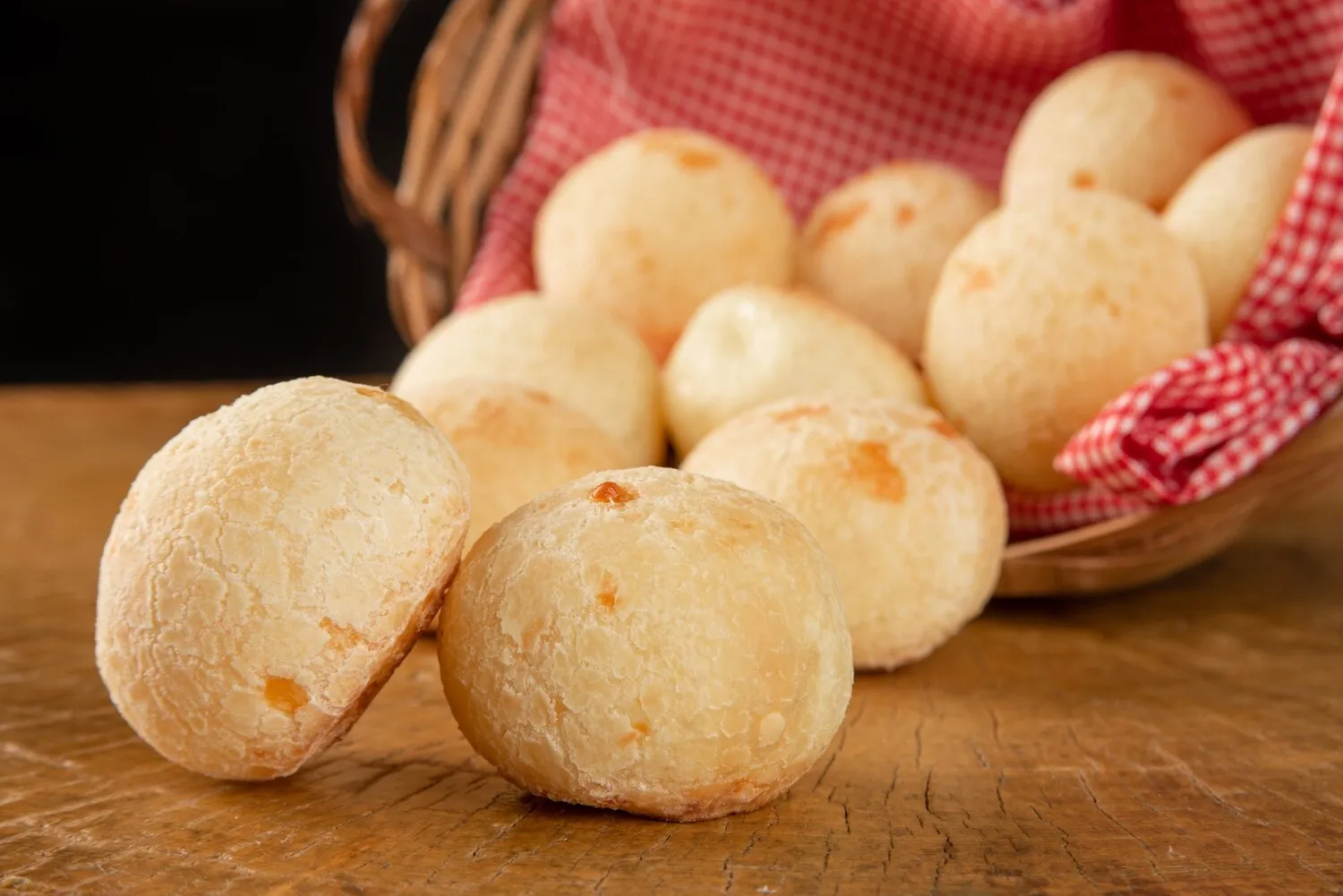

Pão de Queijo
Brazilian cheese bread, a popular snack.
Valeurs Nutritionnelles
* Le % de la valeur quotidienne (VQ) vous indique la quantité d'un nutriment dans une portion d'aliment qui contribue à un régime quotidien. 2 000 calories par jour sont utilisées pour les conseils nutritionnels généraux.
Fonctionnalité Premium
Fonctionnalité Premium
Pão de Queijo's origins are somewhat debated, but it is believed to have emerged in the state of Minas Gerais, Brazil, during the 18th century. The scarcity of wheat flour and the abundance of cassava (tapioca) starch, along with cheese production in the region, led to the experimentation and creation of this unique bread. African slave labor also played a role in its development, as they adapted and transformed available ingredients into culinary staples.
Fonctionnalité Premium
Pão de Queijo is deeply ingrained in Brazilian culture, especially in Minas Gerais. It is a staple food, enjoyed at any time of day – breakfast, snack, or as an accompaniment to meals. It represents Brazilian hospitality and is often offered to guests.
Breakfast Staple
Pão de Queijo is a very common breakfast food, often eaten with coffee.
Social Gathering Food
It is served at parties, cafes, and restaurants as a popular snack.
Regional Pride
Minas Gerais takes particular pride in Pão de Queijo, considering it a culinary symbol of the region.
Hospitality
Offering Pão de Queijo to guests is a sign of warmth and welcome in Brazilian homes.
Fonctionnalité Premium
Pão de Queijo boasts a delightfully chewy interior, a slightly crisp exterior, and a savory, cheesy flavor. The taste is mild and milky with a subtle tang.
The dominant flavor is cheese, typically Queijo Minas (a mild, fresh Brazilian cheese), though other cheeses like Parmesan, mozzarella, or even cheddar can be used. The tapioca starch (polvilho doce or polvilho azedo) contributes a unique texture, lending the bread its characteristic chewiness. Polvilho azedo (sour tapioca starch) provides a slightly tangy flavor, while polvilho doce (sweet tapioca starch) results in a milder, sweeter taste. Eggs bind the ingredients and add richness, while oil (often vegetable oil) contributes to the texture and overall moistness. Salt enhances the other flavors and balances the sweetness of the tapioca starch.
Fonctionnalité Premium
Tapioca Starch Variety
Experiment with both sweet and sour tapioca starch (polvilho doce and polvilho azedo) to find your preferred flavor profile. A blend of both is common.
Cheese Selection
Use a good quality cheese, preferably Queijo Minas if available. Otherwise, a blend of cheeses like Parmesan and mozzarella can add depth of flavor.
Oven Temperature
Bake at a high temperature (around 375-400°F or 190-200°C) to ensure a crispy exterior and a chewy interior.
Don't Overmix
Overmixing the dough can result in a tough Pão de Queijo. Mix just until the ingredients are combined.
Freezing
Pão de Queijo dough can be frozen before baking. Simply shape the dough into balls and freeze them. Bake directly from frozen, adding a few minutes to the baking time.
Fonctionnalité Premium
Explorez des plats et restaurants supplémentaires de Handy food
Explorer Handy foodDécouvrez les meilleurs restaurants et expériences culinaires à Londrina.
Explorer LondrinaEn savoir plus sur la culture gastronomique, la scène des restaurants et le patrimoine culinaire de Brazil.
Explorer Brazil