
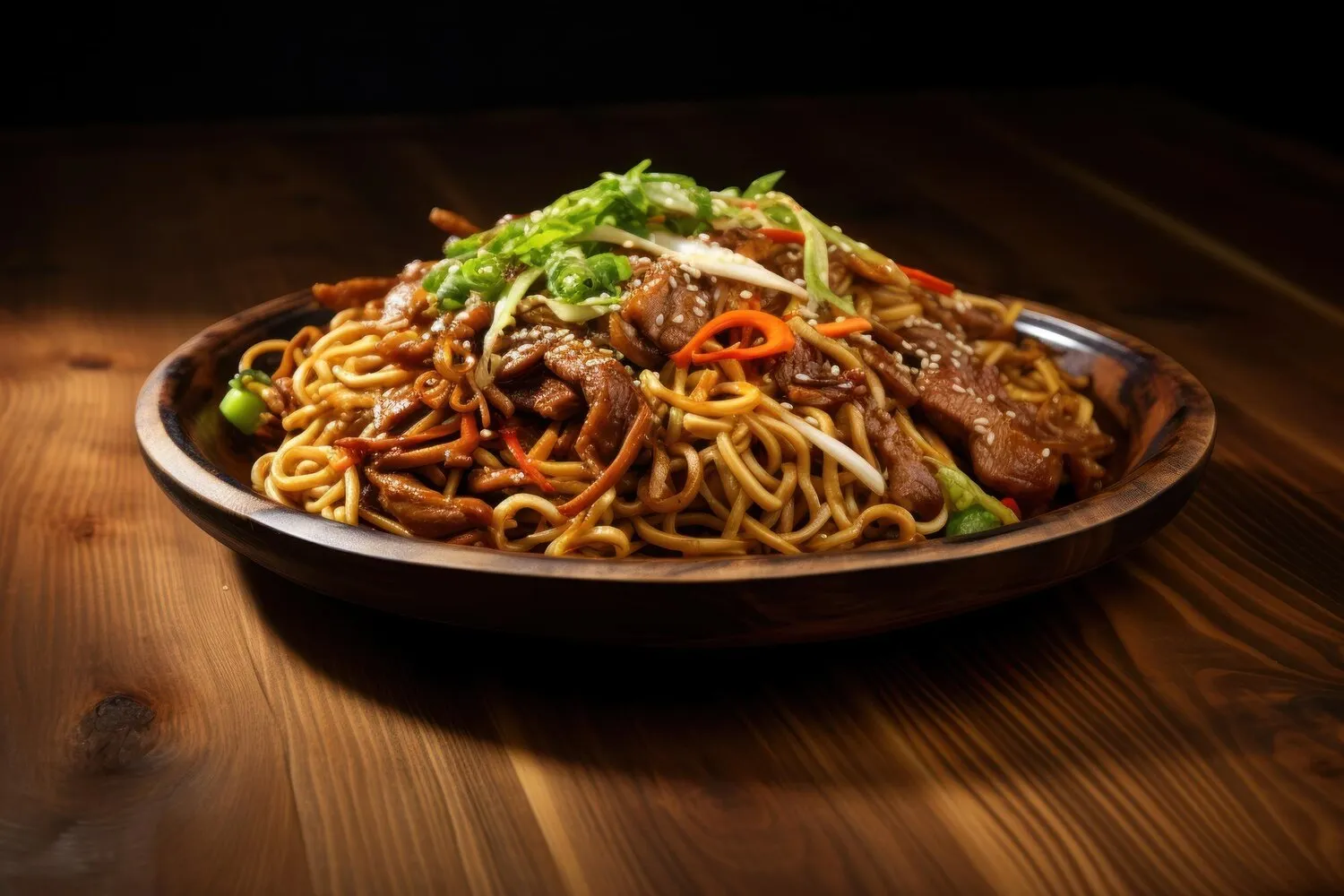

Yakisoba
Fried noodles with vegetables and meat (chicken, beef or shrimp).
Valeurs Nutritionnelles
* Le % de la valeur quotidienne (VQ) vous indique la quantité d'un nutriment dans une portion d'aliment qui contribue à un régime quotidien. 2 000 calories par jour sont utilisées pour les conseils nutritionnels généraux.
Fonctionnalité Premium
Tiwan
Fonctionnalité Premium
Yakisoba's history is tied to the rise of wheat flour noodles in Japanese cuisine, influenced by Chinese noodle dishes. It emerged as a popular street food and festival staple, becoming a more accessible and affordable alternative to traditional Japanese cuisine.
Fonctionnalité Premium
Yakisoba is deeply embedded in Japanese popular culture, particularly as a festival food and a common sight at street food stalls. It represents an accessible and comforting dish enjoyed by people of all ages.
Festival Staple
Yakisoba is a quintessential festival food in Japan, commonly found at matsuri (festivals) and events. The aroma of yakisoba being cooked on a hot griddle is a familiar and welcoming scent at these gatherings.
Street Food Favorite
Yakisoba is a widely available street food, often sold from yatai (food stalls) and small eateries. It's a quick, affordable, and satisfying meal for people on the go.
Home Cooking
Yakisoba is also a popular dish to make at home, offering a versatile and customizable meal. Pre-packaged yakisoba noodle kits and sauces are readily available in supermarkets, making it easy to prepare.
Fonctionnalité Premium
Yakisoba offers a savory and umami-rich flavor profile, balanced with a slight sweetness and tang. The sauce is the key element, complementing the stir-fried noodles, vegetables, and protein.
The predominant flavor comes from the yakisoba sauce, which is typically a blend of Worcestershire sauce, soy sauce, oyster sauce, ketchup, and sometimes brown sugar or mirin. This creates a complex flavor that is both savory and slightly sweet. The stir-frying process adds a smoky element. Common ingredients like cabbage, onions, and carrots provide a fresh, slightly sweet counterpoint, while meat like pork, chicken, beef, or shrimp add richness and protein. Pickled ginger (beni shoga) is often used as a garnish and provides a sharp, tangy flavor that cuts through the richness of the sauce.
Fonctionnalité Premium
Noodle Preparation
Loosen the noodles before stir-frying to ensure they cook evenly and don't clump together. Some cooks recommend parboiling the noodles briefly before adding them to the pan. Pre-cooked yakisoba noodles are often found in stores.
Sauce Adjustment
Taste the yakisoba sauce as you cook and adjust the seasoning to your preference. You can add more Worcestershire sauce for tanginess, soy sauce for saltiness, or brown sugar for sweetness. Some recipes call for adding a touch of oyster sauce for extra umami.
High Heat Cooking
Cook yakisoba over high heat to achieve a slightly charred and smoky flavor. This helps to develop the flavors and prevent the noodles from becoming soggy. Stir-fry in small batches to maintain the high heat of the pan.
Don't overcrowd the pan
Overcrowding the pan will lower the temperature and steam the noodles instead of frying them. Work in batches if necessary to ensure even cooking and a good sear.
Fonctionnalité Premium
Explorez des plats et restaurants supplémentaires de Noodle Dish
Explorer Noodle DishDécouvrez les meilleurs restaurants et expériences culinaires à Macaé.
Explorer MacaéEn savoir plus sur la culture gastronomique, la scène des restaurants et le patrimoine culinaire de Brazil.
Explorer Brazil