
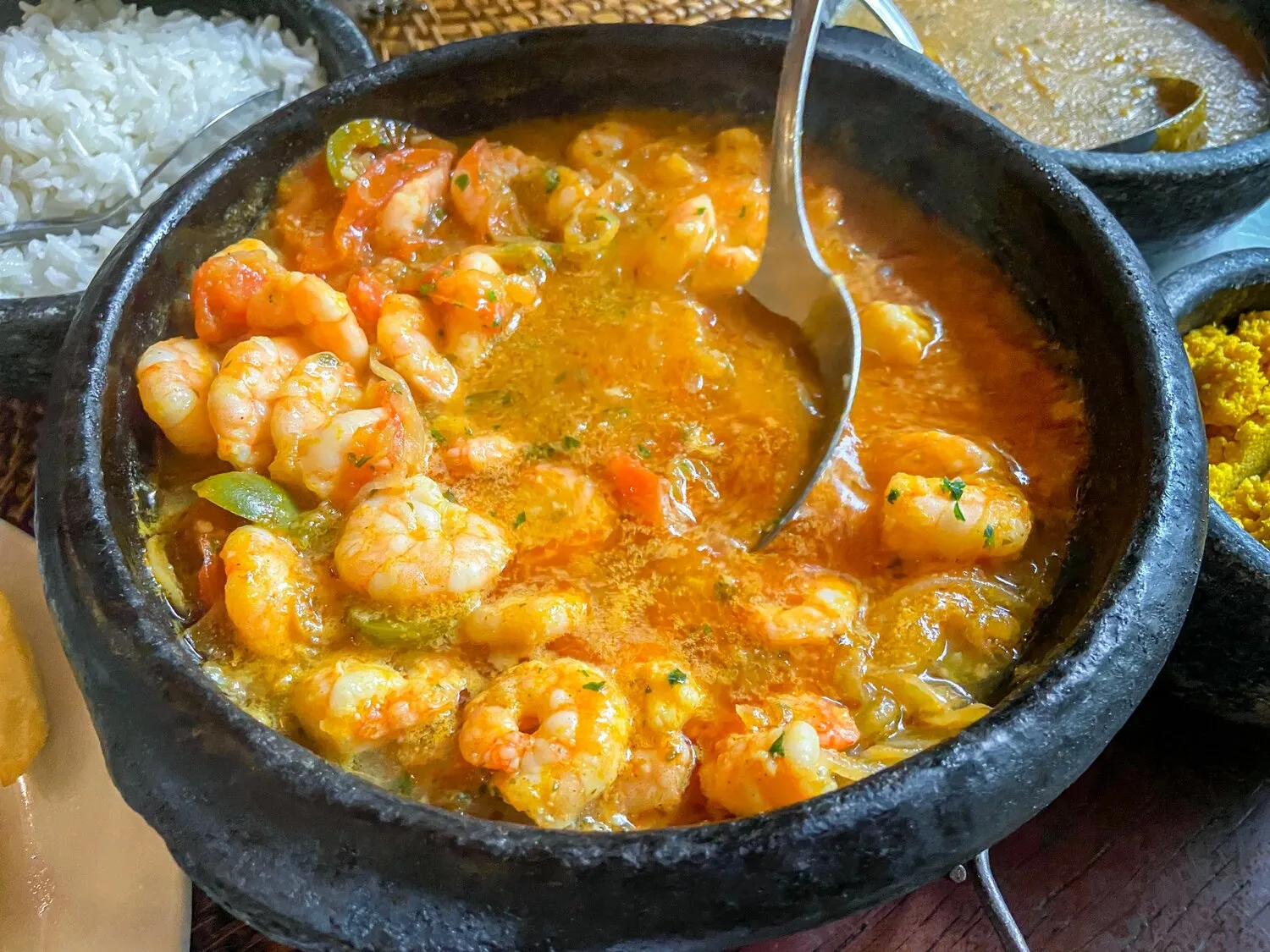

Moqueca de Camarão
Shrimp Moqueca. A traditional Brazilian seafood stew cooked in a clay pot with coconut milk, tomatoes, peppers, and cilantro.
Valeurs Nutritionnelles
* Le % de la valeur quotidienne (VQ) vous indique la quantité d'un nutriment dans une portion d'aliment qui contribue à un régime quotidien. 2 000 calories par jour sont utilisées pour les conseils nutritionnels généraux.
Fonctionnalité Premium
Fonctionnalité Premium
Moqueca's origins trace back to the indigenous peoples of Brazil, who traditionally cooked fish and seafood in clay pots. African influences were incorporated during the colonial period with the addition of ingredients like coconut milk, palm oil (dendê), and peppers, creating the vibrant dish we know today.
Fonctionnalité Premium
Moqueca is deeply ingrained in Brazilian coastal culture, particularly in the states of Espírito Santo and Bahia, where regional variations showcase local ingredients and traditions. It is more than just a dish; it's a celebration of community, shared meals, and the bounty of the sea.
Regional Variations
Espírito Santo's version, Moqueca Capixaba, relies on annatto for color and olive oil, while Bahia's Moqueca Baiana incorporates dendê oil (palm oil) and coconut milk, resulting in a richer, more vibrant flavor. These differences spark friendly culinary rivalries.
Communal Dining
Moqueca is traditionally served family-style in the clay pot it's cooked in, encouraging shared dining experiences and fostering a sense of community. It's often accompanied by rice, pirão (a creamy sauce made from fish broth and cassava flour), and farofa (toasted cassava flour).
Festivals and Celebrations
Moqueca frequently takes center stage at coastal festivals and celebrations, showcasing the region's culinary heritage and providing a taste of Brazilian culture to locals and tourists alike. It symbolizes abundance and the connection to the sea.
Fonctionnalité Premium
Moqueca de Camarão boasts a rich and savory flavor profile, characterized by the sweetness of shrimp, the creaminess of coconut milk, and the tanginess of tomatoes and lime, all balanced by aromatic herbs and a gentle heat from peppers.
The prominent flavors include the delicate sweetness of fresh shrimp, the luxurious richness of coconut milk which adds a subtle sweetness and creamy texture, the acidity of tomatoes and lime juice, providing a refreshing counterpoint, and the aromatic complexity of cilantro, onions, garlic, and bell peppers. A touch of heat is often provided by malagueta peppers, though the spice level varies by region and preference. The dish also may include dendê oil which gives it the distinct color and flavor.
Fonctionnalité Premium
Fresh Ingredients are Key
Use the freshest shrimp available, ideally wild-caught. Ripe, juicy tomatoes, vibrant bell peppers, and fragrant cilantro will significantly enhance the flavor profile. Fresh coconut milk, if possible, is superior to canned.
Don't Overcook the Shrimp
Shrimp cooks quickly and becomes rubbery if overcooked. Add the shrimp towards the end of the cooking process and cook until they turn pink and opaque, usually just a few minutes.
Use a Clay Pot (if possible)
A traditional clay pot imparts a unique earthy flavor and helps distribute heat evenly. If a clay pot is unavailable, a heavy-bottomed pot will suffice. Make sure to cure the clay pot before using it for the first time to avoid cracking.
Adjust the Spice Level
Control the heat by adjusting the amount of malagueta peppers used or by substituting milder chili peppers. Remove the seeds from the peppers to reduce the spice level.
Layer the Flavors
Building the flavor in layers is essential. Start by sautéing the aromatics (onion, garlic, peppers) to release their fragrance before adding the tomatoes and coconut milk.
Fonctionnalité Premium
Explorez des plats et restaurants supplémentaires de Traditional
Explorer TraditionalDécouvrez les meilleurs restaurants et expériences culinaires à Maceió.
Explorer MaceióEn savoir plus sur la culture gastronomique, la scène des restaurants et le patrimoine culinaire de Brazil.
Explorer Brazil