
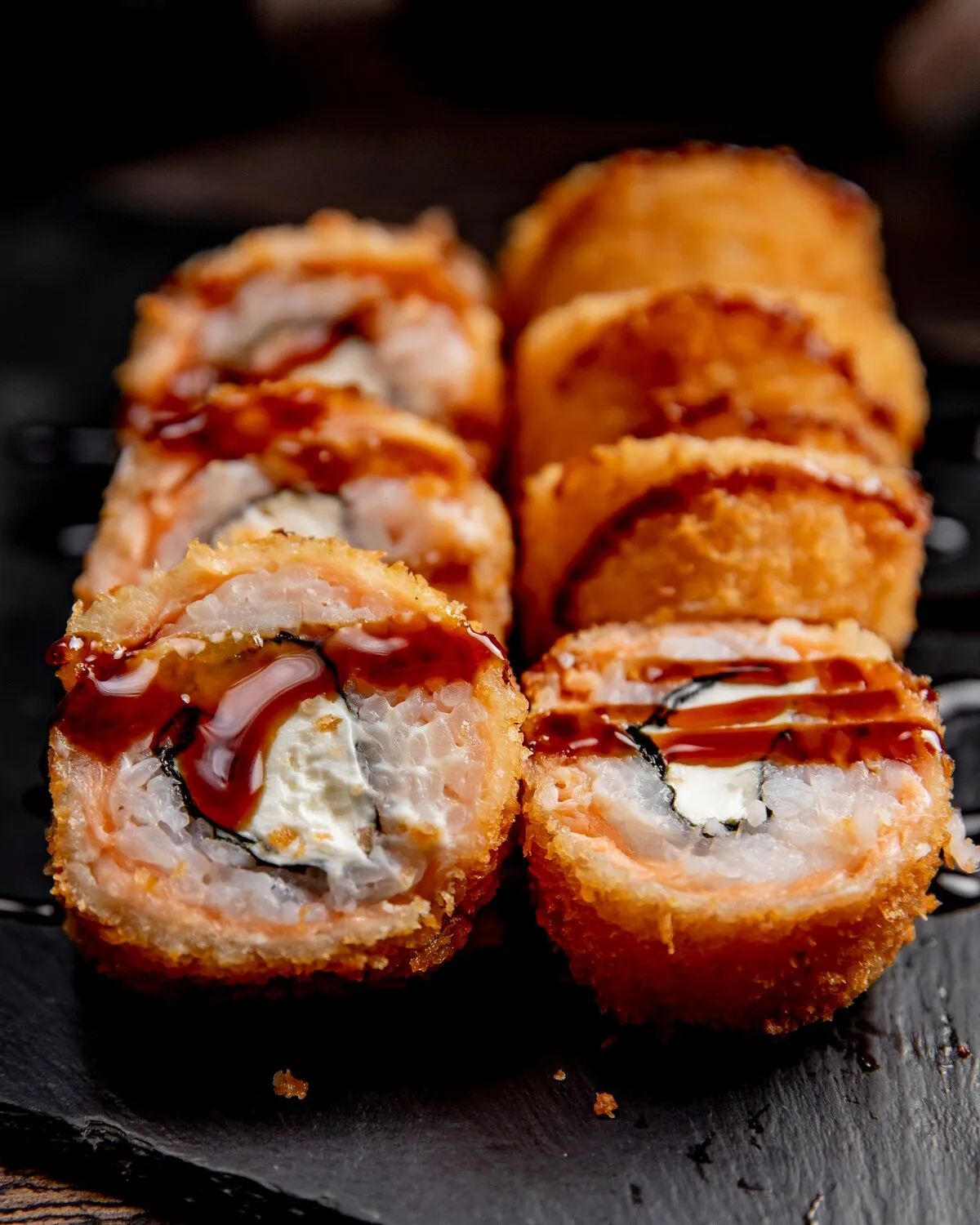

Hot Roll
Hot roll variations are frequently mentioned. A fried sushi roll, often with salmon, cream cheese, and other fillings. Exact fillings vary.
Valeurs Nutritionnelles
* Le % de la valeur quotidienne (VQ) vous indique la quantité d'un nutriment dans une portion d'aliment qui contribue à un régime quotidien. 2 000 calories par jour sont utilisées pour les conseils nutritionnels généraux.
Fonctionnalité Premium
Fonctionnalité Premium
The Hot Roll, as a fried sushi roll variation, emerged in the United States as part of the broader trend of Americanized sushi. Its development reflects a departure from traditional Japanese techniques and flavors, catering to local tastes and preferences, particularly the desire for cooked seafood and bolder, richer flavors. The exact origins are difficult to pinpoint, but its popularity grew alongside other fusion sushi dishes in the late 20th century.
Fonctionnalité Premium
The Hot Roll exemplifies the Americanization of sushi, showcasing how a traditional Japanese dish can be adapted to suit Western palates. It reflects a willingness to experiment with ingredients and techniques, often prioritizing accessibility and flavor profiles that appeal to a broader audience. It's a popular choice for those new to sushi or who prefer cooked options.
Americanized Sushi
The Hot Roll is a clear example of 'Americanized Sushi,' meaning sushi dishes adapted for the United States market. It tends to be less traditional and more focused on cooked ingredients and bolder flavors.
Fusion Cuisine
This dish represents a type of fusion cuisine, blending the Japanese art of sushi with American flavor preferences. It reflects a broader culinary trend of mixing different cultural influences.
Beginner-Friendly Sushi
The Hot Roll is often considered a good introductory sushi option because it uses cooked ingredients and is less intimidating than raw fish preparations.
Fonctionnalité Premium
The Hot Roll boasts a combination of creamy, savory, and slightly sweet flavors, often enhanced by the umami of nori and the textural contrast between the crispy exterior and the soft interior.
The primary flavors derive from the combination of cooked salmon (often imparting a rich, oily taste), cream cheese (providing a creamy tang), and the rice. Depending on the specific roll, additional ingredients like avocado can add a buttery note, while sauces such as spicy mayo or eel sauce contribute sweetness, heat, and umami. The frying process creates a satisfying crunch and enhances the overall richness of the dish.
Fonctionnalité Premium
Rice Consistency
Use sushi rice that is properly cooked and seasoned. The rice should be sticky enough to hold its shape but not mushy. Allow it to cool slightly before assembling the roll.
Rolling Technique
Roll the sushi tightly using a bamboo rolling mat. This ensures a compact roll that won't fall apart during frying. Be sure to evenly distribute the filling.
Frying Temperature
Maintain the oil at a consistent temperature (around 350-375°F or 175-190°C) for even frying. Overcrowding the fryer will lower the temperature and result in soggy rolls.
Battering Methods
Ensure even coverage with a batter for consistent browning and texture during frying. Common methods include a simple tempura-style batter or panko breadcrumbs.
Fonctionnalité Premium
Explorez des plats et restaurants supplémentaires de Sushi
Explorer SushiDécouvrez les meilleurs restaurants et expériences culinaires à Marília.
Explorer MaríliaEn savoir plus sur la culture gastronomique, la scène des restaurants et le patrimoine culinaire de Brazil.
Explorer Brazil