
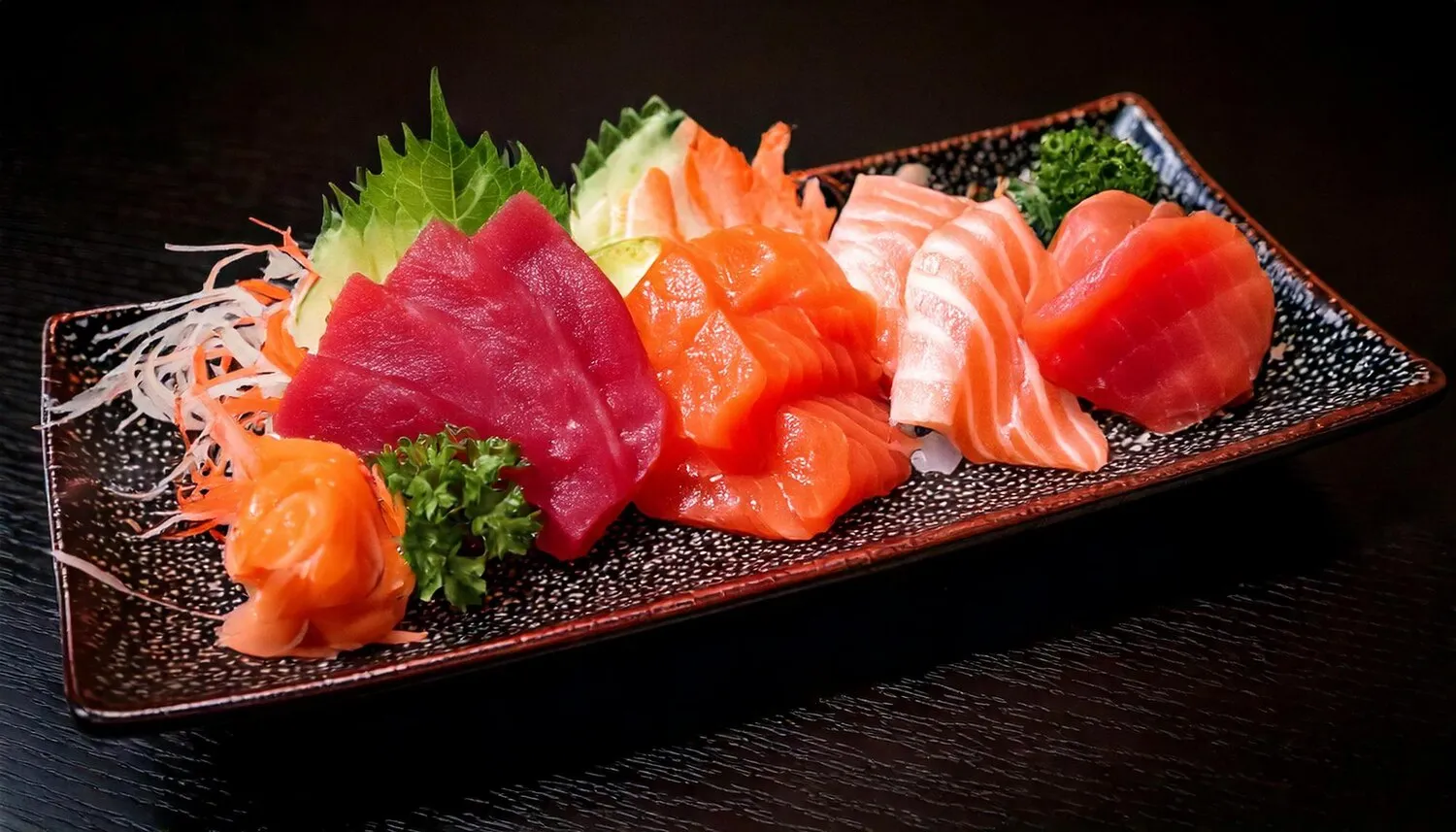

Sashimi
Thinly sliced raw fish. Types of fish available are not specified.
Valeurs Nutritionnelles
* Le % de la valeur quotidienne (VQ) vous indique la quantité d'un nutriment dans une portion d'aliment qui contribue à un régime quotidien. 2 000 calories par jour sont utilisées pour les conseils nutritionnels généraux.
Fonctionnalité Premium
Fonctionnalité Premium
The history of sashimi is intertwined with the development of Japanese culinary techniques and preservation methods. While eating raw fish dates back centuries, the refinement of sashimi into its present form occurred over a long period, influenced by Buddhist dietary restrictions on meat consumption and advancements in fish handling and preparation.
Fonctionnalité Premium
Sashimi is not merely a dish but a reflection of Japanese culinary artistry, respect for ingredients, and seasonal appreciation.
Presentation
The aesthetic presentation of sashimi is as important as its taste. The arrangement of the fish, garnishes, and serving ware are carefully considered to create a visually appealing and harmonious experience.
Seasonal Fish
Sashimi is often enjoyed according to the season, with different types of fish being considered optimal at various times of the year. This reflects the Japanese emphasis on seasonality and appreciating ingredients at their peak flavor.
Knife Skills
The precise cutting techniques used to prepare sashimi are a highly skilled art form. Proper slicing ensures the optimal texture and flavor of the fish.
Freshness
Freshness is paramount. Only the freshest, highest quality fish is suitable for sashimi to prevent illness and ensure the best possible taste.
Fonctionnalité Premium
Sashimi offers a pure and delicate taste of the ocean, emphasizing the natural flavor of the fish.
The flavor profile of sashimi depends heavily on the type of fish. Generally, the taste is clean, subtle, and refreshing, with varying degrees of richness, fattiness, and texture. High-quality sashimi should melt in your mouth, leaving a lingering, umami-rich aftertaste. Wasabi provides a pungent kick, while soy sauce adds saltiness and depth, complementing the fish's natural flavors. Garnishes like shiso leaves and daikon radish offer contrasting textures and aromas.
Fonctionnalité Premium
Soy Sauce Usage
Avoid saturating the sashimi in soy sauce. The goal is to enhance, not mask, the fish's natural flavor. Dip only a small portion of the fish.
Wasabi Application
Apply a small amount of wasabi directly to the fish, not into the soy sauce. This allows you to control the intensity of the wasabi flavor and prevents it from overpowering the fish.
Eating Order
It's often recommended to start with the milder flavored fish and progress to the richer, fattier varieties. This allows you to fully appreciate the subtleties of each type of sashimi.
Garnishes
Don't overlook the garnishes! Shiso leaves, daikon radish, and ginger are not just for decoration; they offer contrasting flavors and textures that can cleanse the palate and enhance the overall experience.
Fonctionnalité Premium
Explorez des plats et restaurants supplémentaires de Sushi
Explorer SushiDécouvrez les meilleurs restaurants et expériences culinaires à Mauá.
Explorer MauáEn savoir plus sur la culture gastronomique, la scène des restaurants et le patrimoine culinaire de Brazil.
Explorer Brazil