
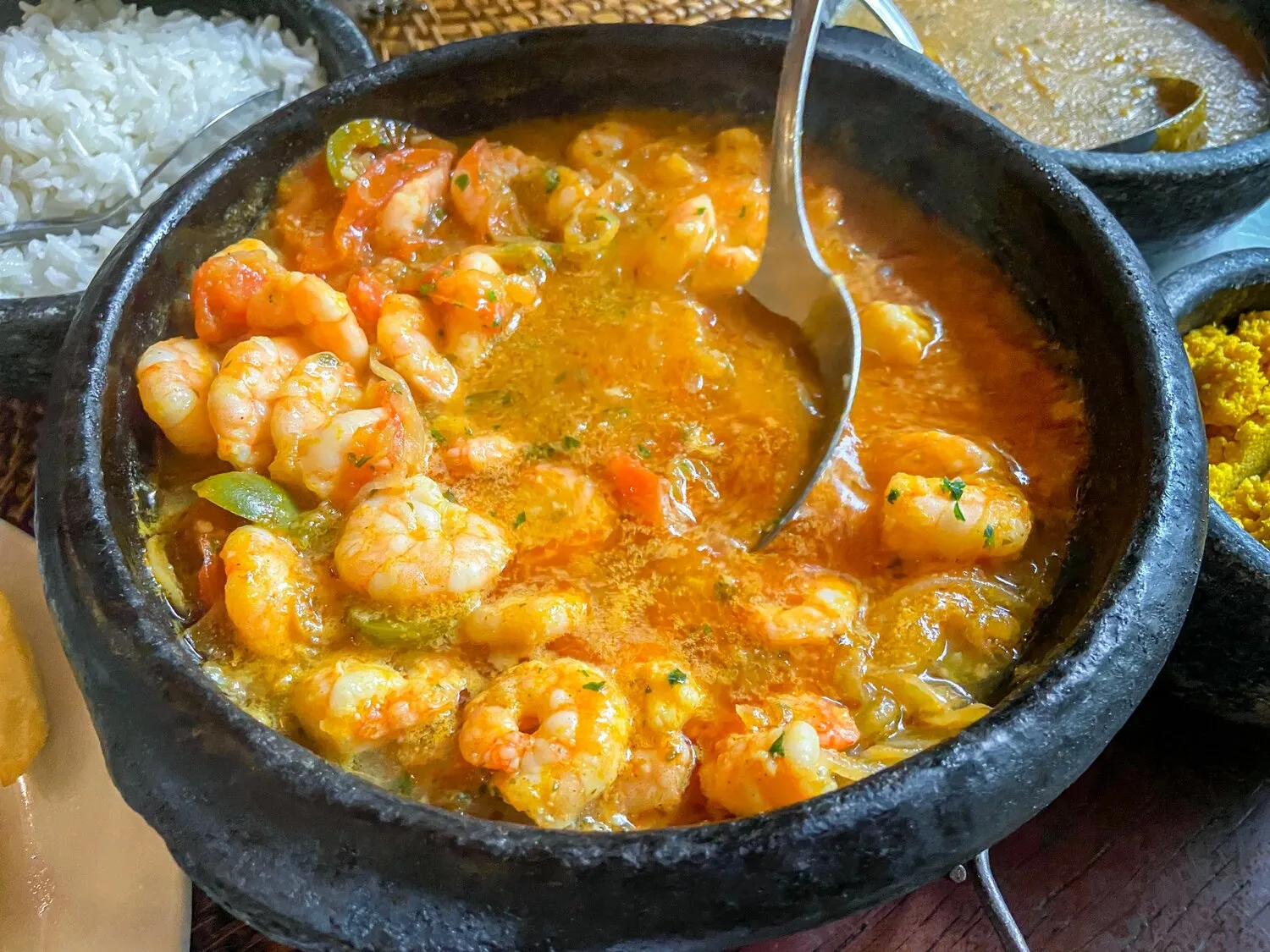

Moqueca de Camarão
Shrimp moqueca, a Brazilian seafood stew cooked in a clay pot, typically featuring coconut milk, tomatoes, onions, garlic, and cilantro.
Valeurs Nutritionnelles
* Le % de la valeur quotidienne (VQ) vous indique la quantité d'un nutriment dans une portion d'aliment qui contribue à un régime quotidien. 2 000 calories par jour sont utilisées pour les conseils nutritionnels généraux.
Fonctionnalité Premium
Restaurante Narval
Fonctionnalité Premium
Moqueca's origins are debated, but it's believed to be a fusion of Indigenous Brazilian cooking techniques with Portuguese and African influences. Indigenous Brazilians likely used a similar stewing method with available ingredients. The Portuguese introduced ingredients like olive oil and tomatoes, while enslaved Africans contributed coconut milk and dendê oil (palm oil), although dendê is more commonly used in Moqueca Baiana.
Fonctionnalité Premium
Moqueca is more than just a dish; it's a symbol of Brazilian coastal culture, particularly in the states of Espírito Santo and Bahia. It represents a shared meal, often enjoyed with family and friends, and reflects the abundance of seafood found along the Brazilian coastline.
Regional Variations
There are two main types of Moqueca: Moqueca Capixaba (from Espírito Santo) and Moqueca Baiana (from Bahia). Capixaba uses annatto for color and flavor, olive oil, and no dendê oil. Baiana uses both dendê oil and coconut milk, resulting in a richer, more vibrant flavor and color.
Celebrations and Gatherings
Moqueca is often served at special occasions, family gatherings, and celebrations along the Brazilian coast. The communal aspect of sharing a large pot of Moqueca contributes to its cultural significance.
Symbol of Coastal Identity
Moqueca represents the connection between Brazilians and the sea, highlighting the importance of seafood in the coastal diet and lifestyle. It is a dish that embodies the flavors and traditions of the region.
Fonctionnalité Premium
Moqueca de Camarão is a vibrant and flavorful stew with a delightful balance of sweet, savory, and slightly spicy notes. The sweetness comes from the coconut milk and the inherent sweetness of the shrimp, while the tomatoes and onions provide a savory base. Garlic and cilantro add aromatic complexity, and chili peppers offer a gentle heat.
The dominant flavors are a rich seafood essence from the shrimp, balanced by the creamy sweetness of coconut milk. Tomatoes contribute acidity and umami, while onions and garlic provide a foundational savory layer. Cilantro adds a fresh, herbaceous note. The overall profile is aromatic, subtly sweet, and deeply satisfying. It's important that the shrimp is fresh to avoid an unpleasant smell and flavor.
Fonctionnalité Premium
Fresh Ingredients are Key
Use the freshest shrimp you can find. Fresh tomatoes, onions, garlic, and cilantro will also significantly enhance the flavor.
Don't Overcook the Shrimp
Shrimp cooks quickly and can become rubbery if overcooked. Add the shrimp towards the end of the cooking process and cook just until they turn pink and opaque.
Simmer, Don't Boil
Cook the Moqueca at a gentle simmer to allow the flavors to meld without the ingredients becoming tough.
Use a Clay Pot (if possible)
Traditionally, Moqueca is cooked in a clay pot (panela de barro), which imparts a unique earthy flavor. If you don't have a clay pot, a heavy-bottomed pot works well.
Serve with Rice and Pirão
Serve Moqueca de Camarão with white rice and pirão (a creamy manioc flour porridge made with the stew's broth) for a complete and authentic Brazilian experience.
Fonctionnalité Premium
Explorez des plats et restaurants supplémentaires de Seafood Stew
Explorer Seafood StewDécouvrez les meilleurs restaurants et expériences culinaires à Penha.
Explorer PenhaEn savoir plus sur la culture gastronomique, la scène des restaurants et le patrimoine culinaire de Brazil.
Explorer Brazil