
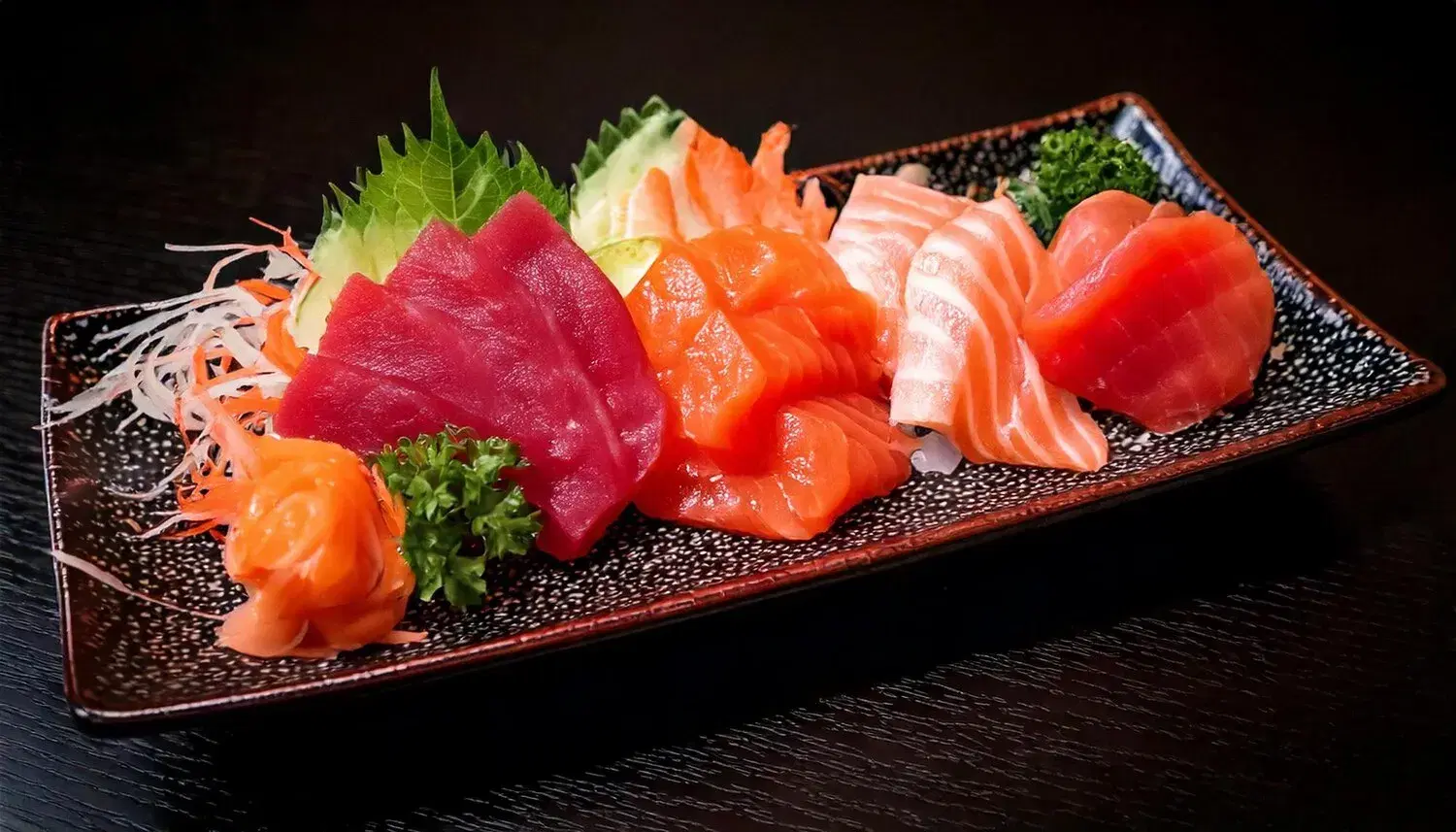

Sashimi
Thinly sliced raw fish.
Valeurs Nutritionnelles
* Le % de la valeur quotidienne (VQ) vous indique la quantité d'un nutriment dans une portion d'aliment qui contribue à un régime quotidien. 2 000 calories par jour sont utilisées pour les conseils nutritionnels généraux.
Fonctionnalité Premium
Fonctionnalité Premium
The origins of sashimi can be traced back to the Muromachi period (1336–1573) in Japan. Before refrigeration, preserving fish was a challenge. Sashimi developed as a way to enjoy the freshest possible seafood, often using techniques like ike jime (a specific method of fish slaughter) to maintain quality. It was originally a dish enjoyed by the upper classes.
Fonctionnalité Premium
Sashimi is deeply embedded in Japanese culinary culture and is considered a sophisticated and refined dish, often associated with special occasions and celebrations.
Presentation Matters
The presentation of sashimi is just as important as the taste. Great care is taken in the arrangement of the fish, garnishes, and serving dishes to create a visually appealing and harmonious presentation.
Respect for Ingredients
Sashimi reflects a deep respect for the ingredients and a commitment to showcasing their natural flavors. The minimal preparation allows the quality of the fish to shine through.
Seasonal Delicacy
Certain types of sashimi are associated with specific seasons. For example, winter is often considered the best time for fatty tuna (otoro) due to its higher fat content.
Ikejime Method
The preservation of taste, and texture also includes consideration of the fish's welfare. It is common for high-end restaurants to use Ikejime methods, which aims to keep fish relaxed and keep their flesh in better conditions.
Fonctionnalité Premium
Sashimi offers a clean, delicate, and nuanced flavor profile that highlights the natural taste of the fish.
The primary flavor is the pure, unadulterated taste of the fish itself. Different types of fish offer varying textures and subtle flavors, from the buttery richness of tuna (maguro) to the clean, slightly sweet taste of sea bream (tai). The wasabi provides a sharp, pungent contrast, while the soy sauce adds saltiness and umami. The accompanying garnishes, like daikon radish, offer a refreshing and palate-cleansing element.
Fonctionnalité Premium
Wasabi Etiquette
Avoid dissolving wasabi directly into the soy sauce. Instead, place a small amount of wasabi on the fish itself to control the intensity of the flavor.
Soy Sauce Sparingly
Dip the fish lightly into the soy sauce. Over-soaking can mask the delicate flavor of the fish.
Start with Lighter Flavors
Begin with the milder-flavored fish and progress to the richer, more flavorful types. This allows you to appreciate the nuances of each variety.
Freshness is Key
Always ensure the sashimi is from a reputable source known for its commitment to freshness and quality. Ask your server for recommendations if you are unsure.
Fonctionnalité Premium
Explorez des plats et restaurants supplémentaires de Sushi
Explorer SushiDécouvrez les meilleurs restaurants et expériences culinaires à Porto Alegre.
Explorer Porto AlegreEn savoir plus sur la culture gastronomique, la scène des restaurants et le patrimoine culinaire de Brazil.
Explorer Brazil