
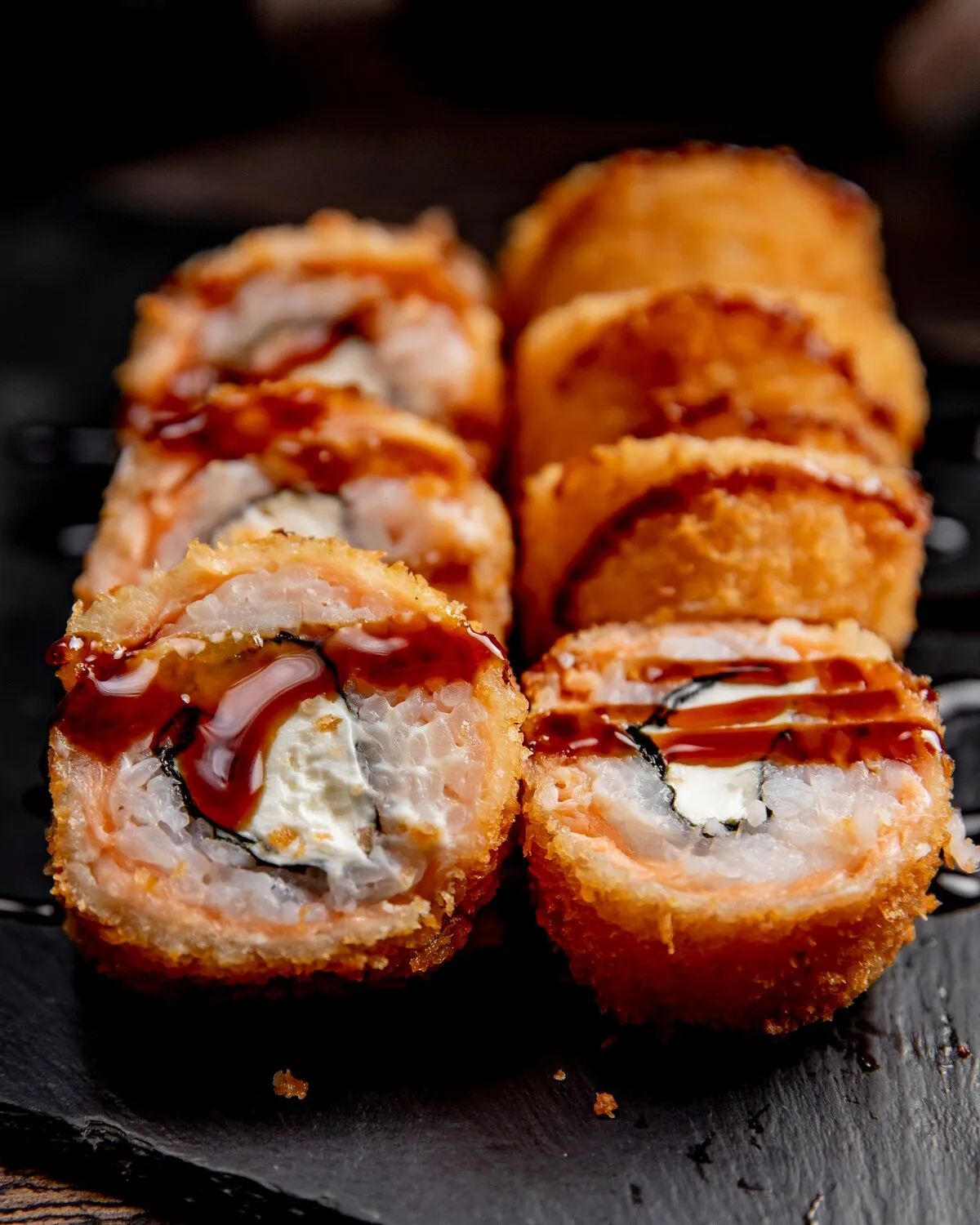

Hot Roll
Sushi roll with a fried or baked exterior, often filled with ingredients like salmon, cream cheese, and vegetables.
Valeurs Nutritionnelles
* Le % de la valeur quotidienne (VQ) vous indique la quantité d'un nutriment dans une portion d'aliment qui contribue à un régime quotidien. 2 000 calories par jour sont utilisées pour les conseils nutritionnels généraux.
Fonctionnalité Premium
Everton Sushiman
Fonctionnalité Premium
Hot rolls, a type of sushi roll featuring a fried or baked exterior, are a relatively recent innovation in sushi, primarily developed in the United States during the late 20th century. They represent a fusion of Japanese sushi techniques with American palates and preferences.
Fonctionnalité Premium
Hot rolls reflect the Americanization of sushi, adapting traditional Japanese cuisine to suit local tastes. They are often seen as a gateway to more traditional sushi for those unfamiliar with raw fish. Their popularity highlights the adaptability and evolution of culinary traditions.
Fusion Cuisine
Hot rolls exemplify fusion cuisine, blending Japanese sushi preparation with American flavors and cooking techniques. They showcase the creative adaptations that occur when different culinary cultures intersect.
Accessibility of Sushi
By using cooked ingredients and offering a familiar, comforting format (fried or baked), hot rolls make sushi more accessible to a wider audience who may be hesitant to try raw fish. They serve as an introduction to sushi culture.
Popularity in American Restaurants
Hot rolls are a ubiquitous offering in many American sushi restaurants, demonstrating their mainstream appeal and acceptance within the American culinary landscape. They are often featured prominently on menus and are a popular choice for diners.
Fonctionnalité Premium
Hot rolls offer a contrasting blend of textures and temperatures. The warm, crispy exterior gives way to the cool, soft interior, creating a unique sensory experience. The flavors vary based on the filling, but common elements include savory seafood, creamy cheese, and crisp vegetables.
The primary flavors depend heavily on the filling. Common ingredients include cooked salmon, imitation crab, or shrimp, lending a savory, umami flavor. Cream cheese adds a rich, tangy creaminess. Avocado provides a smooth, buttery texture and flavor. Vegetables like cucumber or carrot contribute a refreshing crispness. The frying or baking process adds a toasted, slightly nutty flavor to the exterior. Sauces, such as spicy mayo or eel sauce, often enhance the overall flavor profile with sweetness, spice, or further umami.
Fonctionnalité Premium
Ingredient Quality
Use fresh, high-quality ingredients. The flavor of the filling will significantly impact the overall taste of the roll.
Rice Preparation
Properly prepared sushi rice is essential. It should be slightly sticky and seasoned with rice vinegar, sugar, and salt.
Rolling Technique
Roll the sushi tightly using a bamboo rolling mat to ensure it holds its shape during frying or baking. Secure the edges with a little water.
Frying Temperature
When frying, maintain a consistent oil temperature to achieve even browning and crispiness without burning the roll. Ensure the oil is hot enough to quickly seal the exterior.
Baking Considerations
If baking, use a preheated oven and watch carefully to prevent over-browning. You may want to brush the exterior with oil or butter to enhance browning and crispness.
Fonctionnalité Premium
Explorez des plats et restaurants supplémentaires de Sushi Roll
Explorer Sushi RollDécouvrez les meilleurs restaurants et expériences culinaires à Porto Velho.
Explorer Porto VelhoEn savoir plus sur la culture gastronomique, la scène des restaurants et le patrimoine culinaire de Brazil.
Explorer Brazil