
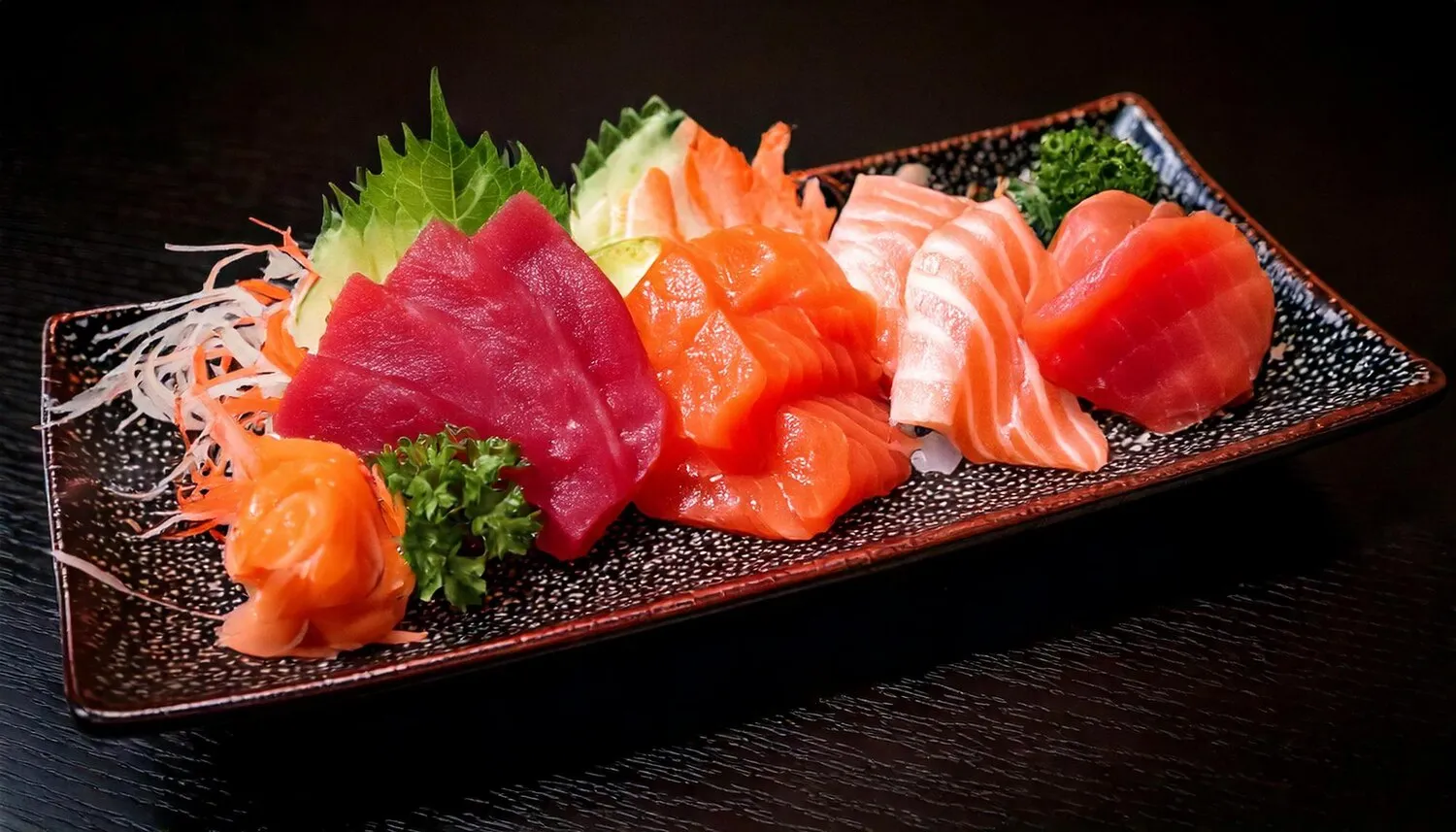

Sashimi
Thinly sliced raw fish (such as salmon or tuna) served without rice.
Valeurs Nutritionnelles
* Le % de la valeur quotidienne (VQ) vous indique la quantité d'un nutriment dans une portion d'aliment qui contribue à un régime quotidien. 2 000 calories par jour sont utilisées pour les conseils nutritionnels généraux.
Fonctionnalité Premium
Japão & Cia - Culinária Japonesa
Fonctionnalité Premium
The origins of sashimi are closely tied to the development of Japanese culinary traditions, particularly the emphasis on fresh, seasonal ingredients and precise knife skills. While the exact date is difficult to pinpoint, the practice of eating raw fish in Japan dates back centuries, evolving from a simple method of preserving fish to a sophisticated art form. Early forms likely involved lightly curing the fish with salt or vinegar. The development of refrigeration and faster transportation methods allowed for greater access to incredibly fresh fish, leading to the refined sashimi we know today.
Fonctionnalité Premium
Sashimi is more than just food in Japan; it's an art form that reflects the country's respect for nature, its emphasis on simplicity and purity, and its dedication to culinary excellence. It's often associated with special occasions and formal dining.
Presentation
The arrangement of sashimi on the plate is carefully considered, often mimicking natural landscapes or evoking seasonal themes. The placement of each slice, the choice of garnishes, and the overall aesthetic are all integral to the dining experience.
Respect for Ingredients
Sashimi embodies the Japanese philosophy of respecting ingredients and allowing their natural flavors to shine. The freshness and quality of the fish are paramount, and minimal processing is used to preserve its integrity.
Social Occasions
Sashimi is frequently served at celebratory meals, business dinners, and other important social gatherings. It is seen as a sophisticated and refined dish, appropriate for formal occasions.
Fonctionnalité Premium
Sashimi offers a pure, clean, and delicate flavor profile, emphasizing the natural taste of the fish. The accompanying condiments enhance these flavors without overpowering them.
The primary flavor is the inherent taste of the fish, which varies greatly depending on the type. Tuna can be rich and buttery, salmon smooth and fatty, while white fish such as sea bream are often delicate and slightly sweet. The condiments play a vital role. Soy sauce adds a salty umami note. Wasabi provides a pungent, sharp heat that clears the palate and enhances the fish's flavor. Pickled ginger (gari) serves as a palate cleanser between different types of fish, refreshing the taste buds. Daikon radish is also often used as a bed, providing a slight peppery flavor and textural contrast.
Fonctionnalité Premium
Dipping Etiquette
Avoid saturating the sashimi in soy sauce. A light dip is sufficient to enhance the flavor without masking it. Only dip the fish side, not the rice (if you were eating nigiri, which is sashimi's sushi counterpart).
Wasabi Usage
Instead of mixing wasabi into the soy sauce (considered inelegant), place a small amount of wasabi directly onto the fish before dipping it. This allows you to control the level of heat.
Order of Consumption
It is generally recommended to start with the lighter, more delicate fish (like white fish) and then move on to the richer, fattier ones (like tuna and salmon). This prevents the stronger flavors from overpowering the more subtle ones.
Fonctionnalité Premium
Explorez des plats et restaurants supplémentaires de Raw Fish
Explorer Raw FishDécouvrez les meilleurs restaurants et expériences culinaires à Rio Claro.
Explorer Rio ClaroEn savoir plus sur la culture gastronomique, la scène des restaurants et le patrimoine culinaire de Brazil.
Explorer Brazil