
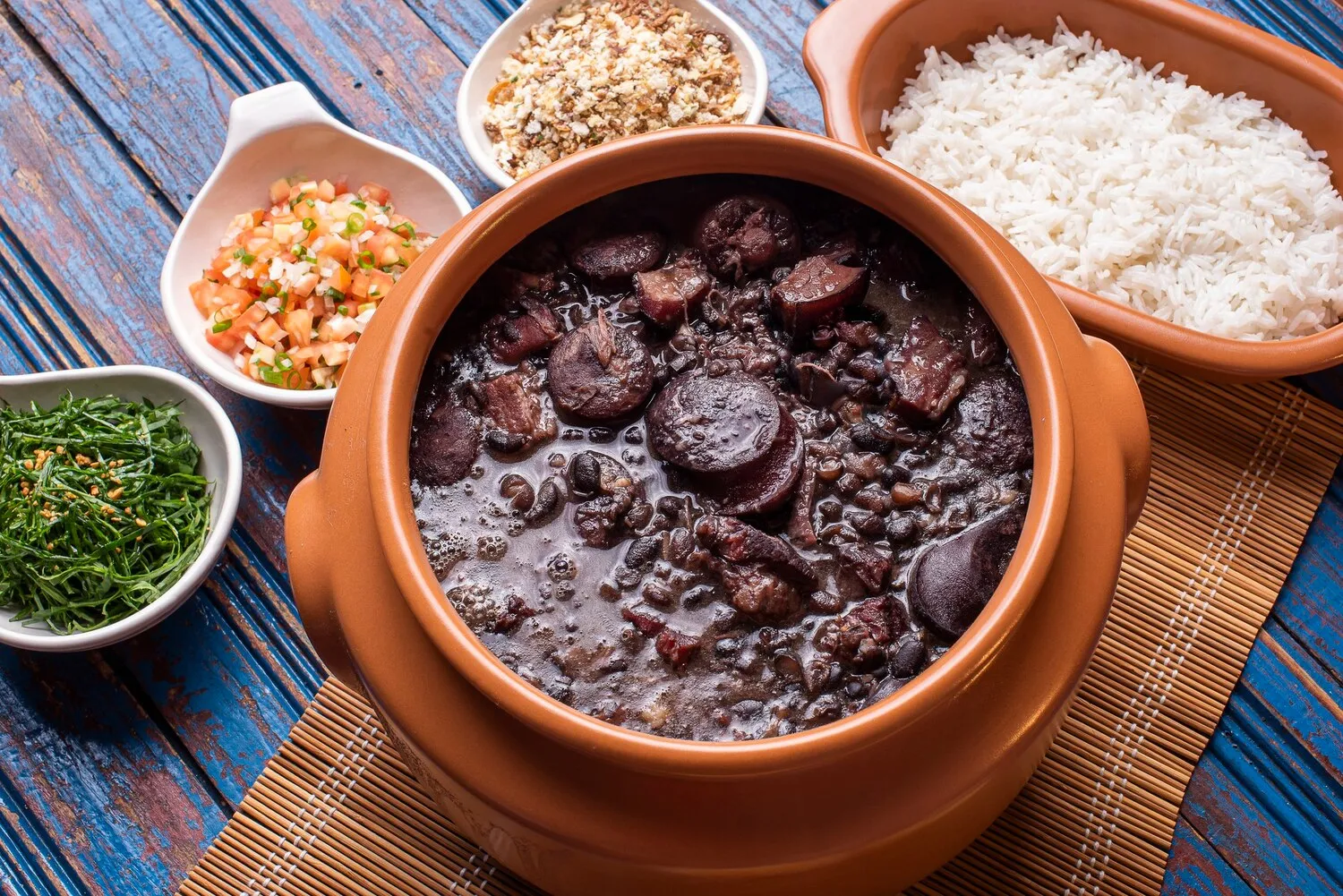

Feijoada
A traditional Brazilian black bean stew with various cuts of pork and beef, usually served with rice, collard greens, farofa (toasted cassava flour), and orange slices.
Valeurs Nutritionnelles
* Le % de la valeur quotidienne (VQ) vous indique la quantité d'un nutriment dans une portion d'aliment qui contribue à un régime quotidien. 2 000 calories par jour sont utilisées pour les conseils nutritionnels généraux.
Fonctionnalité Premium
Fonctionnalité Premium
Feijoada's origins are debated, with some believing it evolved from European bean stews and others suggesting it was created by enslaved Africans utilizing leftover meat scraps. Regardless, it represents a fusion of cultures and culinary traditions.
Fonctionnalité Premium
Feijoada is more than just a dish in Brazil; it's a symbol of national identity, a celebration of communal eating, and a representation of Brazilian history and cultural blending.
National Dish
Considered Brazil's national dish, Feijoada is a staple in restaurants and homes across the country, transcending regional and social boundaries.
Sunday Tradition
It is often prepared and enjoyed on weekends, especially Sundays, as a leisurely and social meal with family and friends.
Communal Meal
Feijoada is typically served family-style, with large portions shared among diners, fostering a sense of community and togetherness.
Carnival Celebration
Feijoada often plays a role in festive celebrations, particularly during Carnival, showcasing its importance in Brazilian culture.
Fonctionnalité Premium
Feijoada offers a rich and savory flavor profile, dominated by the earthy taste of black beans and the smoky, salty notes of various pork and beef cuts.
The black beans provide a hearty, grounding base, while the different cuts of pork (such as salted pork, smoked sausage, bacon, and sometimes pig's ears, feet, and tail) contribute layers of saltiness, smokiness, and richness. Beef, often dried or salted, adds another dimension of savory flavor. Aromatics like garlic, onions, and bay leaves enhance the overall depth. Served with accompaniments like rice, collard greens, farofa, and orange slices, the dish balances savory and refreshing elements.
Fonctionnalité Premium
Soaking the Beans
Soaking the black beans overnight is crucial to reduce cooking time and ensure even tenderness.
Desalting the Meat
Salted pork and beef must be thoroughly desalted by soaking them in water for several hours, changing the water frequently.
Slow Cooking is Key
Feijoada benefits from slow cooking, allowing the flavors to meld and deepen over time. A long simmer results in a richer and more flavorful stew.
Variety of Meats
The specific cuts of pork and beef used can vary depending on regional traditions and personal preferences. Experimenting with different combinations can enhance the complexity of the flavor.
Accompaniments Matter
The traditional accompaniments, such as rice, collard greens, farofa, and orange slices, are essential for balancing the richness of the stew and creating a complete culinary experience.
Fonctionnalité Premium
Explorez des plats et restaurants supplémentaires de Traditional Brazilian
Explorer Traditional BrazilianDécouvrez les meilleurs restaurants et expériences culinaires à Rio Claro.
Explorer Rio ClaroEn savoir plus sur la culture gastronomique, la scène des restaurants et le patrimoine culinaire de Brazil.
Explorer Brazil