
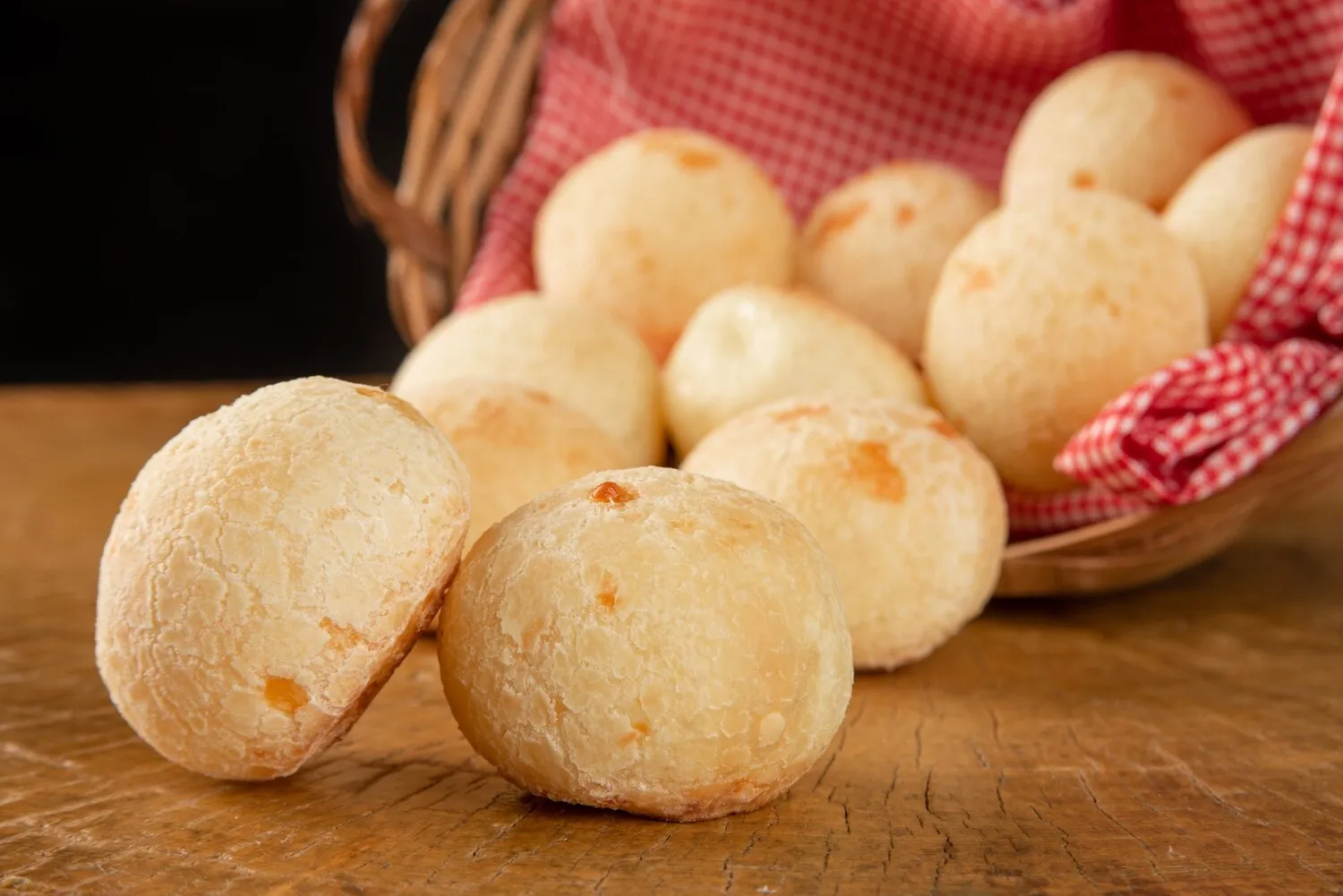

Pão de Queijo
Brazilian cheese bread
Valeurs Nutritionnelles
* Le % de la valeur quotidienne (VQ) vous indique la quantité d'un nutriment dans une portion d'aliment qui contribue à un régime quotidien. 2 000 calories par jour sont utilisées pour les conseils nutritionnels généraux.
Fonctionnalité Premium
Le Gaban Cafeteria
Fonctionnalité Premium
The exact origins of Pão de Queijo are debated, but it's generally believed to have originated in the state of Minas Gerais, Brazil, during the 18th century. The dish likely arose from the resourcefulness of cooks who used available ingredients like cassava starch (tapioca flour), locally produced cheese, and eggs to create a simple yet satisfying bread. It is speculated that enslaved Africans may have played a significant role in the early development of the recipe due to their knowledge of cassava.
Fonctionnalité Premium
Pão de Queijo is deeply embedded in Brazilian culture, especially in the state of Minas Gerais, where it's considered a staple food. It's more than just a snack; it's a symbol of Brazilian hospitality and culinary tradition.
Breakfast Staple
Pão de Queijo is commonly enjoyed for breakfast, often paired with coffee. It's a quick and easy way to start the day.
Social Gathering Food
It's a popular offering at social gatherings, parties, and cafes. Its small size makes it perfect for sharing and snacking.
Regional Pride
In Minas Gerais, Pão de Queijo is a source of regional pride. Many families have their own variations of the recipe, passed down through generations.
National Icon
Pão de Queijo has become a national icon, enjoyed throughout Brazil and increasingly popular internationally.
Fonctionnalité Premium
Pão de Queijo offers a unique and delightful flavor profile that is both savory and slightly tangy, with a chewy and airy texture.
The flavor is primarily dominated by the cheese, which can range from mild to sharp depending on the type used (typically Minas cheese, but also Parmesan or mozzarella). The tapioca flour provides a subtle, slightly fermented flavor and gives the bread its distinctive elasticity. Eggs add richness and contribute to the overall structure. The final product is a balance of cheesy, tangy, and slightly sweet flavors with a delightful chewy texture, often served warm.
Fonctionnalité Premium
Tapioca Flour is Key
Use high-quality tapioca flour (also known as tapioca starch or cassava flour). Sweet tapioca flour is often preferred for its subtle sweetness and ability to create the signature chewiness.
Cheese Selection Matters
The type of cheese used significantly impacts the flavor. Minas cheese is traditional, but other cheeses like Parmesan, mozzarella, or a blend can be used. Experiment to find your preferred flavor profile.
Scald the Flour
Scalding the tapioca flour with hot milk or water is crucial for activating the starch and creating the characteristic chewy texture. Make sure the liquid is hot, but not boiling, to avoid burning the flour.
Don't Overmix
Overmixing can develop gluten, which will result in a tougher bread. Mix just until the ingredients are combined.
Bake at High Temperature
Baking at a high temperature ensures a crispy exterior and a soft, airy interior. Preheating the oven is essential.
Enjoy Warm
Pão de Queijo is best enjoyed warm, straight from the oven, when the texture is at its peak.
Fonctionnalité Premium
Explorez des plats et restaurants supplémentaires de Handy food
Explorer Handy foodDécouvrez les meilleurs restaurants et expériences culinaires à São Carlos.
Explorer São CarlosEn savoir plus sur la culture gastronomique, la scène des restaurants et le patrimoine culinaire de Brazil.
Explorer Brazil