
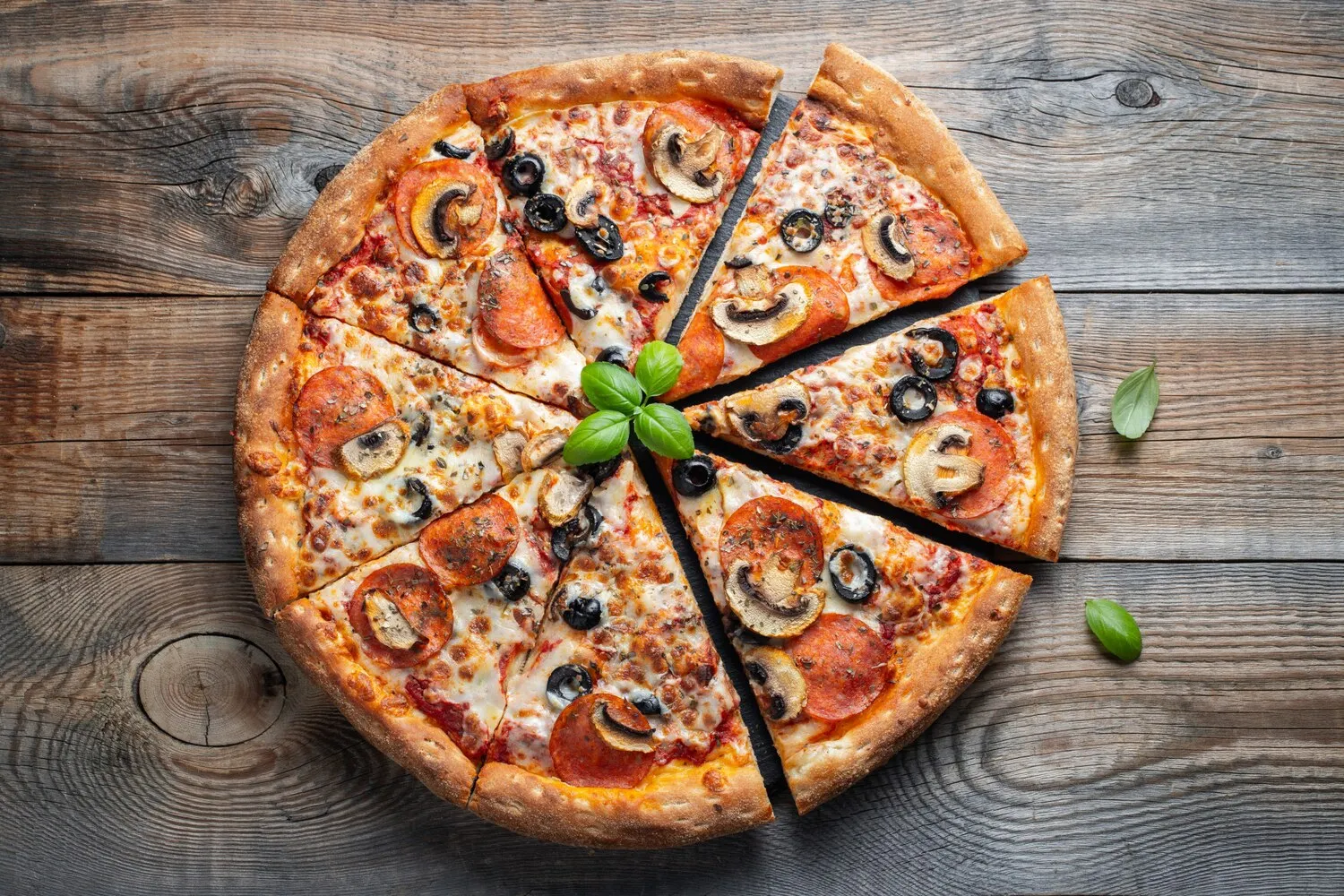

Pizza
A Casa do Ogro also serves pizza with a range of different toppings.
Valeurs Nutritionnelles
* Le % de la valeur quotidienne (VQ) vous indique la quantité d'un nutriment dans une portion d'aliment qui contribue à un régime quotidien. 2 000 calories par jour sont utilisées pour les conseils nutritionnels généraux.
Fonctionnalité Premium
A Casa Do Ogro
Fonctionnalité Premium
Pizza's roots trace back to ancient civilizations where flatbreads were topped with various ingredients. The modern pizza, however, originated in Naples, Italy, in the 18th or early 19th century, evolving from street food for the poor to a global culinary phenomenon.
Fonctionnalité Premium
Pizza holds a significant place in Italian culture, representing family, tradition, and communal dining. Its global popularity has led to countless variations, reflecting local tastes and ingredients worldwide. It is a symbol of comfort food and celebration.
Family Gatherings
In Italy, pizza is often enjoyed during family gatherings, especially on weekends. It's a casual and convivial meal that encourages sharing and conversation.
Regional Variations
Different regions of Italy boast unique pizza styles, such as Roman-style pizza (thin and crispy) and Neapolitan-style pizza (soft and chewy crust with simple toppings).
Global Adaptations
Pizza has been adapted to suit various cultural preferences around the world. For instance, Hawaiian pizza (with ham and pineapple) is popular in North America and Australia.
Pizza as a Symbol
Pizza is often used as a symbol of Italian-American culture in popular media.
Fonctionnalité Premium
Pizza offers a symphony of flavors, combining savory, tangy, and sometimes sweet or spicy notes depending on the toppings. The foundational flavors come from the dough, tomato sauce, and cheese, while toppings add layers of complexity and regional variations.
The key flavors in a classic pizza are: the slightly yeasty and chewy taste of the dough, often enhanced by olive oil; the bright acidity and sweetness of tomato sauce, frequently seasoned with herbs like oregano and basil; the rich, milky flavor of mozzarella cheese, which melts beautifully. Toppings contribute diverse profiles, from the salty and savory flavors of pepperoni and sausage to the earthy notes of mushrooms and peppers, or the briny taste of olives and anchovies.
Fonctionnalité Premium
Dough Preparation
Use high-quality flour (such as 00 flour for Neapolitan-style pizza) and allow the dough to rise slowly in a cool place for optimal flavor development.
Oven Temperature
A very hot oven (ideally 450-500°F or higher) is crucial for achieving a crispy crust and perfectly melted cheese. Consider using a pizza stone or steel to retain heat.
Sauce Simplicity
For a classic pizza, keep the tomato sauce simple with just crushed tomatoes, olive oil, garlic, and herbs. Avoid over-seasoning.
Cheese Quality
Use fresh, high-quality mozzarella cheese for the best flavor and melt. Fresh mozzarella releases water during cooking, so pat it dry before adding it to the pizza.
Topping Balance
Avoid overloading the pizza with toppings, as this can result in a soggy crust. Less is often more when it comes to pizza toppings.
Proper Baking
Make sure to rotate the pizza halfway through baking for even cooking, especially if you are baking at home.
Fonctionnalité Premium
Explorez des plats et restaurants supplémentaires de Pizza
Explorer PizzaDécouvrez les meilleurs restaurants et expériences culinaires à São Luís.
Explorer São LuísEn savoir plus sur la culture gastronomique, la scène des restaurants et le patrimoine culinaire de Brazil.
Explorer Brazil