
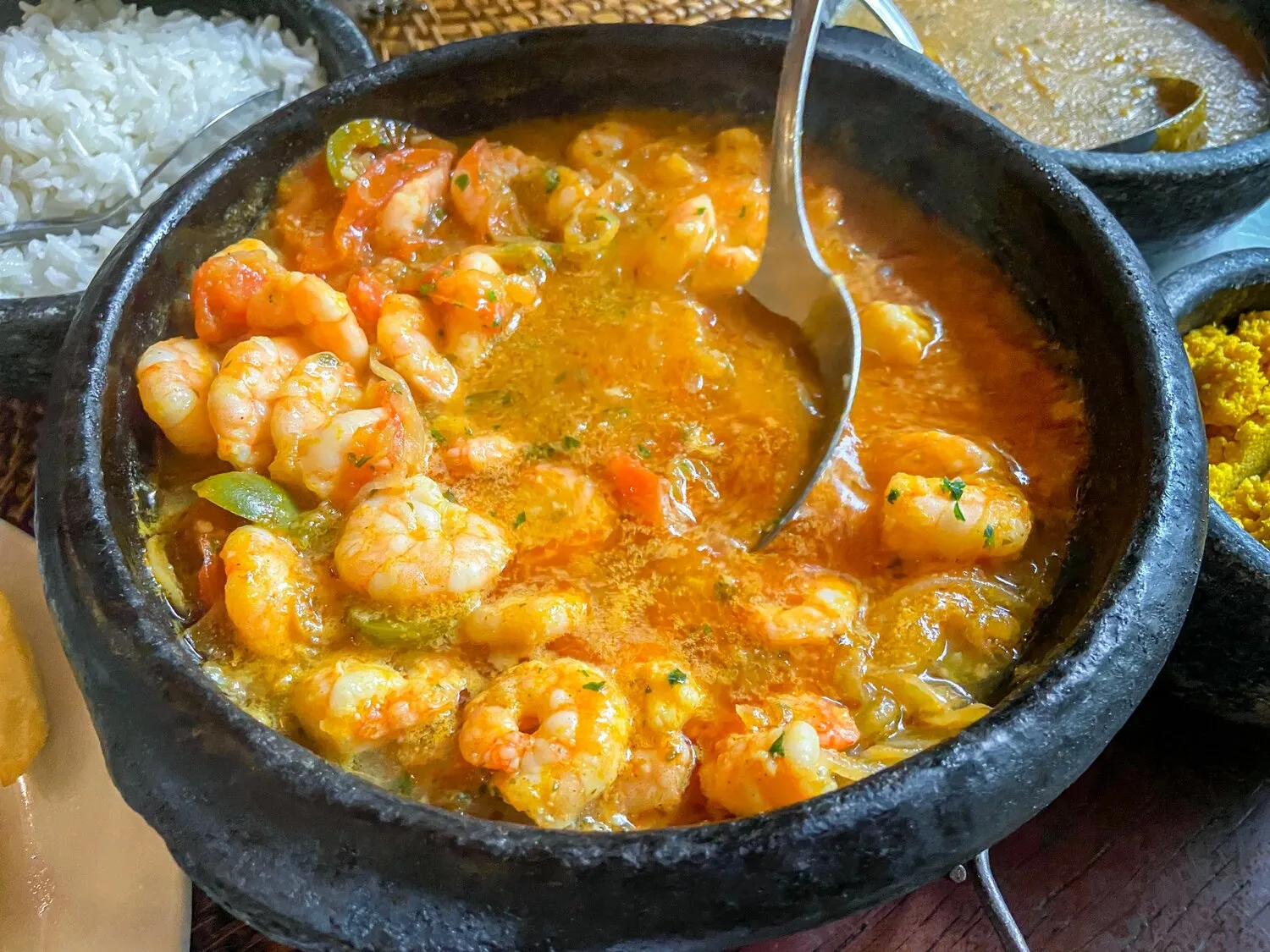

Moqueca de Camarão
Shrimp moqueca.
Valeurs Nutritionnelles
* Le % de la valeur quotidienne (VQ) vous indique la quantité d'un nutriment dans une portion d'aliment qui contribue à un régime quotidien. 2 000 calories par jour sont utilisées pour les conseils nutritionnels généraux.
Fonctionnalité Premium
Fonctionnalité Premium
Moqueca's history is deeply intertwined with the indigenous people of Brazil, particularly the Tupinambá. They traditionally prepared a stew of fish simmered in clay pots with local ingredients. Over time, Portuguese colonizers and African slaves introduced new elements like coconut milk, dendê oil (palm oil), tomatoes, onions, and peppers, enriching and transforming the dish into its modern versions.
Fonctionnalité Premium
Moqueca is more than just a dish; it's a cultural symbol representing the blend of indigenous, African, and Portuguese influences that shaped Brazilian cuisine, particularly in the coastal regions. It's often associated with celebration, family gatherings, and regional identity.
Regional Variations
There are two main types of Moqueca: Moqueca Capixaba (from Espírito Santo) and Moqueca Baiana (from Bahia). The key difference is the use of dendê oil and coconut milk in Moqueca Baiana, while Moqueca Capixaba uses annatto seeds for color and olive oil. This reflects distinct regional culinary traditions.
Celebratory Meal
Moqueca is often served during special occasions and family gatherings, symbolizing togetherness and shared enjoyment. The act of cooking and sharing Moqueca strengthens bonds and reinforces cultural identity.
Coastal Heritage
Moqueca represents the bounty of the Brazilian coast and its connection to the sea. The use of fresh seafood and locally sourced ingredients highlights the importance of maritime resources in the region's culinary heritage.
Fonctionnalité Premium
Moqueca de Camarão offers a vibrant and savory flavor profile, characterized by the sweetness of shrimp, the richness of coconut milk, the distinctive taste of dendê oil, and the aromatic blend of vegetables and herbs.
The primary flavor is undoubtedly the sweet and delicate taste of fresh shrimp, perfectly complemented by the creamy and slightly sweet coconut milk, which creates a rich and luxurious broth. Dendê oil adds a unique earthy and subtly sweet flavor, lending the dish its characteristic vibrant orange color. Aromatic vegetables like onions, garlic, bell peppers (often a mix of colors), and tomatoes contribute a base of savory sweetness, while cilantro and lime juice bring a fresh, bright, and zesty element. Some versions may include malagueta peppers for a spicy kick. The overall taste is a harmonious balance of seafood sweetness, creamy richness, and aromatic spice.
Fonctionnalité Premium
Freshness is Key
Use the freshest shrimp and other seafood available. Fresh ingredients make a significant difference in the overall flavor of the dish.
Don't Overcook the Shrimp
Shrimp cooks quickly, so be careful not to overcook it. Overcooked shrimp will be rubbery and tough. Add the shrimp towards the end of the cooking process and cook until just pink and opaque.
Gentle Simmer
Cook the Moqueca over low heat and simmer gently. Avoid high heat, which can cause the coconut milk to curdle and the flavors to become too intense.
Use a Clay Pot (if possible)
Traditionally, Moqueca is cooked in a clay pot, which imparts a unique earthy flavor and helps distribute heat evenly. If you don't have a clay pot, a heavy-bottomed pot will work as well.
Adjust the Spice Level
Adjust the amount of chili peppers (malagueta) to your preference. Start with a small amount and taste as you go. Remember, the heat will intensify as the dish cooks.
Fonctionnalité Premium
Explorez des plats et restaurants supplémentaires de Moqueca
Explorer MoquecaDécouvrez les meilleurs restaurants et expériences culinaires à São Luís.
Explorer São LuísEn savoir plus sur la culture gastronomique, la scène des restaurants et le patrimoine culinaire de Brazil.
Explorer Brazil