
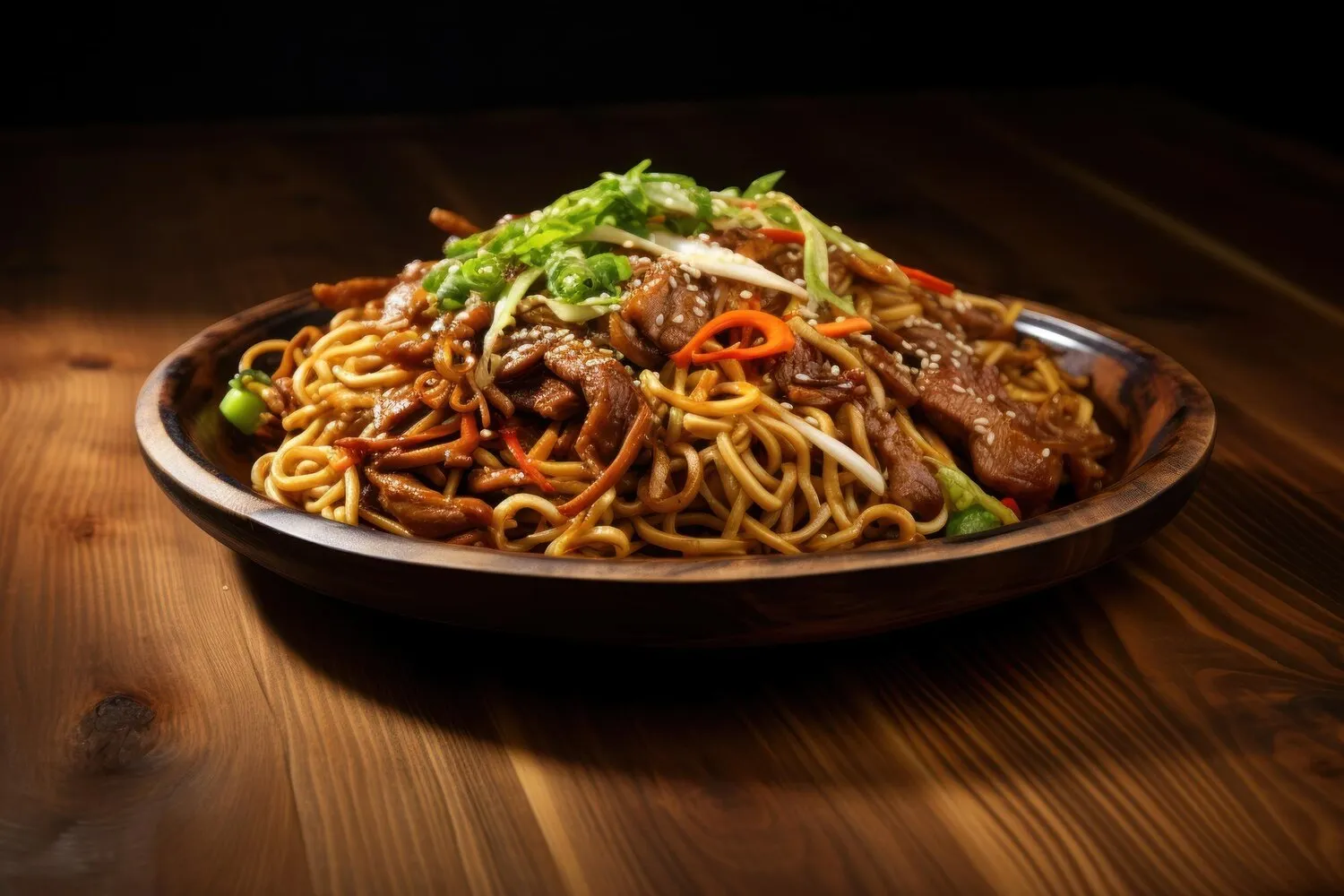

Yakisoba
Fried noodles with vegetables and choice of protein (beef, chicken, pork, shrimp, or vegetarian).
Valeurs Nutritionnelles
* Le % de la valeur quotidienne (VQ) vous indique la quantité d'un nutriment dans une portion d'aliment qui contribue à un régime quotidien. 2 000 calories par jour sont utilisées pour les conseils nutritionnels généraux.
Fonctionnalité Premium
Fonctionnalité Premium
Yakisoba's history is tied to the post-World War II era in Japan when wheat flour became more accessible. It's considered a Yoshoku dish, meaning a Western-influenced Japanese dish, adapting Chinese stir-fried noodles to Japanese tastes and available ingredients.
Fonctionnalité Premium
Yakisoba is a popular and accessible comfort food in Japan, commonly found at festivals, street food stalls, and in households. It is often enjoyed as a quick and affordable meal.
Festival Food
Yakisoba is a staple at Japanese festivals (matsuri), where it's cooked on large griddles and served in paper containers. The smoky aroma and savory taste are synonymous with these festive occasions.
Street Food Staple
Yakisoba is a common sight at street food stalls and food trucks, offering a customizable and satisfying meal on the go. It represents the accessible and casual dining culture of Japan.
Family Meal
It's also a common home-cooked meal, easily adapted with whatever vegetables and protein are on hand. It showcases the adaptability and resourcefulness of Japanese cuisine.
Fonctionnalité Premium
Yakisoba boasts a savory, slightly sweet, and tangy flavor profile, achieved through a combination of soy sauce, Worcestershire sauce, and often oyster sauce. The noodles absorb the sauce, creating a rich and umami-packed dish.
The primary flavor drivers are the yakisoba sauce itself, which typically includes soy sauce, Worcestershire sauce, ketchup, oyster sauce, and sometimes mirin and other seasonings. The stir-fried vegetables add freshness and texture, while the protein provides a savory element. Benishoga (pickled ginger) is a common topping that provides a sharp, sour, and refreshing counterpoint to the richness of the sauce and other ingredients. Aonori (dried seaweed flakes) also add a hint of ocean flavor and visual appeal. Mayonnaise and katsuobushi (dried bonito flakes) are sometimes added to create richer, more complex flavor layers.
Fonctionnalité Premium
Noodle Preparation
Loosen the yakisoba noodles before cooking to prevent clumping and ensure even cooking. Pre-steaming or parboiling can help achieve this.
High Heat Cooking
Cook the yakisoba over high heat to achieve a slightly charred and smoky flavor. This also helps to prevent the noodles from becoming soggy.
Sauce Timing
Add the yakisoba sauce towards the end of cooking, allowing it to coat the noodles evenly and caramelize slightly without burning.
Ingredient Balance
Maintain a good balance between noodles, vegetables, and protein to create a well-rounded and flavorful dish. Don't overcrowd the pan, or the ingredients will steam instead of fry.
Fonctionnalité Premium
Explorez des plats et restaurants supplémentaires de Asian
Explorer AsianDécouvrez les meilleurs restaurants et expériences culinaires à Sorocaba.
Explorer SorocabaEn savoir plus sur la culture gastronomique, la scène des restaurants et le patrimoine culinaire de Brazil.
Explorer Brazil