
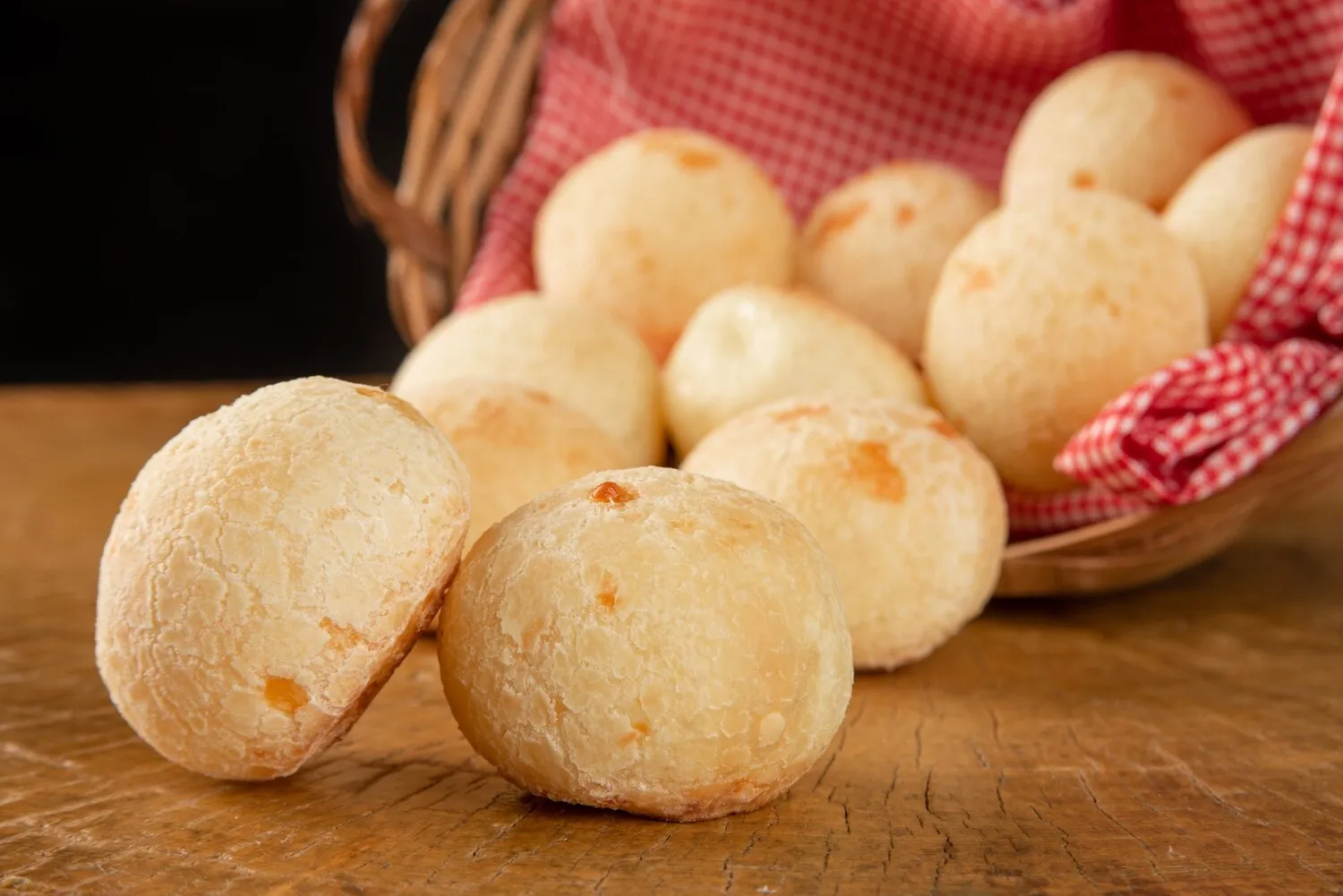

Pão de Queijo
Cheese bread.
Valeurs Nutritionnelles
* Le % de la valeur quotidienne (VQ) vous indique la quantité d'un nutriment dans une portion d'aliment qui contribue à un régime quotidien. 2 000 calories par jour sont utilisées pour les conseils nutritionnels généraux.
Fonctionnalité Premium
Fonctionnalité Premium
The exact origins of Pão de Queijo are somewhat debated, but it's widely believed to have emerged in the state of Minas Gerais, Brazil, during the 18th century. This period saw a rise in dairy farming and cheese production in the region. The use of cassava starch (tapioca flour), readily available in Brazil, likely contributed to its development, offering an alternative to wheat flour which was often scarce and expensive.
Fonctionnalité Premium
Pão de Queijo is deeply embedded in Brazilian culture, particularly in Minas Gerais, where it's a staple food enjoyed at any time of day.
Breakfast Staple
It's a very common breakfast item in Brazil, often paired with coffee.
Social Gathering Food
Pão de Queijo is frequently served at social gatherings and parties, providing a comforting and familiar snack.
Minas Gerais Pride
It is considered a culinary symbol of Minas Gerais, representing the region's rich dairy heritage.
National Favorite
While originating in Minas Gerais, pão de queijo's popularity has spread throughout Brazil and it is considered a national favorite.
Fonctionnalité Premium
Pão de Queijo boasts a savory and slightly tangy flavor profile, with a unique chewy texture.
The primary flavors come from the cheese, which varies depending on the type used, but often includes queijo minas, a semi-cured Brazilian cheese. The tapioca flour provides a characteristic chewy texture and a mild, slightly sour taste. The addition of milk, eggs, and oil further enriches the flavor and contributes to the bread's soft interior and slightly crisp exterior. Some variations include parmesan or other hard cheeses for a stronger, saltier taste.
Fonctionnalité Premium
Tapioca Starch Choice
Use both sweet and sour tapioca starch for the most authentic flavor and texture. The sour starch contributes to the chewiness and a slight tang.
Cheese Quality
The quality of the cheese significantly impacts the final flavor. Authentic 'queijo minas' is ideal, but other semi-hard cheeses like mozzarella or Monterey Jack can be substituted, though the flavor will be different.
Temperature Matters
Scalding the tapioca starch with hot milk or water helps to gelatinize it, resulting in a chewier texture. Allow the mixture to cool slightly before adding the eggs.
Baking Time and Temperature
Baking at a high temperature initially helps to create a crispy exterior, while reducing the temperature allows the interior to cook through without burning. Keep an eye on them – oven times may vary.
Freezing for Later
Pão de Queijo dough can be frozen before baking. Just thaw completely and bake as directed for a convenient snack anytime.
Fonctionnalité Premium
Explorez des plats et restaurants supplémentaires de Handy food
Explorer Handy foodDécouvrez les meilleurs restaurants et expériences culinaires à Uberaba.
Explorer UberabaEn savoir plus sur la culture gastronomique, la scène des restaurants et le patrimoine culinaire de Brazil.
Explorer Brazil