
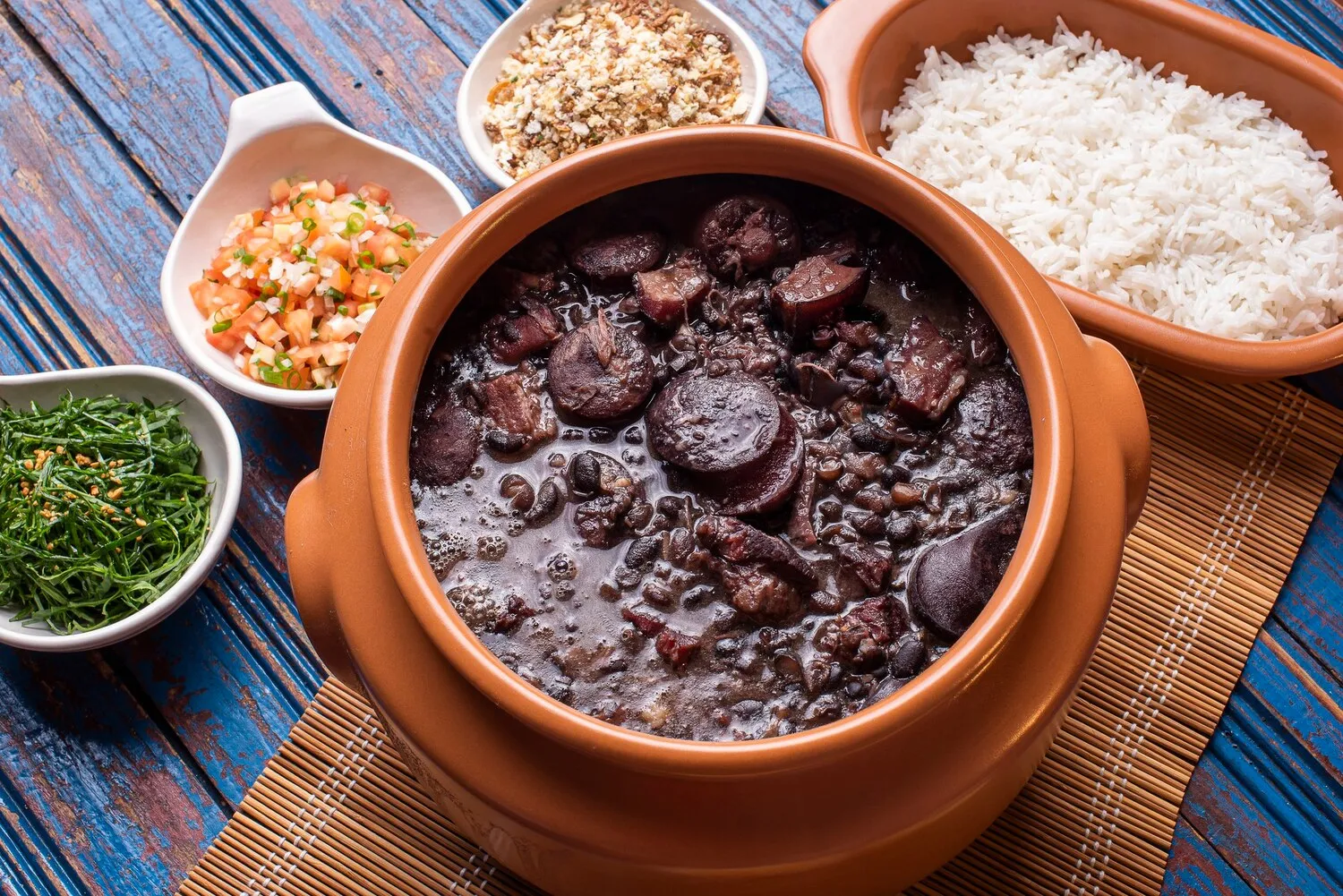

Feijoada
A hearty stew of black beans and various cuts of pork, beef, and sausage. A classic Brazilian dish, often served with rice, collard greens, farofa, and orange slices.
Valeurs Nutritionnelles
* Le % de la valeur quotidienne (VQ) vous indique la quantité d'un nutriment dans une portion d'aliment qui contribue à un régime quotidien. 2 000 calories par jour sont utilisées pour les conseils nutritionnels généraux.
Fonctionnalité Premium
Fonctionnalité Premium
Feijoada's origins are debated, with some claiming it's a direct descendant of Roman stews or Portuguese bean dishes, adapted with ingredients available in Brazil during the colonial period. Others suggest it was created by enslaved Africans utilizing discarded meat cuts, transforming them into a flavorful and nourishing meal. Regardless of its precise origin, Feijoada represents a fusion of cultures and culinary ingenuity.
Fonctionnalité Premium
Feijoada is considered Brazil's national dish, deeply embedded in its cultural identity. It's more than just a meal; it's a social event, often enjoyed on weekends with family and friends, fostering a sense of community and celebration.
Social Gathering
Feijoada is traditionally a dish served for large gatherings. Preparing it is a time-consuming process, making it perfect for sharing and celebrating with loved ones, typically on Saturdays or Sundays.
Regional Variations
While the core ingredients remain consistent, regional variations exist across Brazil. Some regions might use different cuts of meat, add local spices, or serve it with unique accompaniments. These variations reflect the diverse culinary landscape of the country.
Symbolic Representation
Some believe Feijoada reflects Brazil's history and diverse cultural influences. The black beans and less desirable cuts of meat represent the contributions of enslaved Africans, while the inclusion of other meats reflects the European influence. It is a symbolic dish with a rich, albeit complex, past.
Fonctionnalité Premium
Feijoada is a complex and rich stew characterized by savory, smoky, and slightly salty flavors. The black beans provide an earthy base, while various pork cuts and sausages contribute diverse textures and umami. A hint of bitterness may come from the collard greens, balanced by the sweetness of orange slices.
The primary flavor profile revolves around the black beans, which are slow-cooked to a creamy consistency. Smoked and salted pork, such as bacon, ribs, and sausage (linguica or paio), infuse the beans with a smoky and savory depth. Beef, often dried or salted, adds another layer of richness. Spices like garlic, bay leaf, and sometimes chili peppers contribute aromatic complexity. The accompanying sides, such as rice, collard greens, farofa (toasted cassava flour), and orange slices, serve to balance the richness and provide textural contrasts.
Fonctionnalité Premium
Ingredient Quality
Using high-quality ingredients, especially the smoked and salted meats, is crucial for the overall flavor. Source from reputable butchers or markets to ensure authenticity and freshness.
Soaking the Beans
Soaking the black beans overnight significantly reduces cooking time and helps to remove substances that can cause digestive discomfort. Discard the soaking water before cooking.
Slow Cooking
Feijoada benefits from slow cooking, allowing the flavors to meld and the beans to become incredibly tender. Use a slow cooker, Dutch oven, or pressure cooker to achieve the desired result.
Meat Preparation
Salted meats should be soaked in water for several hours (or even overnight, changing the water a few times) to reduce the saltiness before adding them to the feijoada. This prevents the dish from becoming overly salty.
Fonctionnalité Premium
Explorez des plats et restaurants supplémentaires de Stew
Explorer StewDécouvrez les meilleurs restaurants et expériences culinaires à V Redonda.
Explorer V RedondaEn savoir plus sur la culture gastronomique, la scène des restaurants et le patrimoine culinaire de Brazil.
Explorer Brazil