
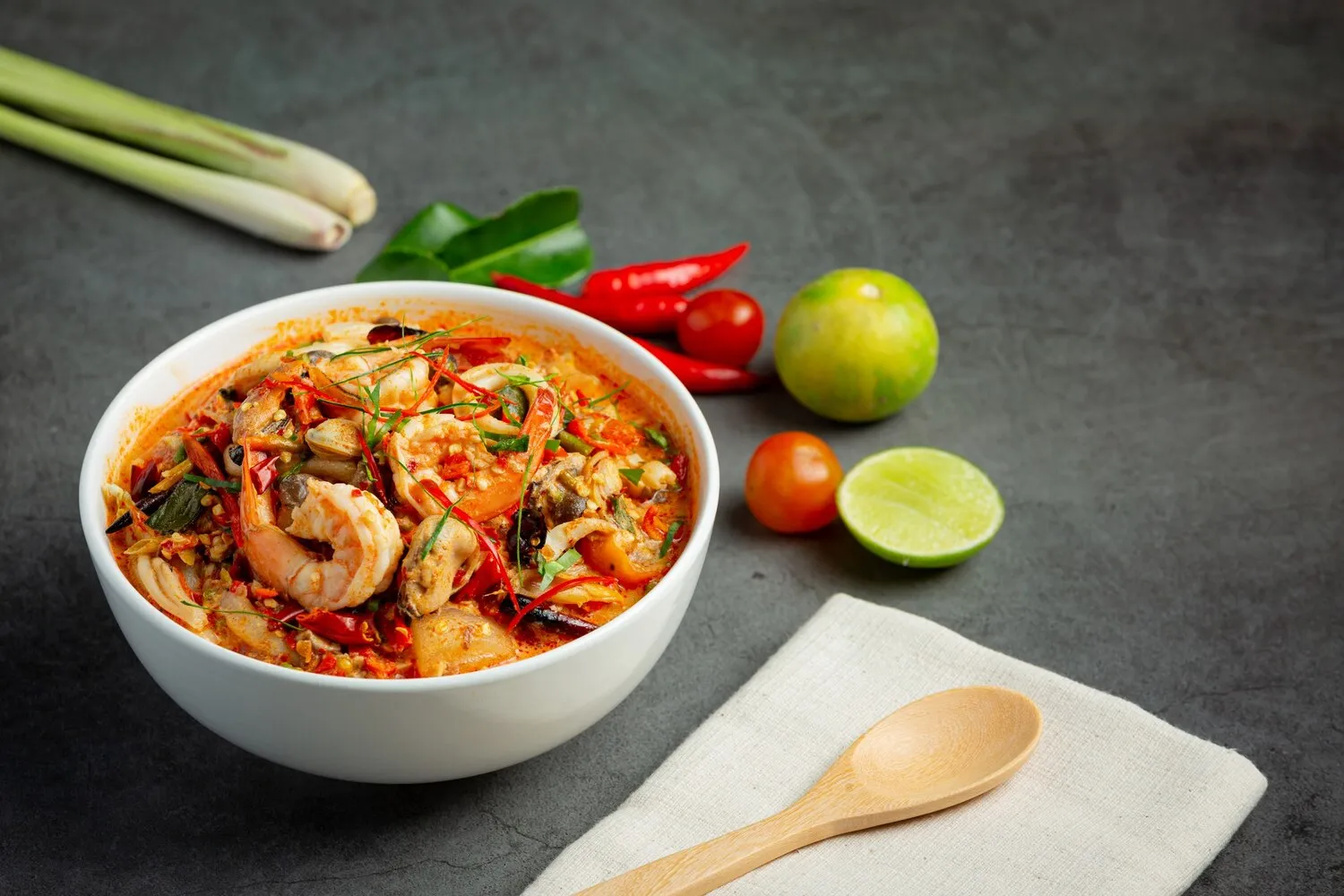

Tom Yum Soup
Hot and sour soup with lemongrass, galangal, lime leaves, chili, and mushrooms.
Valeurs Nutritionnelles
* Le % de la valeur quotidienne (VQ) vous indique la quantité d'un nutriment dans une portion d'aliment qui contribue à un régime quotidien. 2 000 calories par jour sont utilisées pour les conseils nutritionnels généraux.
Fonctionnalité Premium
White Elephant Thai Cuisine at Chestermere Station
Fonctionnalité Premium
The precise origins of Tom Yum are somewhat shrouded in history, but it is believed to have originated in Central Thailand. Its development likely evolved organically, incorporating readily available ingredients from the region, reflecting the agricultural practices and culinary traditions of the time.
Fonctionnalité Premium
Tom Yum is more than just a soup; it's deeply ingrained in Thai culture, representing the country's appreciation for balanced flavors and the use of fresh, local ingredients. It's a comfort food, a celebratory dish, and often used for its perceived medicinal properties.
Regional Variations
Different regions of Thailand have their own variations of Tom Yum. Tom Yum Goong (with shrimp) is perhaps the most famous, but there are also versions with chicken (Tom Yum Gai), seafood (Tom Yum Talay), or mushrooms (Tom Yum Het).
Perceived Health Benefits
In Thai culture, Tom Yum is often believed to have medicinal properties. The spicy chilies can help clear sinuses, while the aromatic herbs are thought to aid digestion. It's a common remedy for colds and flu.
A Symbol of Thai Cuisine
Tom Yum is recognized globally as one of the defining dishes of Thai cuisine, showcasing its distinctive flavors and culinary techniques.
Fonctionnalité Premium
Tom Yum is a harmonious blend of sour, spicy, salty, and aromatic flavors, creating a truly unique and invigorating soup.
The sourness primarily comes from lime juice or tamarind paste. The spiciness is derived from fresh chilies or chili paste. Saltiness is achieved through fish sauce, a staple in Thai cuisine. Aromatic notes are contributed by galangal (a ginger-like rhizome), lemongrass, and kaffir lime leaves. Mushrooms add an earthy umami depth, while optional additions like shrimp, chicken, or pork provide protein and further enhance the flavor profile. A touch of sweetness may also be present, often from palm sugar.
Fonctionnalité Premium
Using Fresh Ingredients
Fresh ingredients are crucial for the best flavor. Use fresh galangal, lemongrass, kaffir lime leaves, and chilies whenever possible. Dried or powdered substitutes will not deliver the same level of aromatic complexity.
Balancing the Flavors
The key to a great Tom Yum is achieving a balance between sour, spicy, salty, and aromatic notes. Taste and adjust the seasonings as you go to ensure that no single flavor overpowers the others.
Preventing Bitterness
To avoid bitterness, do not boil the lime juice. Add it at the end of the cooking process. Also, remove the kaffir lime leaves after they have infused their flavor into the soup.
Using Fish Sauce Carefully
Fish sauce adds a characteristic umami flavor, but it's also very salty. Start with a small amount and add more to taste, being mindful not to oversalt the soup.
Fonctionnalité Premium
Explorez des plats et restaurants supplémentaires de Soup
Explorer SoupDécouvrez les meilleurs restaurants et expériences culinaires à Chestermere.
Explorer ChestermereEn savoir plus sur la culture gastronomique, la scène des restaurants et le patrimoine culinaire de Canada.
Explorer Canada