
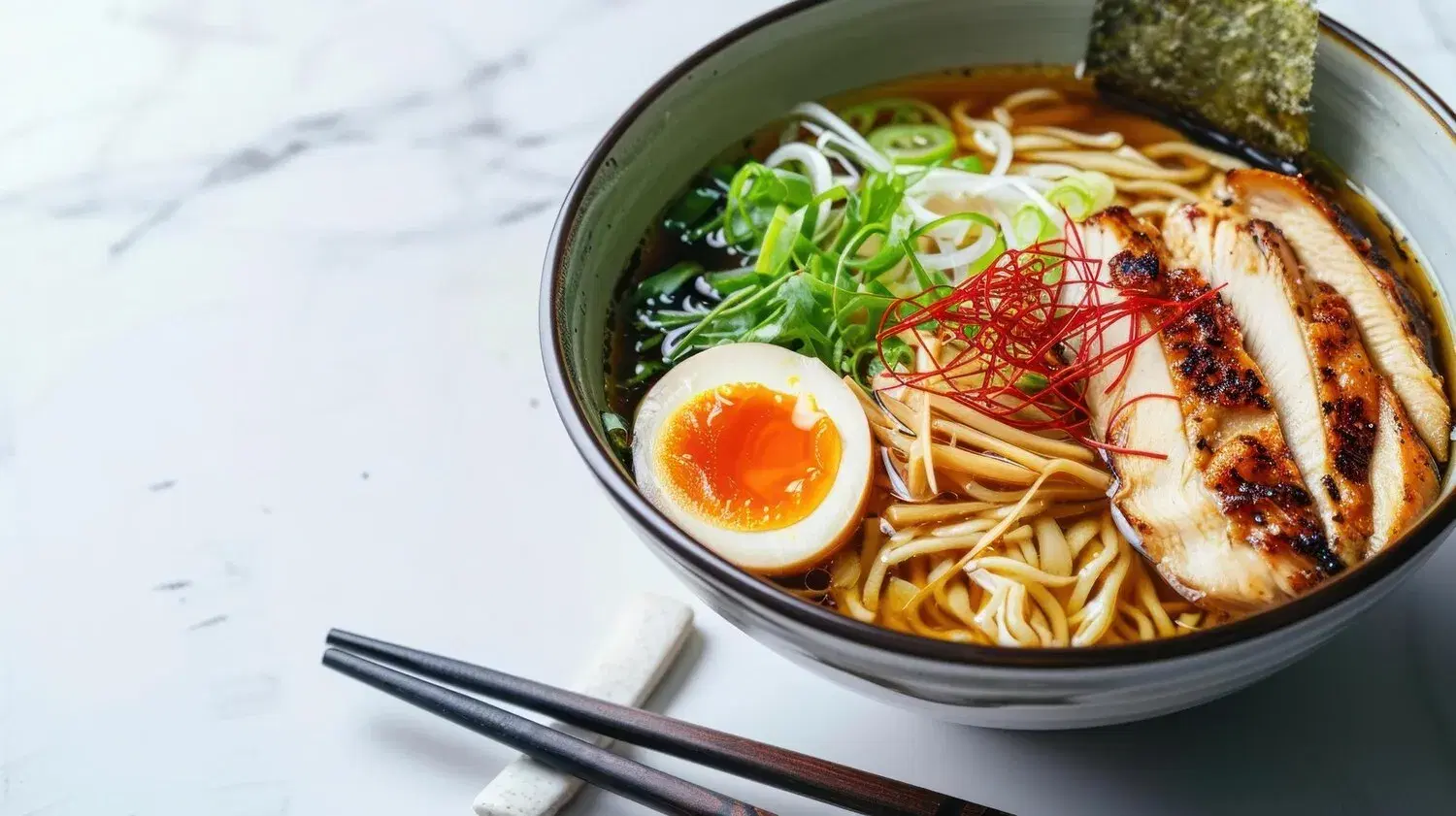

Ramen
The restaurant features different variations of Ramen.
Valeurs Nutritionnelles
* Le % de la valeur quotidienne (VQ) vous indique la quantité d'un nutriment dans une portion d'aliment qui contribue à un régime quotidien. 2 000 calories par jour sont utilisées pour les conseils nutritionnels généraux.
Fonctionnalité Premium
Fonctionnalité Premium
Ramen's origins are traced back to wheat noodles introduced from China to Japan, likely in the late 19th or early 20th century. Early versions were simple noodle soups served in Chinese restaurants. The dish evolved significantly after World War II, influenced by food shortages and the availability of cheap wheat flour from the US. This period saw the emergence of diverse regional variations and the popularization of instant ramen.
Fonctionnalité Premium
Ramen is deeply ingrained in Japanese culture, representing both comfort food and a culinary art form. Ramen shops are ubiquitous, each striving to perfect their unique recipe and create a distinct ramen experience.
Ramen Culture
Ramen is more than just a meal; it's a social experience. Slurping noodles is considered polite and enhances the flavor. The speed of eating is also important, as the noodles are best enjoyed hot and springy.
Regional Variations
Japan boasts numerous regional ramen variations, each reflecting local ingredients and culinary traditions. Examples include Hakata ramen (pork bone broth), Sapporo ramen (miso broth), and Kitakata ramen (soy sauce broth).
Instant Ramen
Instant ramen, invented in the late 1950s, revolutionized food consumption and further cemented ramen's place in Japanese culture and globally. It is a quick, affordable, and accessible way to enjoy a taste of ramen.
Fonctionnalité Premium
Ramen boasts a complex umami flavor profile derived from the broth, tare (seasoning sauce), and toppings. Each component contributes unique tastes, creating a deeply satisfying culinary experience.
The broth, the heart of ramen, is typically made from pork, chicken, fish, or vegetables (or a combination) simmered for hours to extract rich flavors. Tare, a concentrated seasoning sauce made with soy sauce, miso, or salt, adds depth and complexity. Toppings like chashu (braised pork belly), menma (fermented bamboo shoots), nori (dried seaweed), scallions, and ajitsuke tamago (seasoned soft-boiled egg) contribute contrasting textures and flavors.
Fonctionnalité Premium
Slurping is Encouraged
Don't be shy about slurping your noodles! It helps aerate the noodles, enhancing their flavor and cooling them down.
Customize Your Order
Many ramen shops allow you to customize your order, such as the noodle firmness, broth richness, and spice level. Don't be afraid to ask for adjustments to suit your preferences.
Enjoy the Broth
The broth is a crucial element of ramen. Take your time to savor its complex flavors and appreciate the chef's efforts in crafting it.
Kaedama Option
In some ramen shops, especially those serving Hakata-style ramen, you can order 'kaedama,' which is an extra serving of noodles to enjoy with the remaining broth.
Fonctionnalité Premium
Explorez des plats et restaurants supplémentaires de Soup
Explorer SoupDécouvrez les meilleurs restaurants et expériences culinaires à Bergamo.
Explorer BergamoEn savoir plus sur la culture gastronomique, la scène des restaurants et le patrimoine culinaire de Italy.
Explorer Italy