
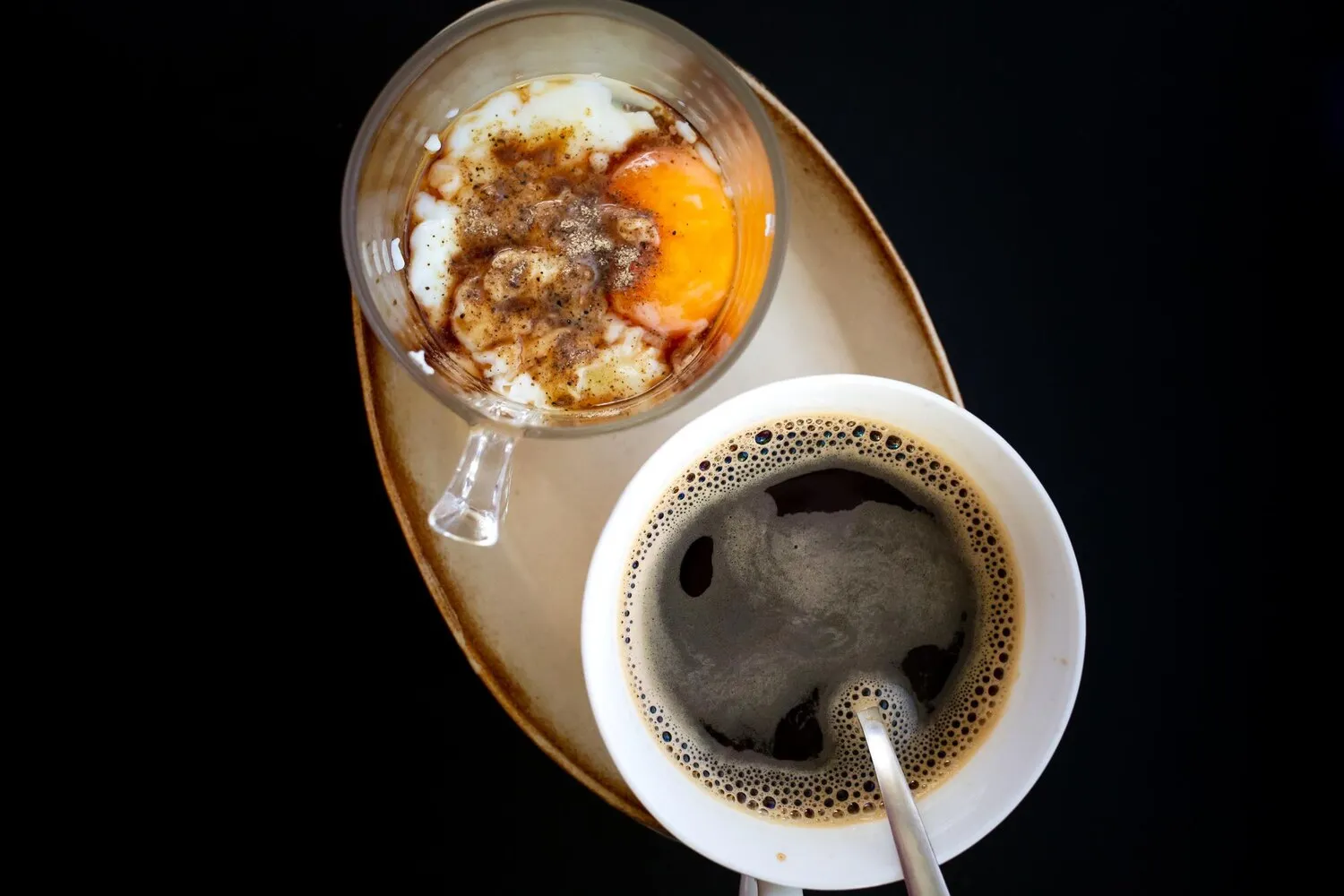

Espresso
Concentrated coffee beverage brewed by forcing hot water through finely-ground coffee beans.
Valeurs Nutritionnelles
* Le % de la valeur quotidienne (VQ) vous indique la quantité d'un nutriment dans une portion d'aliment qui contribue à un régime quotidien. 2 000 calories par jour sont utilisées pour les conseils nutritionnels généraux.
Fonctionnalité Premium
Fonctionnalité Premium
The story of espresso begins in late 19th-century Italy, driven by the desire for faster coffee preparation in burgeoning coffee houses. Angelo Moriondo patented a 'new steam machinery for the economic and instantaneous confection of coffee beverage' in 1884. Luigi Bezzera further refined the process in 1901, and Desiderio Pavoni commercialized the first espresso machine, solidifying espresso's place in Italian culture.
Fonctionnalité Premium
Espresso is deeply embedded in Italian culture and has spread worldwide, becoming a central part of cafe culture and daily rituals.
Coffee Breaks
In Italy, espresso is often consumed quickly at the bar as a short break throughout the day. It's a social ritual as much as a caffeine fix.
Cafe Culture
Espresso forms the base for many popular coffee drinks like cappuccino, latte, and macchiato, and is a staple in cafes worldwide. The preparation and presentation of espresso are often considered an art form.
Italian Identity
Espresso is viewed as an integral part of Italian heritage and a symbol of Italian craftsmanship and quality.
Fonctionnalité Premium
Espresso delivers a concentrated and intense coffee flavor profile characterized by a bold, rich, and often slightly bitter taste, enhanced by subtle nuances depending on the bean origin and roasting level.
The primary flavor components include: a deep, roasted coffee base often with dark chocolate or nutty undertones; a distinct bitterness balanced by sweetness (ideally); acidity which contributes to brightness and complexity; and a creamy texture contributed by the emulsified coffee oils. Different bean origins contribute unique characteristics; for example, Ethiopian beans might introduce floral or citrus notes, while Sumatran beans could offer earthy tones.
Fonctionnalité Premium
Grind Size
Use a fine, consistent grind specifically for espresso. Too coarse will result in weak, sour espresso (under-extraction), while too fine will cause a bitter taste and slow extraction (over-extraction).
Tamping
Tamp the coffee grounds evenly and firmly with approximately 30 pounds of pressure to create a consistent density for even water flow. Consistent tamping leads to consistent extraction.
Water Temperature
Use water heated to around 195-205°F (90-96°C) for optimal extraction. Temperature fluctuations can affect the flavor profile.
Extraction Time
Aim for an extraction time of around 25-30 seconds for a double shot (around 2 ounces). Adjust grind size to achieve this timeframe.
Fonctionnalité Premium
Explorez des plats et restaurants supplémentaires de Coffee
Explorer CoffeeDécouvrez les meilleurs restaurants et expériences culinaires à Milano.
Explorer MilanoEn savoir plus sur la culture gastronomique, la scène des restaurants et le patrimoine culinaire de Italy.
Explorer Italy