
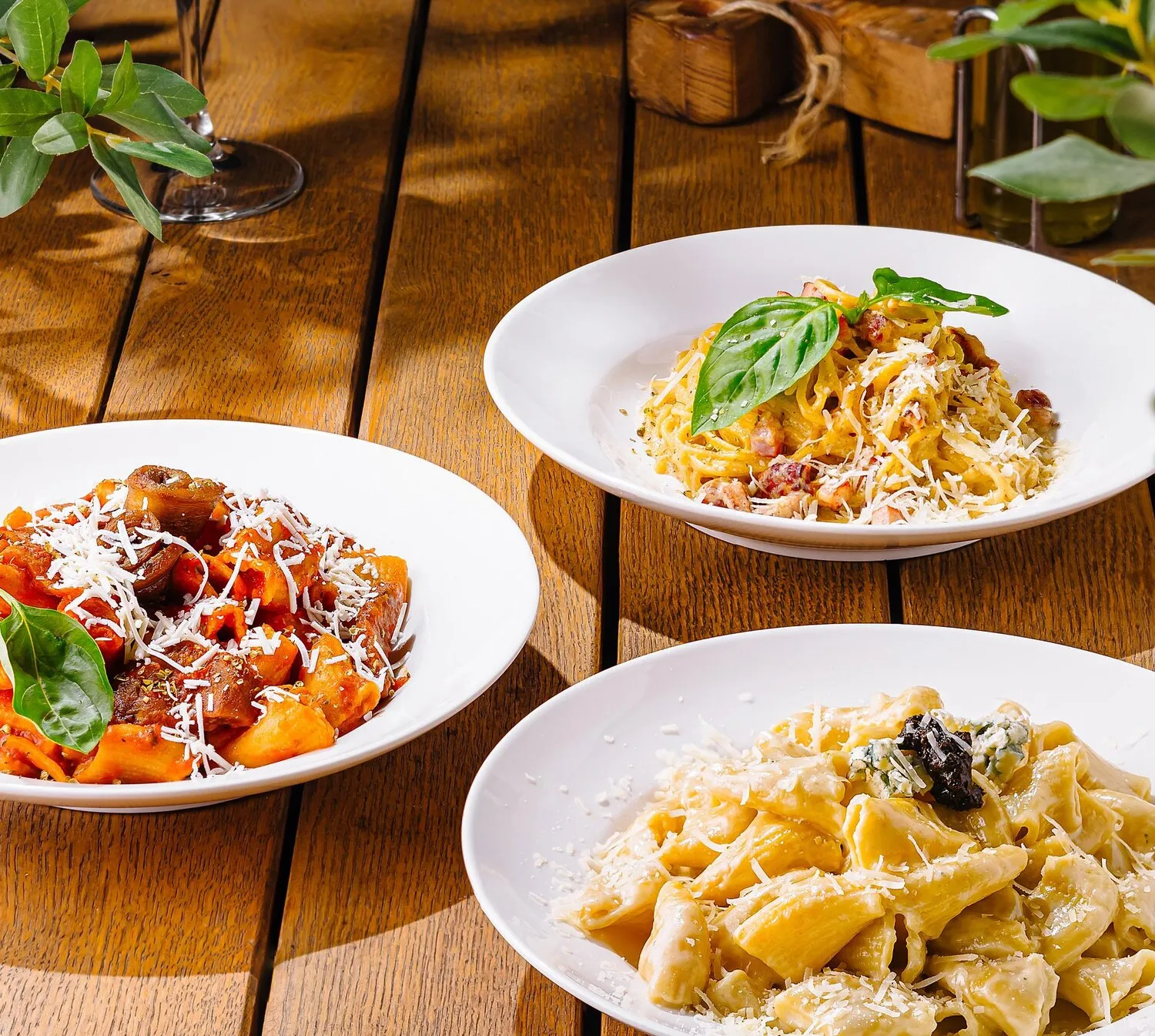

Pasta dishes
Different kinds of pasta are mentioned in reviews.
Valeurs Nutritionnelles
* Le % de la valeur quotidienne (VQ) vous indique la quantité d'un nutriment dans une portion d'aliment qui contribue à un régime quotidien. 2 000 calories par jour sont utilisées pour les conseils nutritionnels généraux.
Fonctionnalité Premium
Fonctionnalité Premium
Pasta's history stretches back to ancient civilizations, with evidence suggesting variations existed in China and the Middle East. However, its modern form and widespread consumption are firmly rooted in Italian culinary tradition. The introduction of durum wheat in Sicily and advancements in pasta-making techniques over centuries contributed to the diverse range of pasta shapes and dishes we know today. Arab influence in Sicily also played a significant role in early pasta development. Mass production and global migration further popularized pasta worldwide.
Fonctionnalité Premium
Pasta is more than just food in Italy; it's a central element of Italian culture, tradition, and social life. It represents family, togetherness, and regional identity.
Family Meals
Pasta dishes are frequently served during family gatherings and Sunday lunches, fostering a sense of community and shared experience.
Regional Variations
Each region in Italy boasts its own unique pasta shapes and sauces, reflecting local ingredients and culinary traditions. This regional diversity is a source of pride and identity.
Symbolism
Certain pasta shapes and dishes are associated with specific holidays or celebrations. For example, lasagna is often served during Christmas.
Social Occasions
Pasta is a versatile dish suitable for both casual and formal occasions, making it a staple in Italian social life.
Fonctionnalité Premium
Pasta dishes offer a symphony of flavors, ranging from simple, fresh, and bright to rich, savory, and complex, largely dictated by the sauce and ingredients accompanying the pasta.
The flavor profile of a pasta dish is highly dependent on the accompanying sauce. Tomato-based sauces often provide a tangy and slightly sweet base, while cream-based sauces offer richness and a velvety texture. Pesto brings herbaceous notes of basil, garlic, and pine nuts. Olive oil and garlic based sauces offer a simple, aromatic, and savory foundation. Other ingredients, like seafood, meats, vegetables, and cheeses, add further complexity and depth. The pasta itself, made from wheat, provides a neutral base that absorbs and complements the flavors of the sauce.
Fonctionnalité Premium
Cooking Pasta Al Dente
Cook pasta until it is firm to the bite ('al dente'), avoiding overcooking which results in a mushy texture. Test for doneness a minute or two before the package instructions suggest.
Salting the Pasta Water
Salt the pasta water generously. The salty water seasons the pasta from the inside out, enhancing its flavor. The water should taste like the sea.
Reserving Pasta Water
Before draining the pasta, reserve about a cup of the starchy cooking water. This water can be added to the sauce to help it adhere to the pasta and create a creamier consistency.
Pairing Pasta and Sauce
Choose pasta shapes that complement the sauce. Long, thin pasta like spaghetti pairs well with lighter sauces, while thicker, ridged pasta like penne holds chunkier sauces effectively.
Cook the sauce separately.
Always make sure the sauce is cooked separately, and mixed to pasta right before serving.
Fonctionnalité Premium
Explorez des plats et restaurants supplémentaires de Italian
Explorer ItalianDécouvrez les meilleurs restaurants et expériences culinaires à Palermo.
Explorer PalermoEn savoir plus sur la culture gastronomique, la scène des restaurants et le patrimoine culinaire de Italy.
Explorer Italy