
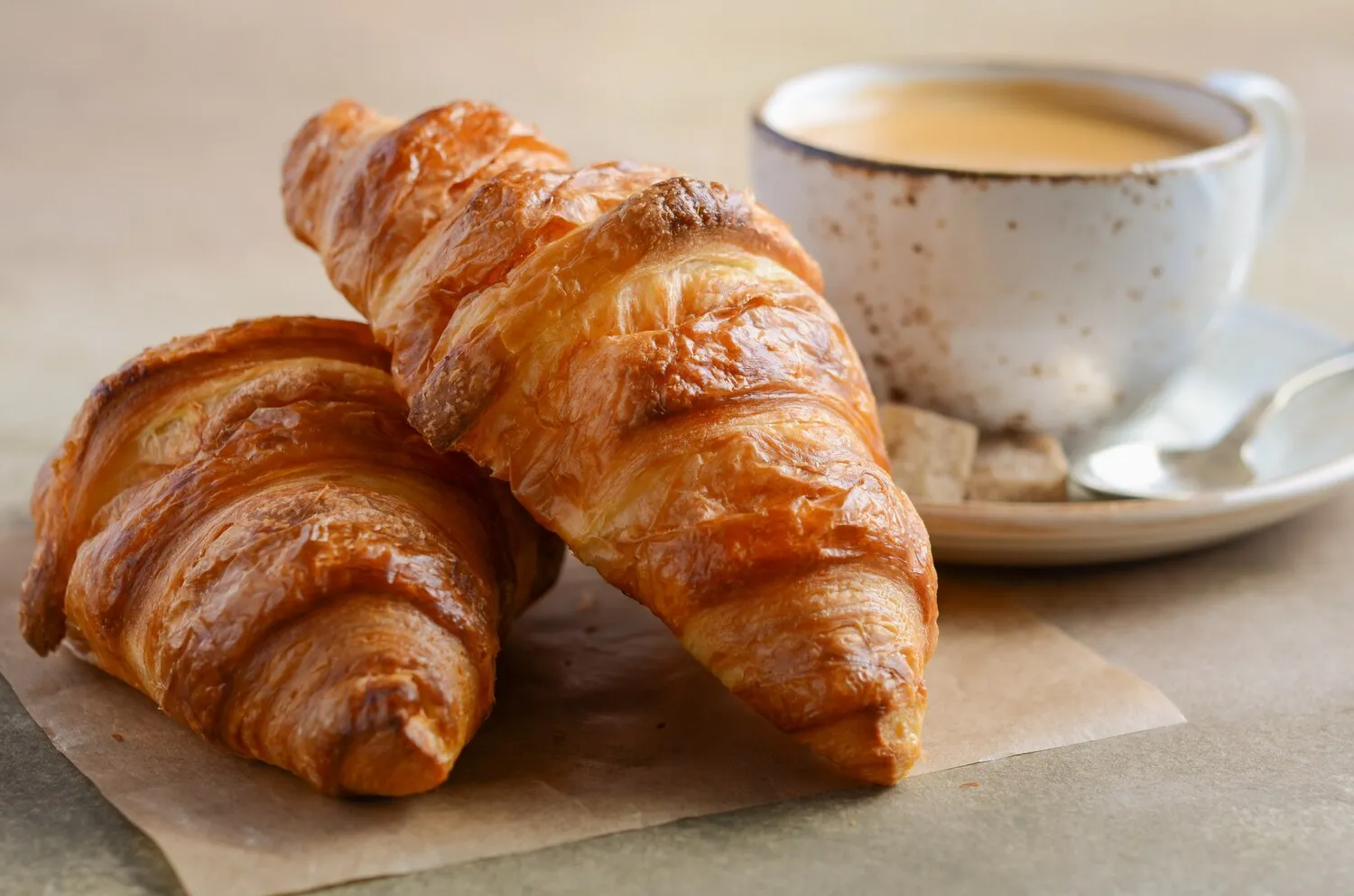

Croissant
A buttery, flaky pastry.
Valeurs Nutritionnelles
* Le % de la valeur quotidienne (VQ) vous indique la quantité d'un nutriment dans une portion d'aliment qui contribue à un régime quotidien. 2 000 calories par jour sont utilisées pour les conseils nutritionnels généraux.
Fonctionnalité Premium
Fonctionnalité Premium
While the croissant is almost synonymous with French baking, its origins lie in Austria. It's believed to have evolved from the Austrian 'kipferl,' a crescent-shaped pastry. Marie Antoinette, an Austrian princess who married King Louis XVI of France, is often credited with introducing the kipferl to France in the 18th century. However, it wasn't until the 19th century that the modern, flaky croissant, made with laminated dough, emerged.
Fonctionnalité Premium
The croissant has become a staple of French breakfast culture and is enjoyed worldwide as a symbol of Parisian café culture. It is often eaten plain, with coffee, or accompanied by jam, butter, or chocolate.
French Breakfast Staple
In France, the croissant is a common breakfast item, often enjoyed with a café au lait. It's a quick and easy way to start the day.
Café Culture Icon
The image of someone enjoying a croissant at a Parisian café is deeply ingrained in popular culture, representing a leisurely and sophisticated lifestyle.
Symbol of French Pastry
The croissant, along with other pastries like pain au chocolat and macarons, has become a symbol of French culinary artistry and skill.
Fonctionnalité Premium
The croissant is defined by its rich, buttery flavor and delicate, flaky texture. The taste is both savory and subtly sweet, with a prominent buttery aroma.
The flavor profile stems primarily from the high butter content in the laminated dough. As the dough bakes, the butter melts, creating steam that separates the layers, resulting in a light and airy interior. The subtle sweetness comes from a small amount of sugar added to the dough. High-quality butter is crucial for achieving the characteristic rich, nutty flavor.
Fonctionnalité Premium
Temperature Control
Keep the dough and butter cold throughout the lamination process. Work in a cool environment and refrigerate the dough frequently to prevent the butter from melting. Melting butter will result in a dense, greasy pastry.
High-Quality Butter
Use high-quality butter with a high fat content. European-style butter is often preferred because of its richer flavor and lower water content.
Proofing Time
Proper proofing is essential for a light and airy croissant. Allow the croissants to proof in a warm, humid environment until they have nearly doubled in size before baking.
Baking Temperature
Bake the croissants at a high temperature initially to create steam and promote flakiness. Then, reduce the temperature to ensure they are cooked through without burning.
Fonctionnalité Premium
Explorez des plats et restaurants supplémentaires de Pastry
Explorer PastryDécouvrez les meilleurs restaurants et expériences culinaires à Trento.
Explorer TrentoEn savoir plus sur la culture gastronomique, la scène des restaurants et le patrimoine culinaire de Italy.
Explorer Italy