
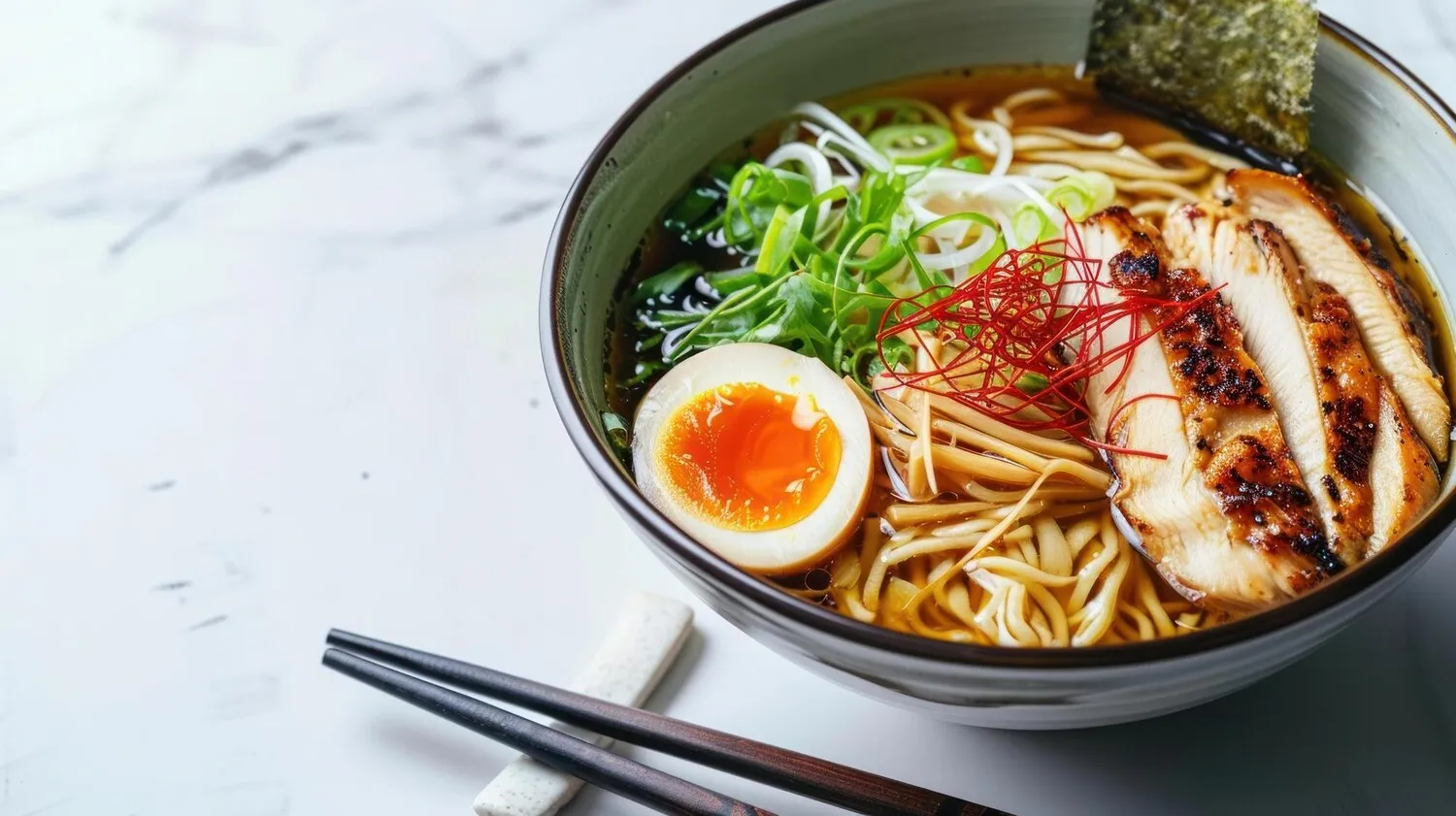

Ramen
Noodle soup dish with broth, noodles, and toppings. Many different variations are often available.
Valeurs Nutritionnelles
* Le % de la valeur quotidienne (VQ) vous indique la quantité d'un nutriment dans une portion d'aliment qui contribue à un régime quotidien. 2 000 calories par jour sont utilisées pour les conseils nutritionnels généraux.
Fonctionnalité Premium
Fonctionnalité Premium
Ramen's origins trace back to Chinese noodle soups. It was introduced to Japan in the late 19th or early 20th century, with significant development and localization occurring after World War II. Initially, it was known as 'shina soba' (Chinese soba) but evolved into the distinct dish we know today.
Fonctionnalité Premium
Ramen is deeply ingrained in Japanese culture as a quick, affordable, and customizable meal. Ramen shops are ubiquitous, ranging from small, family-owned establishments to large chains, each with its unique style and recipe. It is more than just food; it's a cultural experience.
Ramen Shops
Ramen shops are a staple of Japanese cities and towns. They are often small and bustling, with a focus on speed and efficiency. The atmosphere is typically casual and lively.
Regional Variations
Different regions of Japan have their own unique ramen styles, featuring local ingredients and flavor profiles. For example, Hakata ramen is known for its creamy tonkotsu broth, while Sapporo ramen is famous for its miso-based broth and buttered corn.
Ramen Culture
Ramen is a popular topic in Japanese media, with numerous television shows, movies, and manga dedicated to the dish. Ramen chefs are often revered as culinary artists, and ramen competitions are a common occurrence.
Fonctionnalité Premium
Ramen boasts a complex and umami-rich flavor profile, stemming from the interplay of broth, tare (seasoning), noodles, and toppings. The broth, often simmered for hours, provides the foundation, while tare contributes saltiness, sweetness, and depth. Each ingredient complements the others, creating a harmonious and satisfying taste experience.
The broth is a critical component, typically made from pork bones (tonkotsu), chicken bones (chintan), vegetables, and occasionally seafood. It can range from light and clear to rich and creamy. Tare, the seasoning, often uses soy sauce (shoyu), salt (shio), miso, or a combination of ingredients, adding a concentrated burst of flavor. Noodles vary in thickness, shape, and wheat content, affecting the texture and how they absorb the broth. Common toppings include chashu (braised pork belly), menma (fermented bamboo shoots), negi (scallions), nori (dried seaweed), soft-boiled eggs (ajitsuke tamago), and various vegetables.
Fonctionnalité Premium
Slurping Etiquette
Slurping your noodles is considered polite in Japan as it enhances the flavor and helps cool the noodles down. It also shows appreciation for the chef's hard work.
Broth Appreciation
Take time to savor the broth before adding toppings, as it is the foundation of the ramen flavor. You can use the provided spoon to taste it. A good ramen broth is a complex concoction.
Kaedama
If you finish your noodles but still have broth left, you can order 'kaedama,' which is a refill of noodles. This is particularly common with tonkotsu ramen.
Customization
Don't be afraid to customize your ramen! Many shops allow you to adjust the noodle firmness, broth richness, and spice level to your liking.
Fonctionnalité Premium
Explorez des plats et restaurants supplémentaires de Noodles
Explorer NoodlesDécouvrez les meilleurs restaurants et expériences culinaires à Hilversum.
Explorer HilversumEn savoir plus sur la culture gastronomique, la scène des restaurants et le patrimoine culinaire de Netherlands.
Explorer Netherlands