
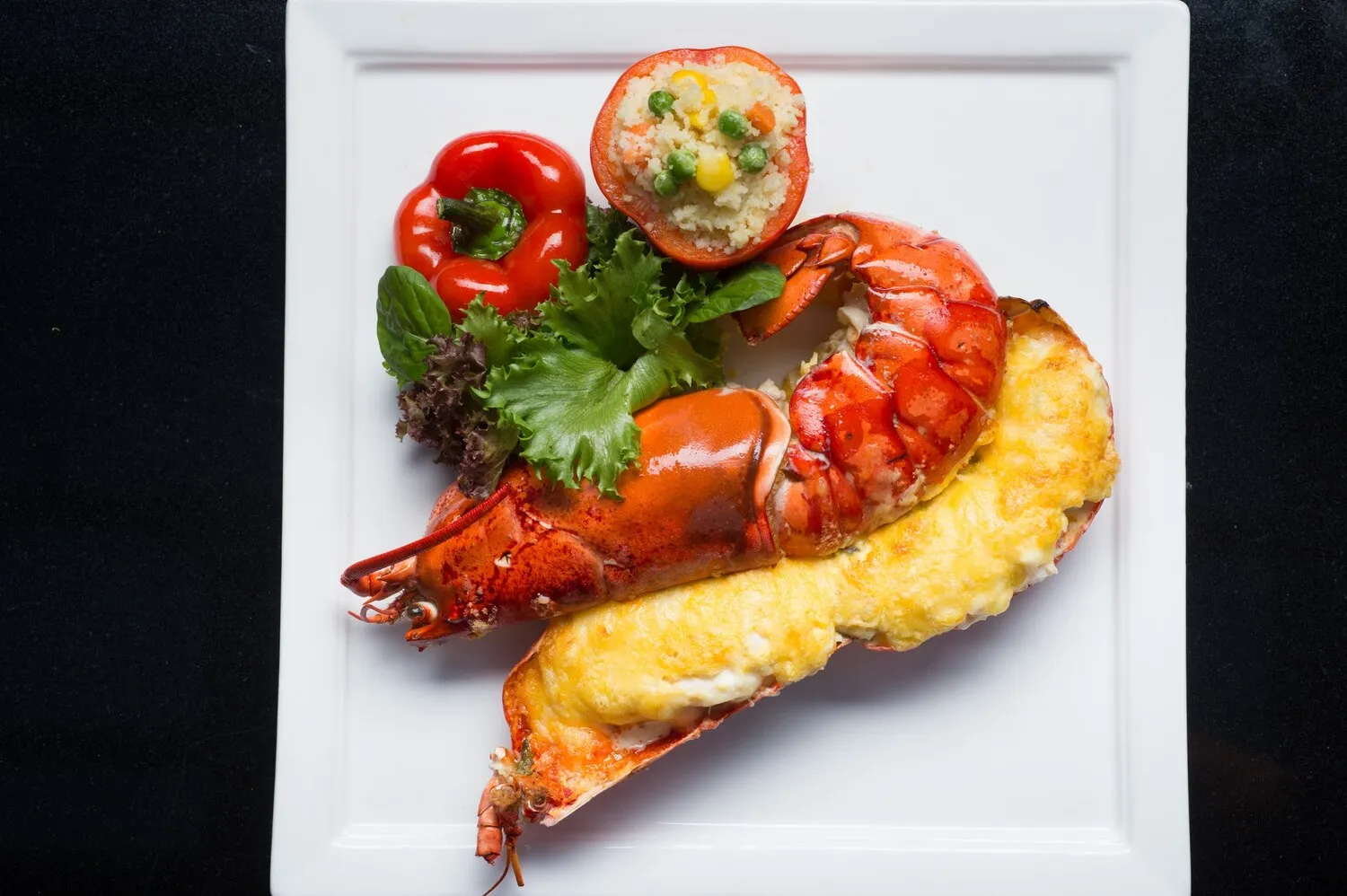

Lobster
Freshly prepared lobster dish.
Valeurs Nutritionnelles
* Le % de la valeur quotidienne (VQ) vous indique la quantité d'un nutriment dans une portion d'aliment qui contribue à un régime quotidien. 2 000 calories par jour sont utilisées pour les conseils nutritionnels généraux.
Fonctionnalité Premium
Fonctionnalité Premium
Lobster has been consumed by humans for millennia, with evidence found in prehistoric shell middens. Historically, lobster was considered a poor man's food, especially in North America, often used as fertilizer or prison fare. Its transformation into a delicacy is a relatively recent phenomenon, largely driven by advancements in transportation and preservation, allowing fresh lobster to reach wider markets. The development of the lobster industry, including trapping techniques and sustainable fishing practices, also contributed to its elevated status.
Fonctionnalité Premium
Lobster has evolved from a humble food to a symbol of luxury and celebration, often associated with special occasions, fine dining, and coastal lifestyles. Its cultural significance varies across regions, reflecting local traditions and fishing practices.
Lobster Rolls in New England
In New England, particularly Maine, lobster rolls are a quintessential summer staple. They represent a casual yet indulgent culinary experience, often enjoyed at roadside shacks and seaside restaurants.
Lobster Thermidor
Lobster Thermidor, a creamy, cheesy dish, represents classic French haute cuisine and signifies elegance and sophistication.
Lunar New Year Traditions
In some Asian cultures, lobster, especially when prepared whole and presented elegantly, is considered a symbol of prosperity and good fortune, often served during Lunar New Year celebrations.
Fonctionnalité Premium
Lobster boasts a sweet, rich, and subtly briny flavor, complemented by a firm yet tender texture. The taste is delicate and often enhanced by simple preparations that allow its natural flavors to shine.
The dominant flavor profile is sweetness, often compared to that of crab or shrimp but with a more distinct, oceanic note. The sweetness comes from the lobster's diet and the natural sugars present in its meat. The briny or salty element is a subtle undertone, reflecting its marine environment. The texture is crucial; perfectly cooked lobster should be firm and yielding, not rubbery or tough. The specific flavors can vary slightly depending on the lobster's diet, origin (e.g., Maine lobster versus spiny lobster), and cooking method. Common preparations include steaming, boiling, grilling, and baking, often with butter, lemon, garlic, or herbs to enhance the natural flavors.
Fonctionnalité Premium
Selecting a Lobster
Choose live lobsters that are active and have a strong claw grip. The shell should be hard, indicating a higher meat yield. Look for lobsters with intact antennae and legs.
Storing Live Lobsters
Keep live lobsters refrigerated in a damp environment (e.g., wrapped in wet newspaper) for up to 24 hours. Do not submerge them in freshwater, as this will kill them.
Cooking Lobster
Avoid overcooking lobster, as this will make it tough and rubbery. The internal temperature should reach 140°F (60°C). A properly cooked lobster will have opaque meat and a bright red shell. For steaming, about 8-10 minutes per pound is a good estimate.
Shelling a Lobster
Twist off the claws and tail. Crack the claws with a cracker. To remove the tail meat, fan out the tail and push the meat out. Remove the vein.
Fonctionnalité Premium
Explorez des plats et restaurants supplémentaires de Seafood
Explorer SeafoodDécouvrez les meilleurs restaurants et expériences culinaires à Vlaardingen.
Explorer VlaardingenEn savoir plus sur la culture gastronomique, la scène des restaurants et le patrimoine culinaire de Netherlands.
Explorer Netherlands