
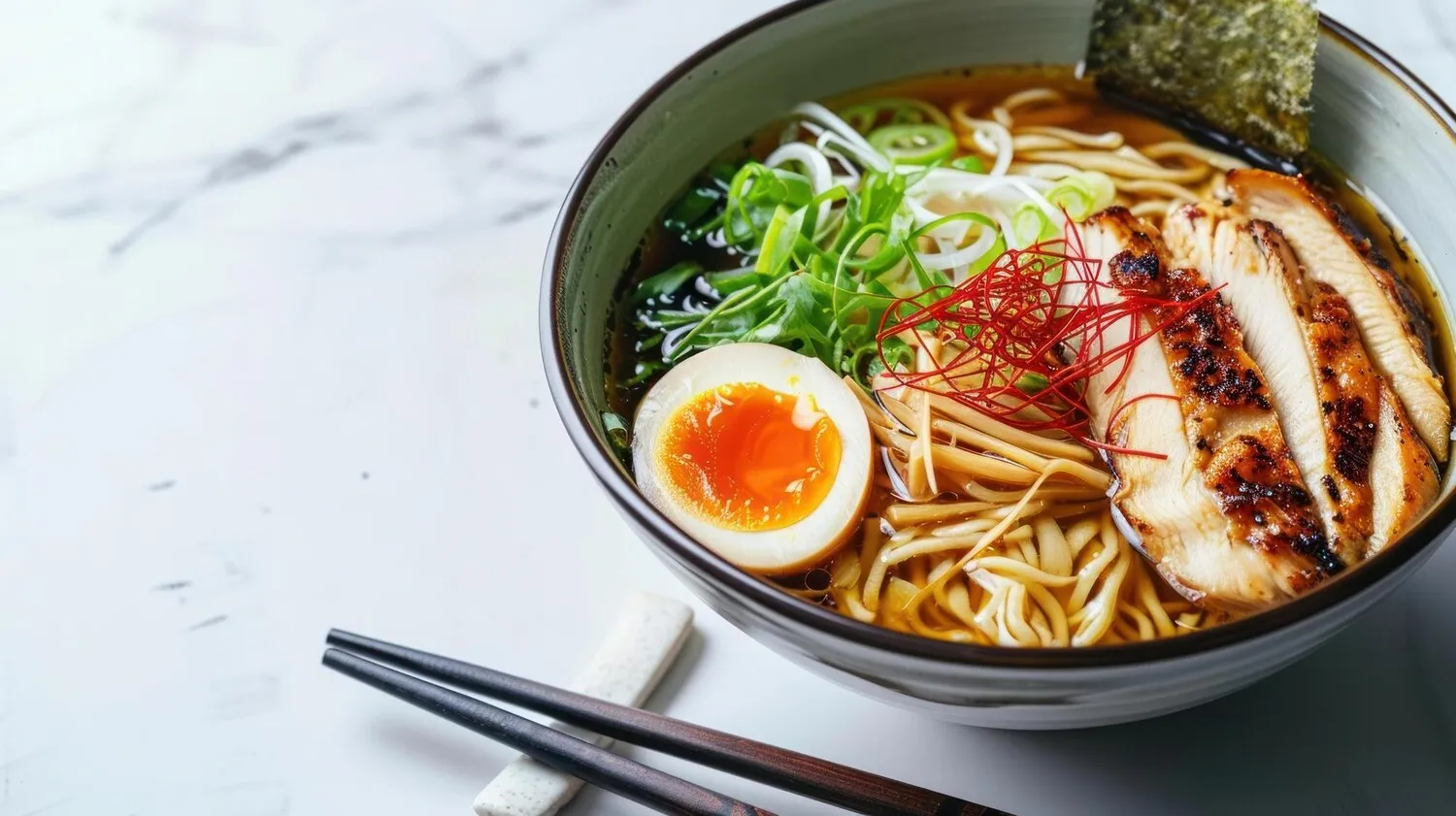

Ramen
Ramen, a Japanese noodle soup, is a featured dish. Takame specializes in ramen.
Valeurs Nutritionnelles
* Le % de la valeur quotidienne (VQ) vous indique la quantité d'un nutriment dans une portion d'aliment qui contribue à un régime quotidien. 2 000 calories par jour sont utilisées pour les conseils nutritionnels généraux.
Fonctionnalité Premium
Fonctionnalité Premium
Ramen's origins trace back to China, with noodle dishes making their way to Japan in the late 19th or early 20th century. It wasn't until after World War II, with the return of soldiers from China, that ramen truly took root and began to evolve into the dish we know today. Instant ramen, invented in 1958, further popularized the dish globally.
Fonctionnalité Premium
Ramen is deeply ingrained in Japanese culture, evolving from a simple noodle soup to a culinary art form. It's more than just food; it's a social experience, a source of comfort, and a reflection of regional identity.
Regional Variations
Different regions of Japan boast their own unique ramen styles, reflecting local ingredients and preferences. Examples include Hakata ramen (tonkotsu broth), Sapporo ramen (miso broth), and Kitakata ramen (flat, wide noodles).
Ramen Shops (Ramen-ya)
Ramen shops are a ubiquitous part of the Japanese dining scene, ranging from small, family-run establishments to trendy, modern restaurants. Many ramen-ya specialize in a particular style or broth.
Noodle Slurping
Slurping ramen noodles is considered polite in Japan, as it enhances the flavor and helps cool the noodles down. It's also seen as a sign that you're enjoying the meal.
Fonctionnalité Premium
Ramen's flavor profile is rich and complex, built around a savory broth, umami-rich toppings, and perfectly cooked noodles. The specific flavors vary widely based on regional variations and individual recipes.
The foundation of ramen is the broth, which can be made from chicken, pork, beef, fish, or a combination thereof. Common flavorings include soy sauce (shoyu), miso paste, salt (shio), and garlic. Toppings often include sliced pork (chashu), seasoned soft-boiled eggs (ajitsuke tamago), seaweed (nori), green onions, bamboo shoots (menma), and narutomaki (fish cake). The noodles themselves are typically made from wheat flour, water, salt, and kansui (an alkaline mineral water), which gives them their characteristic yellow color and chewy texture. Each ingredient contributes to the overall umami, salty, and savory flavor.
Fonctionnalité Premium
Customizing your Ramen
Many ramen shops allow you to customize your order, specifying the firmness of the noodles, the richness of the broth, and the amount of toppings. Don't be afraid to ask for adjustments to suit your taste.
Adding Condiments
Most ramen shops provide condiments such as chili oil, sesame seeds, garlic paste, and pepper. Experiment with different combinations to find your favorite flavor profile.
Kaedama (Noodle Refill)
In some ramen shops, particularly those specializing in Hakata-style ramen, you can order 'kaedama,' which is a refill of noodles served in a separate bowl. This allows you to enjoy the remaining broth without it becoming too diluted.
Fonctionnalité Premium
Explorez des plats et restaurants supplémentaires de Soup, Noodles
Explorer Soup, NoodlesDécouvrez les meilleurs restaurants et expériences culinaires à Göteborg.
Explorer GöteborgEn savoir plus sur la culture gastronomique, la scène des restaurants et le patrimoine culinaire de Sweden.
Explorer Sweden