
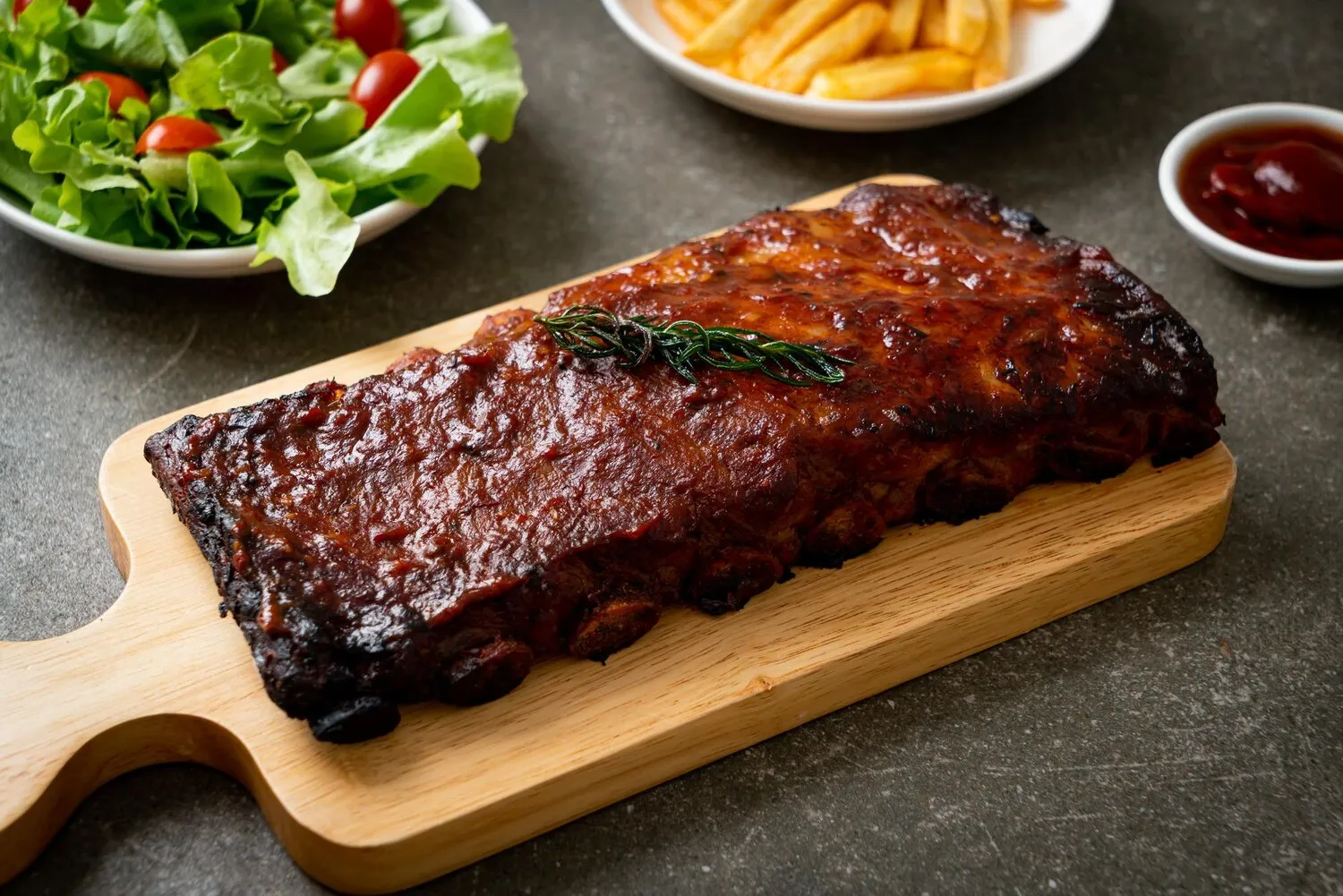

Ribs
Many reviews mention the ribs are delicious and a good portion size. Again, details regarding the exact preparation (sauce, etc.) are not readily and consistently available.
Valeurs Nutritionnelles
* Le % de la valeur quotidienne (VQ) vous indique la quantité d'un nutriment dans une portion d'aliment qui contribue à un régime quotidien. 2 000 calories par jour sont utilisées pour les conseils nutritionnels généraux.
Fonctionnalité Premium
Fonctionnalité Premium
The cooking of ribs over open fire or in smoky environments is an ancient practice, dating back to early methods of preserving and cooking meat. In the United States, barbecue traditions, particularly in the South, heavily influenced the development of modern rib preparation, drawing from Native American, European, and African culinary techniques. Over time, regional variations emerged, each with distinct sauces, rubs, and cooking styles.
Fonctionnalité Premium
Ribs are deeply ingrained in American barbecue culture, often associated with social gatherings, celebrations, and regional pride.
Barbecue Competitions
Ribs are a staple in barbecue competitions across the United States, where pitmasters vie for the title of best ribs based on factors like tenderness, flavor, and appearance.
Family Gatherings
Ribs are a popular dish for family cookouts and celebrations, symbolizing togetherness and shared meals.
Regional Variations
Different regions in the US have their unique rib styles, such as Memphis dry-rub ribs, Kansas City sweet and smoky ribs, and Texas-style beef ribs, reflecting local culinary traditions.
Fonctionnalité Premium
Ribs offer a complex flavor profile that balances savory meatiness with smoky undertones and sweet, tangy, or spicy accents, depending on the preparation style.
The dominant flavor is the rich, savory taste of pork (or beef, depending on the rib type). This is complemented by smoky notes imparted by the cooking method (e.g., grilling, smoking). The sauce, whether it's a vinegar-based concoction, a sweet and sticky barbecue sauce, or a dry rub of spices, significantly impacts the overall flavor. Common spices include paprika, garlic powder, onion powder, chili powder, brown sugar, and cayenne pepper. The level of sweetness, tanginess, or spiciness can vary considerably depending on regional preferences and the specific recipe.
Fonctionnalité Premium
Low and Slow Cooking
Cooking ribs at a low temperature (around 225-250°F) for an extended period (3-6 hours) allows the connective tissue to break down, resulting in tender, fall-off-the-bone ribs.
The 3-2-1 Method
This popular method involves smoking the ribs for 3 hours, wrapping them in foil with liquid (e.g., apple juice, beer) for 2 hours, and then unwrapping and saucing them for the final hour. It helps to tenderize and moisturize the ribs.
Checking for Doneness
The 'bend test' is a good way to check if ribs are done. Pick up the slab with tongs and if it bends easily and the meat cracks, they are ready.
Resting Period
Allowing the ribs to rest for at least 30 minutes after cooking helps the juices redistribute throughout the meat, resulting in a more flavorful and tender final product.
Fonctionnalité Premium
Explorez des plats et restaurants supplémentaires de BBQ
Explorer BBQDécouvrez les meilleurs restaurants et expériences culinaires à Örebro.
Explorer ÖrebroEn savoir plus sur la culture gastronomique, la scène des restaurants et le patrimoine culinaire de Sweden.
Explorer Sweden