
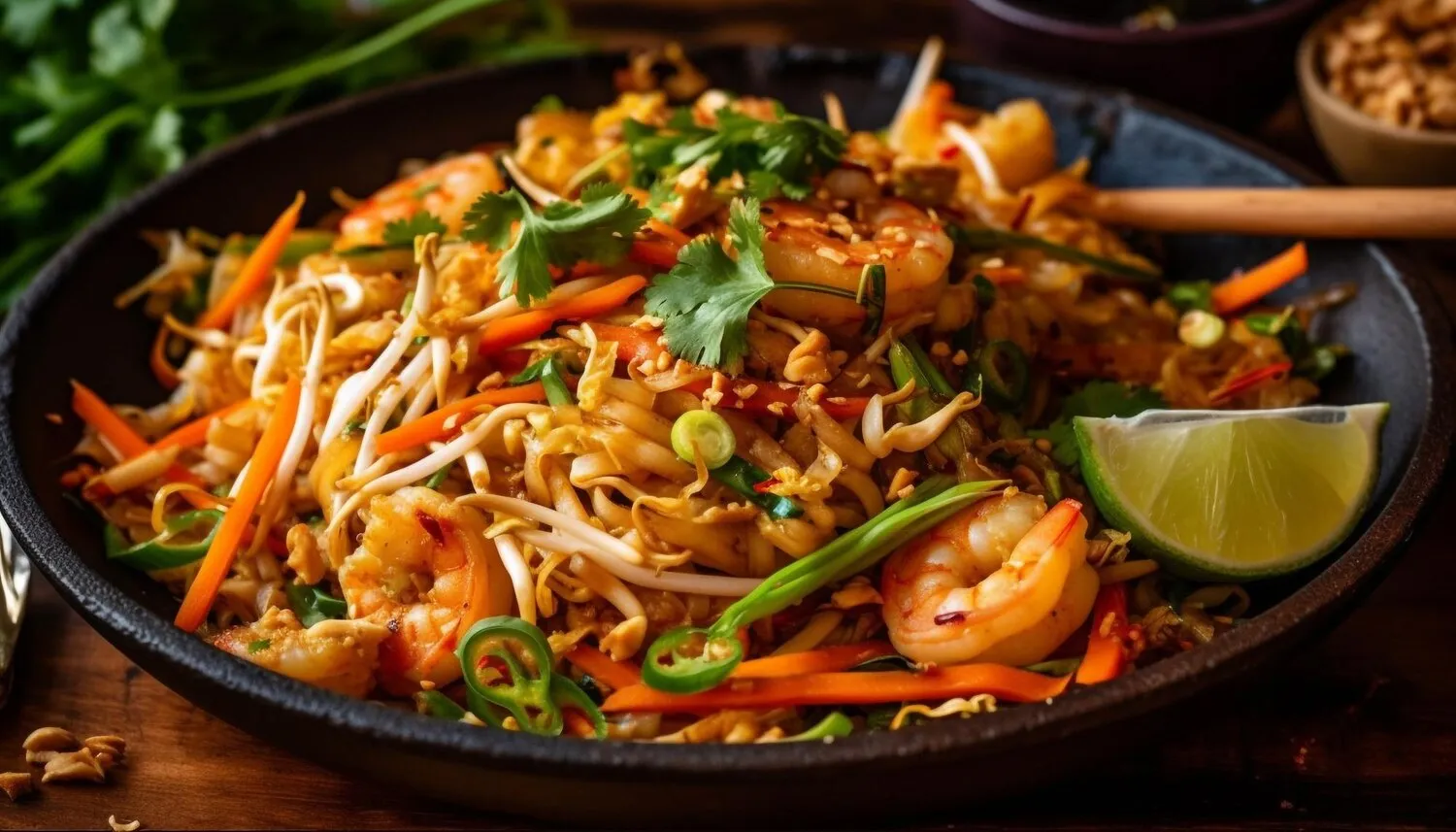

Pad Thai
Fried rice noodles with tofu, vegetables, and peanuts.
Valeurs Nutritionnelles
* Le % de la valeur quotidienne (VQ) vous indique la quantité d'un nutriment dans une portion d'aliment qui contribue à un régime quotidien. 2 000 calories par jour sont utilisées pour les conseils nutritionnels généraux.
Fonctionnalité Premium
Fonctionnalité Premium
Pad Thai's history is intertwined with Thailand's national identity. It emerged during World War II, promoted by Prime Minister Plaek Phibunsongkhram (Phibun) as a way to reduce rice consumption and foster a sense of national unity during a period of economic hardship and rice shortages. The government encouraged the use of rice noodles and supported vendors, helping popularize the dish.
Fonctionnalité Premium
Pad Thai is more than just food; it represents Thai identity and is a culinary symbol recognized worldwide.
National Dish
Pad Thai is widely considered one of Thailand's national dishes, frequently served to tourists and presented as a key element of Thai cuisine.
Street Food Staple
It's a common and affordable street food dish, easily found throughout Thailand from bustling markets to quiet roadside stalls.
Culinary Diplomacy
The Thai government has actively promoted Pad Thai internationally as part of its culinary diplomacy efforts, aiming to showcase Thai culture and attract tourism.
Adaptations
Pad Thai has many variations depending on region and preference, catering to different tastes and dietary requirements, demonstrating its adaptability within Thai culture.
Fonctionnalité Premium
Pad Thai offers a complex and balanced flavor profile that is sweet, sour, salty, and savory, with a hint of spiciness.
The primary flavors come from the tamarind paste (sour), fish sauce (salty and umami), palm sugar (sweet), and chili (spicy). These core elements are complemented by the nutty flavor of peanuts, the freshness of bean sprouts and chives, and the richness of tofu and often shrimp or chicken. A squeeze of lime adds brightness and acidity to finish the dish.
Fonctionnalité Premium
Tamarind Paste is Key
Use authentic tamarind paste for the signature sour flavor. Avoid substitutes if possible, as they won't provide the same depth.
Don't Overcook the Noodles
Soak the rice noodles until pliable but not mushy. They should still have some bite before stir-frying, as they will continue to cook in the wok.
High Heat is Essential
Use a wok or large skillet over high heat to achieve that characteristic smoky flavor and prevent the noodles from sticking.
Balance the Flavors
Taste and adjust the sauce throughout the cooking process to ensure the perfect balance of sweet, sour, salty, and spicy. Add more fish sauce for saltiness, palm sugar for sweetness, or lime juice for acidity.
Fresh Ingredients Matter
Use fresh bean sprouts, chives, and lime for the best flavor and texture. These ingredients add a bright, refreshing element to the dish.
Fonctionnalité Premium
Explorez des plats et restaurants supplémentaires de Thai
Explorer ThaiDécouvrez les meilleurs restaurants et expériences culinaires à Lugano.
Explorer LuganoEn savoir plus sur la culture gastronomique, la scène des restaurants et le patrimoine culinaire de Switzerland.
Explorer Switzerland