
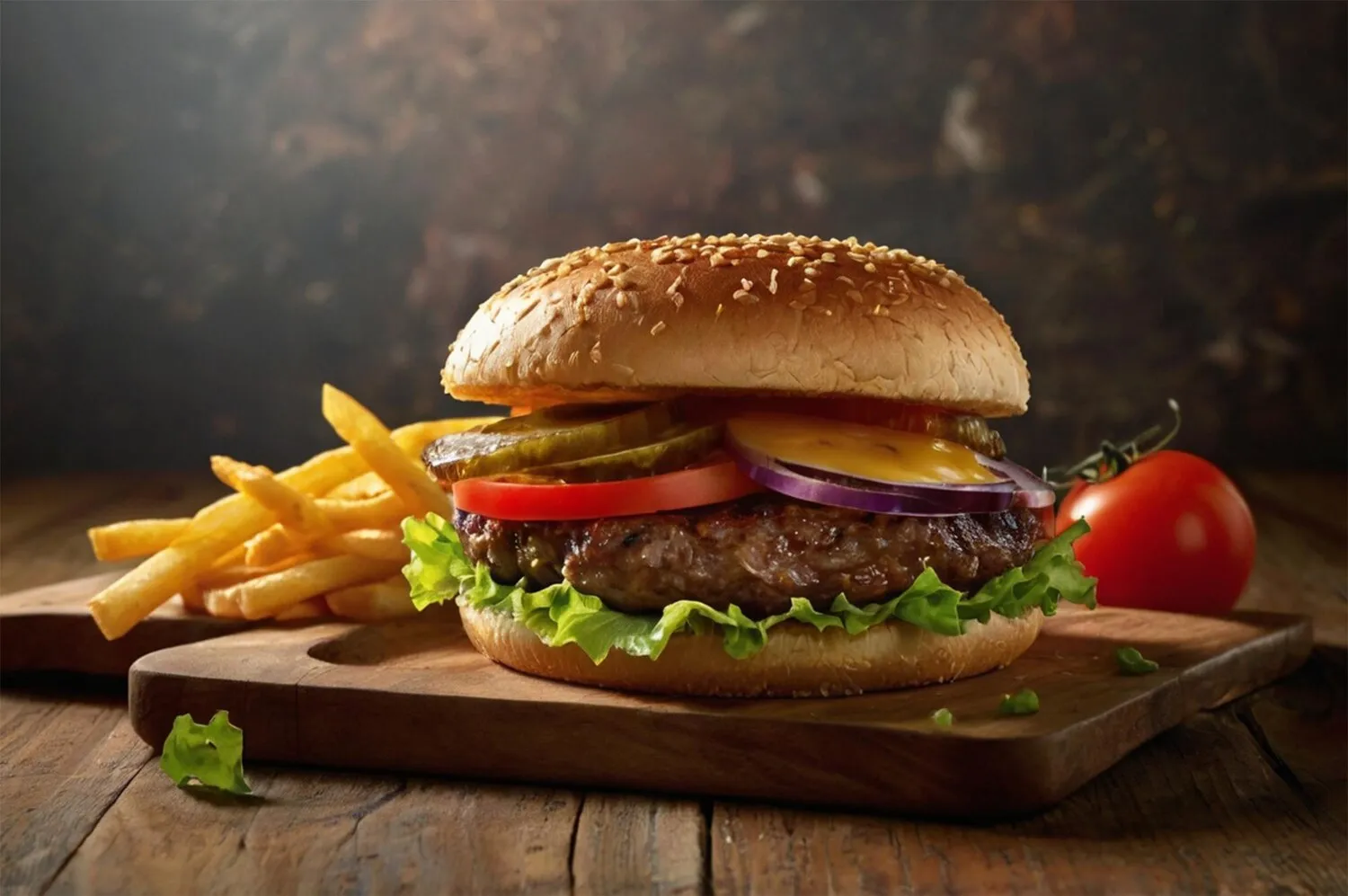

Hamburger
Nutrition Facts
* The % Daily Value (DV) tells you how much a nutrient in a serving of food contributes to a daily diet. 2,000 calories a day is used for general nutrition advice.
Premium Feature
The Bungalow Lakehouse
No Similar Dishes Found
We couldn't find any similar dishes at the moment. Try exploring other restaurants!
The hamburger's origins are debated, with various claims pointing to the late 19th and early 20th centuries in the United States. While ground meat dishes existed prior, the combination of a ground beef patty served between two buns is largely attributed to American ingenuity, influenced by German immigrants who brought ground meat preparations to the US.
Premium Feature
The hamburger is deeply embedded in American culture, representing convenience, casual dining, and a symbol of American cuisine recognized globally. It has evolved from a simple sandwich to a diverse culinary canvas.
Fast Food Icon
The hamburger is synonymous with fast food culture, popularized by chains like McDonald's and Burger King, making it an accessible and affordable meal for millions.
Regional Variations
Numerous regional variations exist, reflecting local ingredients and culinary preferences. Examples include the green chile cheeseburger in New Mexico and the butter burger in Wisconsin.
American Barbecue
Hamburgers are a staple at American barbecues and cookouts, representing a communal and celebratory food experience.
Culinary Innovation
The hamburger serves as a platform for culinary innovation, with chefs constantly experimenting with different patties, toppings, and bun variations, leading to gourmet and artisanal hamburgers.
Premium Feature
The hamburger is characterized by savory, meaty flavors enhanced by various toppings and condiments. The core flavor profile relies on the quality of the beef and the Maillard reaction achieved during cooking.
The primary flavor component is the rich, umami flavor of ground beef, which is typically seasoned with salt, pepper, and sometimes garlic powder or onion powder. Grilling or pan-frying the patty creates a browned crust that enhances the savory taste. Common toppings like cheese add creamy, salty, and tangy notes, while vegetables such as lettuce, tomato, and onion provide freshness and crispness. Condiments like ketchup, mustard, and mayonnaise offer sweet, tangy, and creamy accents.
Premium Feature
Beef Selection
Choose ground beef with a fat content of around 20% for optimal flavor and juiciness. A blend of chuck and sirloin is often recommended.
Patty Formation
Gently form patties without overworking the meat to avoid a tough texture. Create a slight indentation in the center to prevent bulging during cooking.
Cooking Temperature
Cook hamburgers to an internal temperature of 160°F (71°C) for medium doneness. Use a meat thermometer to ensure accuracy.
Bun Choice
Select a bun that complements the patty size and texture. Brioche, potato, and sesame seed buns are popular choices.
Toasting the Bun
Toasting the cut sides of the bun prevents sogginess and adds a pleasant crunch.
Premium Feature
Explore additional 10 Years Old & Under Please dishes and restaurants
Explore 10 Years Old & Under PleaseDiscover top dining spots and culinary experiences in Sterling.
Explore SterlingLearn more about the food culture, restaurant scene, and culinary heritage of United States.
Explore United States