
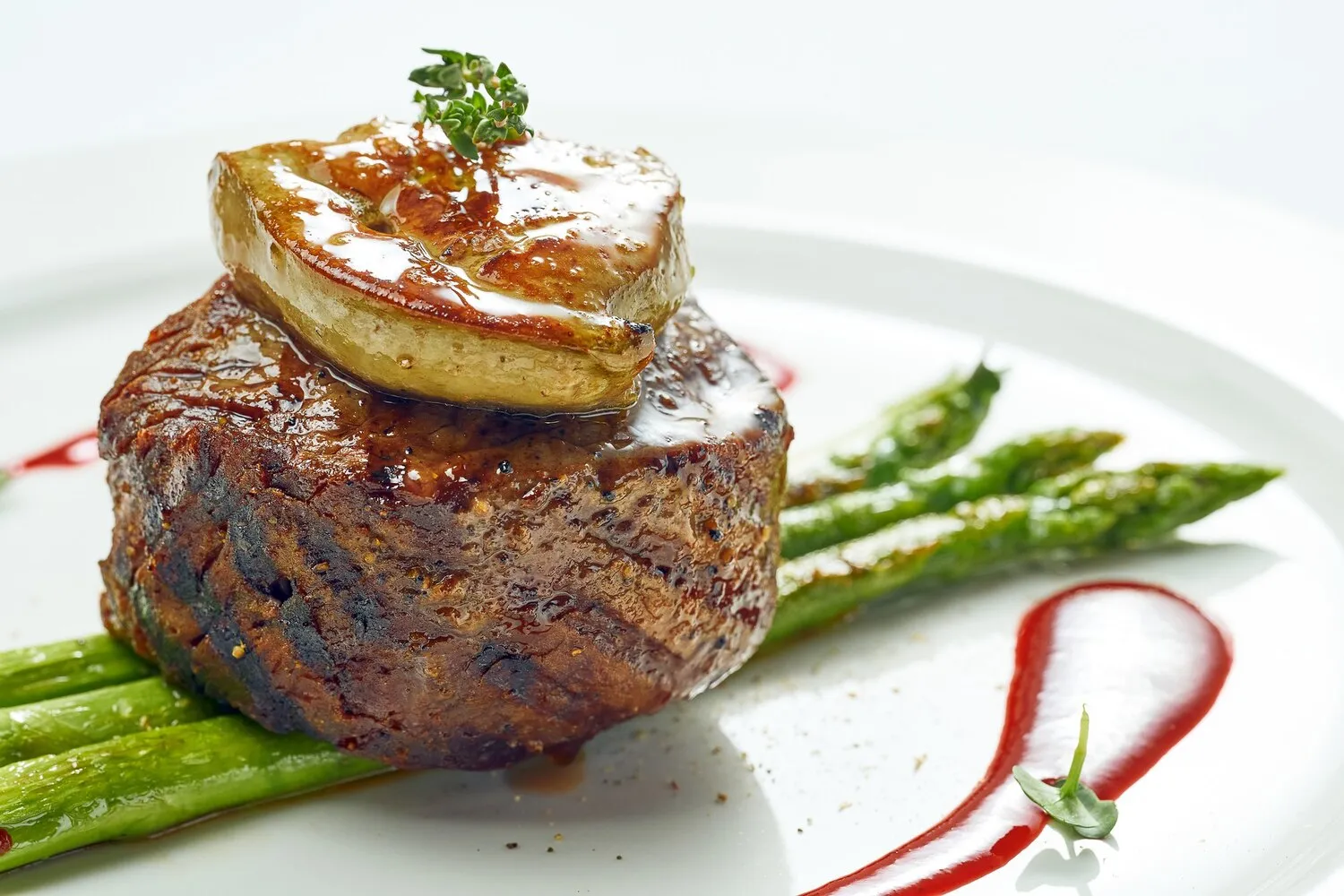

Filet Mignon
Tender and flavorful cut of beef.
Valeurs Nutritionnelles
* Le % de la valeur quotidienne (VQ) vous indique la quantité d'un nutriment dans une portion d'aliment qui contribue à un régime quotidien. 2 000 calories par jour sont utilisées pour les conseils nutritionnels généraux.
Fonctionnalité Premium
Fogo de Chão Brazilian Steakhouse
Fonctionnalité Premium
The term 'filet mignon' is French, translating to 'tender fillet' or 'dainty fillet.' While the specific origins are debated, it's generally believed to have emerged in French culinary circles during the 19th century, reflecting a growing appreciation for refined cuts of meat and sophisticated dining experiences. The cut gained popularity as a symbol of luxury and culinary skill.
Fonctionnalité Premium
Filet mignon is often associated with fine dining and special occasions. It symbolizes indulgence and is frequently featured on the menus of high-end restaurants. Its preparation and presentation are often treated with meticulous care, reflecting its premium status.
Celebratory Meals
Filet mignon is commonly chosen for celebrating anniversaries, birthdays, and other important milestones due to its luxurious nature and perceived sophistication.
Romantic Dinners
The dish is frequently associated with romantic evenings, often served in intimate settings and paired with fine wines to create a memorable dining experience.
Symbol of Status
Ordering or serving filet mignon can be seen as a symbol of affluence and good taste, reflecting a commitment to quality ingredients and culinary excellence.
Fonctionnalité Premium
Filet mignon is prized for its incredibly tender texture and subtle, buttery flavor. It's a lean cut, so the flavor is delicate compared to other beef cuts, making it an excellent canvas for complementary sauces and seasonings.
The primary flavor of filet mignon is a mild, beefy taste with a hint of sweetness. Because it lacks significant marbling, it's not as intensely flavored as ribeye or New York strip. The texture is incredibly tender and melts in your mouth. Common flavor profiles are enhanced with butter, herbs like thyme and rosemary, garlic, and sometimes a touch of pepper. Sauces such as béarnaise, bordelaise, or peppercorn sauce are frequently served alongside to add richness and depth of flavor.
Fonctionnalité Premium
Choosing the Right Cut
Look for a filet mignon that is uniform in thickness and has a bright red color. Avoid cuts that appear dry or have discoloration. A small amount of marbling is desirable, but the filet should primarily be lean.
Searing for Flavor
Achieve a beautiful crust by searing the filet over high heat in a hot pan with oil or butter. This creates a Maillard reaction, enhancing the flavor and adding a desirable texture.
Temperature Control
Use a meat thermometer to ensure the filet is cooked to your desired level of doneness. Common temperatures are: Rare (125-130°F), Medium-Rare (130-135°F), Medium (135-140°F), Medium-Well (140-145°F), Well-Done (145°F+). Remember that the temperature will continue to rise slightly during resting.
Resting is Key
Allow the filet to rest for at least 5-10 minutes after cooking. This allows the juices to redistribute throughout the meat, resulting in a more tender and flavorful final product. Tent it loosely with foil to keep it warm.
Don't Overcook
Filet mignon is best enjoyed when cooked to medium-rare or medium. Overcooking will result in a dry and less flavorful cut.
Fonctionnalité Premium
Explorez des plats et restaurants supplémentaires de Brazilian Churrasco
Explorer Brazilian ChurrascoDécouvrez les meilleurs restaurants et expériences culinaires à Washington.
Explorer WashingtonEn savoir plus sur la culture gastronomique, la scène des restaurants et le patrimoine culinaire de United States.
Explorer United States